Irish Civil War
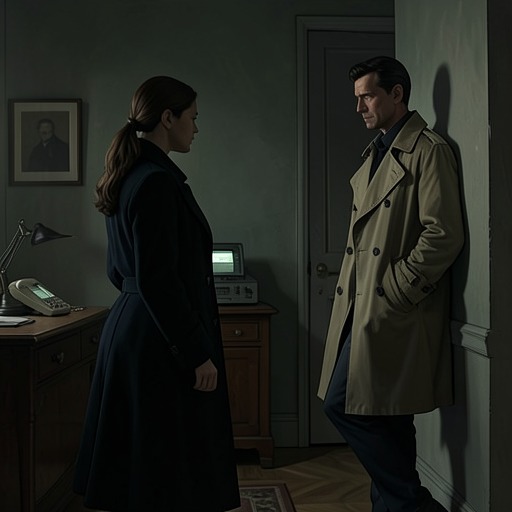
The Black-Eyed BlondeThe Irish Civil War is presented through Mrs. Langrishe’s memory of her husband Aubrey, whose death during the conflict gives the historical event an intimate, personal weight. Rather than offering a general account of the war, the scene shows how its violence remains lodged in an unfinished family history and surfaces unexpectedly in conversation with Philip Marlowe.
Historical Background in the Conversation
Mrs. Langrishe raises the war after Philip Marlowe resists her attempt to name his price and describes his commitment to staying honest. Marlowe initially confuses the conflict with the earlier Irish War of Independence, mentioning Rusty Regan, who had fought in an Irish war. Mrs. Langrishe corrects the chronology: the war of independence came first, before the civil war. Her brief explanation frames the conflict as part of a succession of struggles, but her attention soon leaves the present exchange.
Aubrey Langrishe’s Death
Mrs. Langrishe says that her husband, Aubrey Langrishe, fought with Michael Collins’s men and was murdered. He was taken away in the middle of the night; she did not know where he had been brought. His body was found the following day at Fanore, where he had been left in the tidal sand and was discovered after the tide receded. She was not allowed to see him. The account establishes the circumstances of his death while making clear that even its aftermath was kept from her.
Mrs. Langrishe notes that Aubrey was a Protestant and that few Protestants fought in the Irish Civil War. His identity therefore places him among a minority within the conflict, a detail she emphasizes as she recalls him. The memory is particular rather than strategic: the war is rendered through the disappearance of a husband, the delayed discovery of his body, and a widow denied the chance to see him.
The Return of the Past
The telling unfolds as a break in the conversation. Mrs. Langrishe pauses over her empty teacup before describing Aubrey’s death, and Marlowe waits before offering his sympathy. She then turns back toward him as if she has forgotten he is present. That moment makes the recollection feel less like a prepared historical account than a sudden return to an earlier loss: the past briefly displaces the room and the person listening to her.
The scene also distinguishes Mrs. Langrishe’s experience from Marlowe’s passing reference to Rusty Regan. Although both men are connected to Irish wars, Marlowe’s anecdote does not hold her attention; her own memory is centered on Aubrey and his death. The Irish Civil War thus functions here as the historical setting of a private bereavement, conveyed through the fragments and silences of recollection rather than a broader account of the conflict.