Lost Boys
The Black-Eyed Blonde“Lost Boys” is the name Lamarr gives to the marginal workers employed at the Cahuilla Club. The phrase draws on Peter Pan, but in the investigation it also becomes a practical clue: Marlowe connects the club’s vulnerable, hard-to-trace employees to the possibility that the body identified as Nico Peterson was not Peterson at all.
Meaning and Allusion
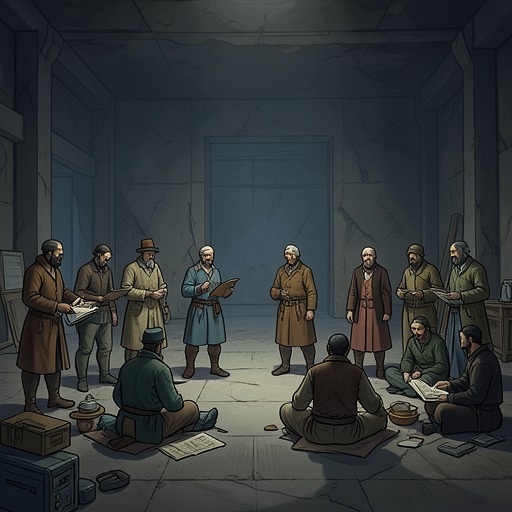
Lamarr explains the phrase directly: “The Lost Boys,” Lamarr said. “We’re the Lost Boys.” Marlowe recognizes it as an allusion to the Lost Boys in Peter Pan, with the club’s leader figured as Captain Hook. The literary reference gives the workers a shared name, but it also frames their position as people separated from ordinary social ties and histories.
The Club’s Workers
Marlowe learns that the Cahuilla Club has a policy of hiring loners and drifters—people with no past and little prospect of a future. Floyd Hanson had described the policy as a kind of philanthropy, though Marlowe doubts that Wilberforce Canning himself is philanthropic and attributes that quality instead to Canning’s father. The phrase thus identifies not simply a group of employees but the club’s practice of taking on people who may be difficult to trace or account for.
A Clue in the Peterson Case
The name gains investigative weight when Marlowe revisits the body identified in the morgue as Nico Peterson. Lynn Peterson had identified the corpse as her brother, but Marlowe considers whether she might have lied to conceal that Nico was alive and the supposed death was a setup. He proposes that the body could have been one of the club’s homeless workers: Nico might have killed the man, exchanged clothes with him, damaged the body beyond recognition by running over it, and left it by the roadside. This is Marlowe’s hypothesis, not a confirmed account of what happened.
Hanson and the Limits of the Theory
Marlowe links the club’s phrase to Floyd Hanson, whom he identifies as Captain Hook. On the night Nico was supposedly killed, Hanson was among the first at the scene and gave an initial identification. Marlowe urges Bernie Ohls to bring Hanson back for further questioning, reasoning that he may know the full story. The Lost Boys clue therefore redirects attention from the apparent identification toward the club’s workforce and Hanson’s role, while leaving the proposed body substitution unresolved.