“Blinking-World of Wit”
The Blazing World“Blinking-World of Wit” names the literary culture that judges plays by the artificial rules of the current fashion and dismisses the Duchess of Newcastle’s work for not following them. In a conversation with the Emperor and Empress of the Blazing-World, the Duchess contrasts this blinkered standard with natural representation: her plays may be rejected in the Blinking-World of Wit, she says, yet performed in a world willing to value descriptions of human character and action beyond prescribed methods.
The Name and Its Literary Target
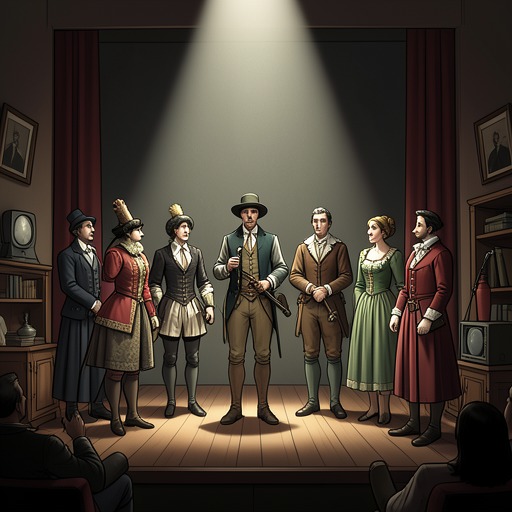
The phrase occurs in a discussion of theatre, where the Duchess distinguishes between writing plays and constructing theatres or painted scenes. She says that critics in her own world condemn her plays as incapable of performance because they are not made according to the Rules of Art. The Emperor’s questions clarify what is at stake: if the purpose of plays is to describe human dispositions, actions, and fortunes, then a rigid method may not be the only measure of theatrical success.
The name “Blinking-World of Wit” turns this disagreement into an image of limited vision. The world’s celebrated wit cannot recognize the merit of descriptions that do not conform to its preferred rules. The phrase is therefore more than a synonym for a rival society: it compresses the Duchess’s complaint that fashionable judgment mistakes convention for artistic necessity.
Artificial Rules and Natural Description
The Duchess concedes that methodical plays are considered good according to the judgment of the age or the fashion of the nation, but she does not accept that judgment as decisive. In her view, plays built to meet those expectations risk becoming “a Nursery of whining Lovers,” rather than an academy or school for wise, witty, noble, and well-behaved people. Her criticism links form to consequence: theatrical conventions do not merely shape how a play is made; they also shape what kinds of characters and conduct the stage encourages.
The Emperor shares her preference for descriptions that are natural rather than artificial and wants a theatre that may make wise men. The exchange gives the phrase its clearest contrast: the Blinking-World of Wit prizes compliance with rules, while the Blazing-World can make room for plays judged by their representation of human life and their capacity to instruct. The Duchess offers to help establish such a theatre on a future visit, though she leaves before doing so.
Authorship and the Blazing-World
The Duchess’s critique also belongs to the book’s account of her literary self-presentation. In her address to noble ladies, she describes the work as an appendix to her Observations upon Experimental Philosophy, separated from philosophical argument so that she might offer readers the fancies of her contemplation. She calls herself a maker of a world of her own, presenting imaginative creation as a form of authorship available even without the power or opportunity to conquer a world in political life.
Against that background, the Blazing-World is not simply a setting in which the Duchess’s plays might find an audience. It is an imagined alternative to the critical world that refuses them: its rulers invite her to advise on theatre, and its Emperor argues that natural descriptions may serve a wiser purpose than fashionable artifice. The Duchess’s promised return remains unfulfilled in this exchange, but the contrast is complete: the world that blinks at her work is set against a world willing to stage it.