Fire-stones
The Blazing WorldFire-stones are moisture-activated weapons used by the Empress to destroy enemy fleets and force resistant nations to submit to the King of Esfi. Their defining property is a reversal of the expected relation between water and fire: when wetted, the stones grow intensely hot and ignite, allowing rain and tidal water to activate devastation on a scale that ordinary weapons could not achieve. They are not merely emblems of the Empress’s authority. Their physical behavior determines the course of her campaigns, from the burning of ships to the destruction of towns and houses.
Nature and operation
The Fire-stones’ special property is established before their military use. The Empress learns of a stone that, when wetted, becomes excessively hot and breaks into flame until it dries. She secures samples in secret, treating the discovery as a means to preserve the religious conversion she has undertaken. In this first context, the stones belong to a plan for making devotion endure; their subsequent deployment turns the same capacity into an instrument of political coercion.
Their operation depends on arranging them where moisture will reach them. In the naval attack, the Fish-men carry them inside diamond cases and are instructed to uncover and wet them only when directly beneath or alongside enemy ships. In the later campaign against towns, the stones are set under house foundations and on rooftops. Rain and moisture in the earth then supply the conditions for ignition. This method makes the weapon effective without requiring an open assault at the moment it is planted: the stones can be concealed in advance, while water completes the attack.
The cases are made of diamonds, whose brilliance in the Blazing-World is said to exceed that of diamonds in the Empress’s native country as pebbles exceed the finest diamonds there. The striking contrast between the glittering containers and the incendiary material within them gives the weapon an appearance of magnificence without softening its purpose. At the same time, the Fire-stones remain materially active: their response to wetness, rather than the Empress’s spectacle or reputation alone, makes the planned destruction possible.
Destruction of the fleets
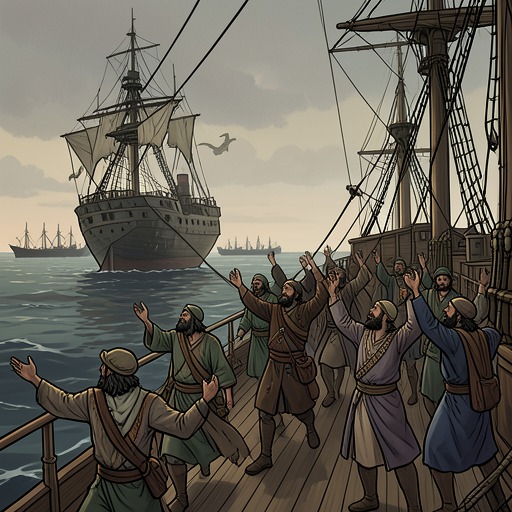
The Empress first employs the stones during her intervention on behalf of her native country. Appearing on the water in imperial robes made of diamonds and carbuncles, she gives the Fish-men instructions for attacking the invading navies. They approach the enemy ships, uncover the stones at close range, and wet them. The resulting fires spread through the fleets; when the flames reach the gunpowder, the ships explode, and the enemy navies are destroyed in a short time.
The attack makes the stones’ effect immediate and decisive. The people of the Empress’s country interpret the destruction as miraculous deliverance and acclaim her as an angel sent by God. She does not return to the Blazing-World after this victory. Instead, she continues the campaign until the rest of the world has submitted to her native nation. The stones thus mark the change from rescue of a threatened country to the imposition of an expansive political order.
When the King of Esfi explains that hostile maritime powers still hinder trade, the Empress offers to burn or sink ships that refuse to pay him tribute. Neighboring nations reject the demand, and she orders the Fish-men to destroy foreign ships engaged in maritime commerce. Faced with the loss of their fleets and trade, the nations negotiate but cannot secure conditions other than submission and tribute to the King of Esfi. The Fire-stones therefore help convert naval superiority into a system of tribute: their threat reaches beyond the ships actually destroyed, making continued commerce conditional on political obedience.
Burning towns and extending submission
Some nations remain outside this arrangement because they can live without foreign trade or rely on overland commerce. The Empress threatens to burn their towns and cities if they refuse to submit. Before the attack, she has the Bear-men use Telescopes to identify the towns and instructs the Bird-men and Worm-men where to begin. She says that the smaller towns will be attacked first, while a continued refusal will turn limited losses into total ruin. The order sets out a graduated threat, but it also shows how observation, advance placement, and the Fire-stones combine in the campaign.
The Worm-men travel beneath the earth, while the Bird-men approach from above. The Worm-men place stones under the foundations of houses; the Bird-men set others on their roofs. The Empress tells the rulers that the smaller towns will serve as a demonstration of her power, and orders the Bird-men to fly by night so their approach will not be detected. Once in place, the stones turn the forecast of an attack into a delayed mechanism: their effect waits on moisture rather than on a visible battle.
The Bird-men learn a few words of the inhabitants’ language and warn them that their towns will catch fire the next time it rains. The warning seems absurd to its hearers, who know water as something that puts fires out. When rain arrives, however, houses burst into flame, and the more water is poured on them, the more fiercely they burn. The reversal transforms the townspeople’s ordinary understanding of rain into a source of terror, while the visible failure of their expectations spreads fear to neighboring cities, nations, and kingdoms. They submit to the King of Esfi to avoid suffering the same fate.
One nation still refuses because it receives little or no rain, only dew that would quickly be consumed in a great fire. The Empress answers this apparent protection by exploiting the country’s annual tide. Although its houses stand high above the ground, their supporting posts are fixed in the earth. The Bird-men and Worm-men place Fire-stones at the bottoms of the supports, and when the tide comes in, the houses ignite. The heat turns the water into vapor and then air; the attack destroys the houses and leaves the country generally barren for that year. The exception is brought into submission by adapting the stones’ use to local conditions rather than abandoning the campaign.
Spectacle, power, and material agency
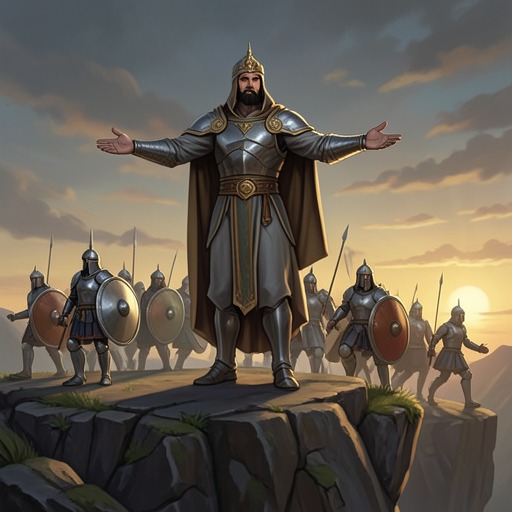
The Fire-stones are also used to stage the Empress’s authority before the princes of the conquered world. She invites them to meet their ships in a large circle at sea, where her vessels close the formation and provide a place for her to appear. At night, the stones are lit, making both air and sea seem to burn. The spectacle frightens the assembled spectators, who believe they are about to be destroyed; the Empress then has the lights extinguished and presents herself in garments of light. The stones move from concealed weapon to controlled display, demonstrating how the same material can serve conquest and theatrical self-presentation.
That display culminates in a performance of forces that seem to belong to sea and sky. The Bird-men carry the Empress through the air, while the Fish-men and Bird-men answer one another in a song that makes the elements appear to speak. The Fire-stones’ light helps produce the scene’s terror, but the Empress also controls when it appears and disappears. The princes’ awe and desire to worship her follow the earlier destruction of fleets and towns: spectacle magnifies a power already established through material consequences.
Across these episodes, the Fire-stones make political command effective through the properties of matter. The Empress chooses targets, directs the Bear-men’s observation and the Bird-men’s and Worm-men’s placement, and sets the terms of submission; yet the outcome depends on the stones’ capacity to ignite when wet and on the different sources of moisture available in each place. Rain and tide are not passive scenery but participants in the weapon’s operation. By turning water into the trigger of fire, the Fire-stones join natural processes to military planning and make resistance costly even where conventional naval pressure cannot reach. Their recurrence traces the Empress’s movement from defending her native country to forcing the world into the tributary order of the King of Esfi.