The Duke of Newcastle's exile and financial ruin
The Blazing WorldThe Duke of Newcastle’s exile and financial ruin form the material and moral history behind his appearances in the narrative: the Civil War has cost him his place, much of his estate, and many of his friends, while the Duchess presents his endurance as inseparable from his honesty and reputation. His losses become a test of the difference between wealth as a means of restoration and wealth as an appetite that can never be satisfied.
Causes and Political Consequences
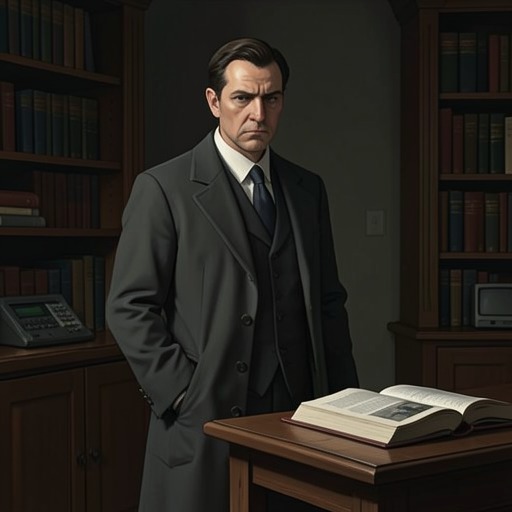
The Duchess explains that the Duke chose the side consistent with his conscience, nature, and education rather than entrusting his reputation to Fortune. In her account, Fortune did not merely withhold favor: she became his open enemy, fought him in several battles, sometimes hand to hand, and eventually overcame him. The consequence was banishment, misery, the ruin of his estate, and the loss of most of his friends. The Duchess stresses that he bore these reversals patiently and continued to respect Fortune’s power, even though she favored others who had opposed her.
The loss is also set against the destruction wrought by a long civil war in the Duke’s homeland. As the Empress and the Duchess’s soul travel through Nottinghamshire, the Duchess says that the war ruined many of the best timber trees and principal palaces. The Duke lost half his woods, as well as houses, land, and movable goods; the losses to his personal estate amounted to more than half a million pounds. The scale is made visible in the journey’s landscape: the Empress remarks on the woods surrounding Welbeck, while the Duchess explains how much timber has already been lost.
Welbeck and the Signs of Loss
At Welbeck, the Duke’s residence is described as useful rather than magnificent. The contrast sharpens when the Empress asks whether he has no other house and learns of Bolsover Castle, five miles away. The Duchess calls it bare and stripped of furniture. The Empress wants to see its structure nonetheless, so the conversation makes clear that deprivation has not erased the buildings themselves, but has left them without the possessions that would make them comfortable or splendid.
The Duke’s losses are not treated as a lack of taste or ambition. Later, when the Duchess sees the Emperor’s magnificent stables and riding house, she says that if her husband had wealth, he would spare none in making his buildings as noble as possible. The Emperor’s double stable holds a hundred horses on each side, with gold, agate, cornelian, amber, mother-of-pearl, crystal, and turquoise in its construction; the riding house is lined with sapphires and topazes. Against this extravagant display, the Duke’s plain residence and unfurnished castle register not indifference to magnificence, but the deprivation that prevents him from realizing it.
The Duchess’s Defense of His Character
The Duchess speaks for her absent husband when Fortune complains that he chose his friends poorly and treated her with disrespect. She answers that his choices proved him wise, and rejects the charge that he slighted Fortune. He had, she argues, served and championed women, risking life and estate in their cause; he simply could not entrust what he valued above life—his reputation—to a power that did not favor the honest and honorable. His choice brought punishment, but the narrative makes the loss of fortune evidence of a moral distinction rather than proof of wrongdoing.
The Duchess also insists that the Duke did not retaliate against Fortune’s favorites. Though he received no favor at her court, he did not injure those she favored and continued to give Fortune the respect due to her power and dignity. Through the Duchess’s defense, exile and ruin become part of a conflict between principled conduct and arbitrary favor: he asks only that Fortune become his friend in the future, having been his enemy in the past.
Wealth, Loyalty, and the Limits of Repair
The Empress wishes that she could give the Duke some of the gold in the Blazing-World to repair his losses. The Duchess accepts the kindness but answers that wishes cannot repair ruins; her husband’s patience, granted by God, is what enables him to bear misfortune. The exchange distinguishes sympathy from restitution: even a ruler with access to extraordinary riches cannot make an offer effective without a passage between worlds.
The Duchess later wonders why the Empress, having found a way to the world of her birth, does not enrich her own family. The Empress replies that she withholds wealth because riches make people mad and drive them to destroy one another. The Duchess counters that scarcity makes people eager for wealth. The Empress rejects that explanation: covetousness, she says, is infinite and grows with abundance. The Duchess does not ask riches for herself; she would want them for her husband’s descendants, and says that she desires no more wealth than he possessed before the civil wars. She would prefer the life-preserving elixir of the Blazing-World to gold or jewels, but recognizes that material things cannot cross worlds as souls can.
This discussion gives the Duke’s losses a continuing consequence beyond the immediate ruin of his estate. The Empress offers wealth and even imagines making the Duchess as powerful a monarch as herself, but the Duchess’s loyalty remains directed toward her husband and his posterity. Her refusal of personal enrichment does not diminish the loss; it defines what she believes wealth should serve. The episode sets the Duke’s former estate against limitless imperial abundance, while leaving his lost property, diminished holdings, and family’s future as matters that riches cannot simply resolve.