The Empress and Duchess’s spiritual journey to the Duchess’s world
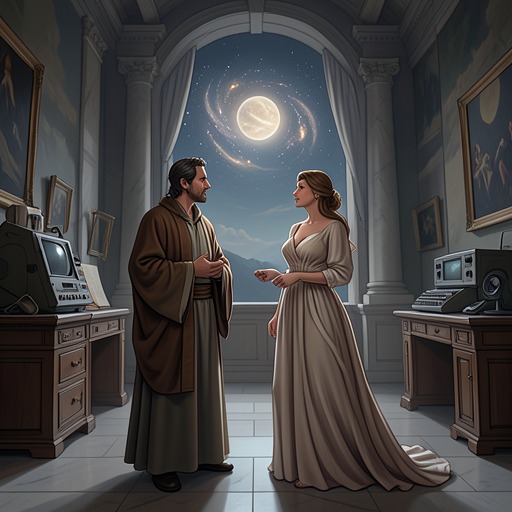
The Blazing WorldThe Empress and Duchess’s spiritual journey to the Duchess’s world is a soul-travel episode that turns a visit into a comparison of political worlds, theatrical conventions, and forms of companionship. Travelling together beyond their bodies, the Empress and the Duchess survey the Duchess’s native world, visit its royal court and theatres, and continue to the Duke of Newcastle’s home. Their observations unsettle any simple contrast between the Empress’s orderly realm and the divided world she visits: even a peaceful empire brings its ruler work and ceremony, while the Duchess’s journey ultimately draws the Empress into an intimate encounter with the Duke and back toward the problem of his long-standing conflict with Fortune.
Departure and the Nature of the Journey
The visit grows out of the Empress’s desire to see the Duchess’s world and observe the different governments, laws, and customs of its nations. The Duchess tries to dissuade her, warning that the world is troubled by factions, divisions, and wars, but the Empress persists. To keep her absence from being discovered, she asks the Immaterial Spirits to provide a substitute in her body while her soul travels. They say that one or more spirits could enter it; the Empress requests a single honest and ingenious spirit, preferably female. The Spirits explain that they have no distinction of sex, but promise a substitute so like the Empress’s soul that neither the Emperor nor his subjects will detect the difference. The Duchess, asked how her own body is governed while her soul is away, says that its sensitive and rational corporeal motions sustain it.
The two women’s souls then travel together, described as moving as lightly as thoughts. In a moment they survey the world and the actions of its inhabitants, especially those of its various nations. The journey is therefore at once a tour and an act of comparison: it gives the Empress a view across many societies, while keeping the Duchess’s world connected to the personal history that will draw the travelers toward the Duke.
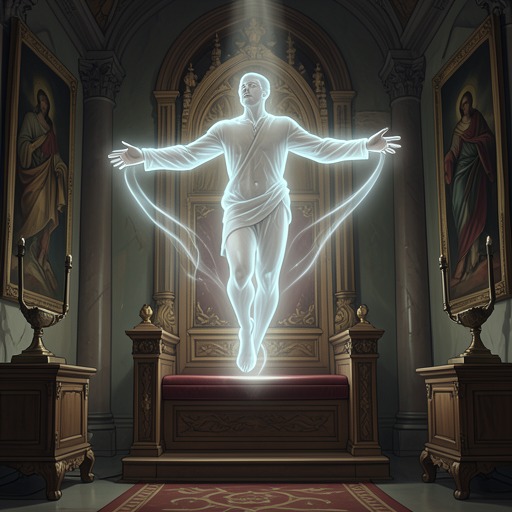
Their invisible presence depends on material vehicles rather than on wholly disembodied passage. The narrator explains that souls cannot travel without vehicles and that these two take the form of the purest, finest air in human shape. Their vehicles are consequently imperceptible to human beings. The episode’s account of spirit travel thus preserves a material condition even as it grants the travelers extraordinary speed and reach.
A Survey of Power, Ambition, and Moderation
Across the nations, the Empress is struck by what she sees as a common human character beneath differences in government, law, religion, and opinion. She observes people as ambitious, proud, self-conceited, vain, prodigal, deceitful, envious, malicious, unjust, revengeful, irreligious, and factious. States and kingdoms, she notes, are not content with their own shares but seek to encroach on their neighbours. Their glory lies in plunder and slaughter, yet victory brings returns smaller than its expenses, while defeat can mean ruin. Most striking to her is the tendency to value material wealth above human life and vanity above tranquillity.
The Duchess turns the Empress’s criticism back toward her own experience. It is surprising, she observes, that a ruler of a peaceful, obedient world should speak so critically of sovereignty. The Empress agrees that her rule is more trouble than pleasure: order requires industry, contrivance, and direction, and the magnificent state expected of great princes is itself burdensome. The exchange distinguishes political command from personal happiness. The Duchess concludes that moderation is the greatest happiness in all worlds, and the Empress assents.
The pair visit assemblies and congregations concerned with religion and state, as well as courts of justice, and discuss the rulers they have encountered. The Empress regards the Grand Signior as the greatest monarch because his word is law and his power absolute. The Duchess qualifies that judgment: he cannot alter Mahomet’s laws and religion, so the law and church also govern him. The Empress replies that he can appoint and remove officials in church and state, giving him command in practice. Their disagreement makes sovereignty a question of both formal limits and the power to control appointments.
The Duchess then proposes that they visit the monarch whose dominions are smaller but, in her view, stronger, whose laws are easy and safe, and whose just and wise rule makes his subjects the happiest in that world. The Empress agrees to see him. The visit shifts from general comparisons of authority toward a particular court—and toward the Duchess’s desire to meet the Duke of Newcastle, who lives far from the royal seat.
The Theatre and the Royal Court
In the metropolitan city, the Empress sees people entering a theatre and learns from the Duchess that it is a place where comedies and tragedies are performed. After watching a play, she praises the recreation but distinguishes the elements she finds most successful: the actors make a better show than the spectators, the scenery a better one than the actors, and the music and dancing are more agreeable than the play. She reads the scenery as standing for wit, the dancing for humour, and the music as the chorus.
The Duchess warns that the wits of her world would condemn such a judgment. The Empress defends her preference for natural faces and humour over artificial display, and for music over what she calls a true and profitable relation. Their discussion turns to the relation between dramatic novelty and inherited material. The Duchess acknowledges that most plays draw on old Greek or Roman stories, or on stories from newly discovered worlds, but argues that new actions combined with old stories, new prologues, scenes, music, and dancing make new plays. The encounter presents theatrical form as a mixture of received plots and fresh performance, while exposing a difference between the Empress’s preference for what seems natural and the theatrical conventions the Duchess describes.
At court, the Empress sees the King, Queen, and royal family with the principal nobles of their dominions. She admires the King for combining majesty with affability without letting either quality eclipse the other. She praises the Queen’s virtue and piety and sees the royal family as possessing a divine splendour. Hearing the King speak, she imagines that Mercury and Apollo might have instructed him; the Duchess adds that her own dear lord and husband had been his earthly governor.
The court visit also marks the point at which the Duchess’s purpose becomes urgent. After a short stay, she grows melancholy because she longs to converse with her husband and can endure no longer delay. The Empress asks her to wait until the King, Queen, and royal family have retired, then promises to accompany her to the Duke, who lives in the country about 112 miles away.
Nottinghamshire and the Duke of Newcastle
The travelers’ destination is Nottinghamshire. Passing through Sherwood Forest, the Empress admires its dry, level, wooded character and finds it pleasant to travel through in both winter and summer, neither very muddy nor dusty. They reach Welbeck, where the Duke lives, a house closely surrounded by dense woods. The Empress remarks that she has seen more wood in a smaller compass nowhere else in the kingdom, and jokes that the sea seems to contain more wood than the land, referring to ships.
The Duchess explains the contrast between the wooded estate and the destruction she has seen elsewhere: a long civil war has ruined many of the kingdom’s best timber trees and principal palaces. Her husband has lost half his woods, along with houses, land, and movable goods; the losses to his estate amount to more than half a million pounds. The Empress wishes that he could have some of the gold in the Blazing-World to repair the damage. The Duchess thanks her for the kind wish but notes that wishes cannot rebuild what has been lost; she says that God has given the Duke patience with which to bear his losses and misfortunes.
Welbeck, the Empress observes, is useful rather than magnificent. The Duchess tells her that the Duke also owns Bolsover Castle, about five miles away, although it is unfurnished. The Empress wants to see it for its structure and design. Before they go, the Duke comes into the courtyard to watch his horses at the manage. The Duchess is so overjoyed at seeing him that her aerial vehicle becomes unusually radiant, which the narrator presents as evidence that the passions of souls or spirits can alter their bodily vehicles. The Duke cannot see the two visitors. The Empress watches the riding exercise and approves of it as suitable to noble and heroic people.
When the Duke goes inside to practise swordsmanship, the Empress is again impressed, calling him an excellent and unparalleled master. The Duchess, concerned that he is exercising violently before a meal and may overheat himself, leaves her aerial vehicle and enters his body. The Empress follows her. For a time, the Duke’s body contains three souls: his own, the Duchess’s, and the Empress’s. The narrator playfully calls the arrangement a Platonic seraglio, distinguishing this spiritual companionship from an ordinary household arrangement.
Companionship, Return, and the Unresolved Dispute
The Duke’s soul, described as wise, honest, witty, complaisant, and noble, delights the Empress through conversation. He entertains her with scenes, songs, music, witty discourse, recreation, and harmless sports. The three souls enjoy their conversation so much that time passes faster than they expect. The scene carries the journey from public observation into a more intimate form of encounter: the Empress’s friendship with the Duchess now includes an attachment to the Duchess’s husband, while the Duchess initially feels jealous.
The Duchess overcomes that jealousy by reasoning that no adultery can occur among Platonic lovers and that Platonism is divine. Her response preserves the distinction between spiritual affection and bodily infidelity, allowing the three souls’ companionship to remain, in the narrative’s terms, harmless. The episode treats the Empress’s affection not as a break with the Duchess but as an enlargement of the unusual intimacy the two women share.
That companionship cannot continue indefinitely. A Spirit tells the Empress that, although neither the Emperor nor his subjects know her soul is absent, the Emperor has become so sad and melancholy without his beloved that the whole court has noticed. The Empress must return to the Blazing-World and her own body. The Duke’s and Duchess’s souls regret her departure and wish she could stay longer, but accept that she must go. Her concealed absence has protected her from discovery, yet the Emperor’s visible grief gives the journey a personal cost and a reason to end.
Before the Empress leaves, the Duchess asks her to arrange an agreement between the Duke and Fortune. She says they have been enemies ever since she became his wife and that the Duke has complained that Fortune has crossed him for as long as he can remember. The Empress cannot speak with Fortune directly without help from an Immaterial Spirit, and says that she has no Fly-men or Bird-men with her to send into the air, where spirits mostly dwell. The Duchess suggests that the Duke send a lawyer, but the Empress fears Fortune would bribe the lawyers and that the Duke would lose his case. Instead, she proposes that each side choose a friend and that the two friends try to compose the difference. The Duchess objects that no agreement will hold without a judge or umpire. The Empress agrees that an impartial judge is difficult to find in nature or hell and could come only from heaven, leaving the dispute unresolved at the end of this episode. The journey thus closes not with a settlement but with a new proposed task, linking the Duke’s domestic misfortunes to the Empress’s continuing negotiations between worlds and their inhabitants.