Dennis Lachance
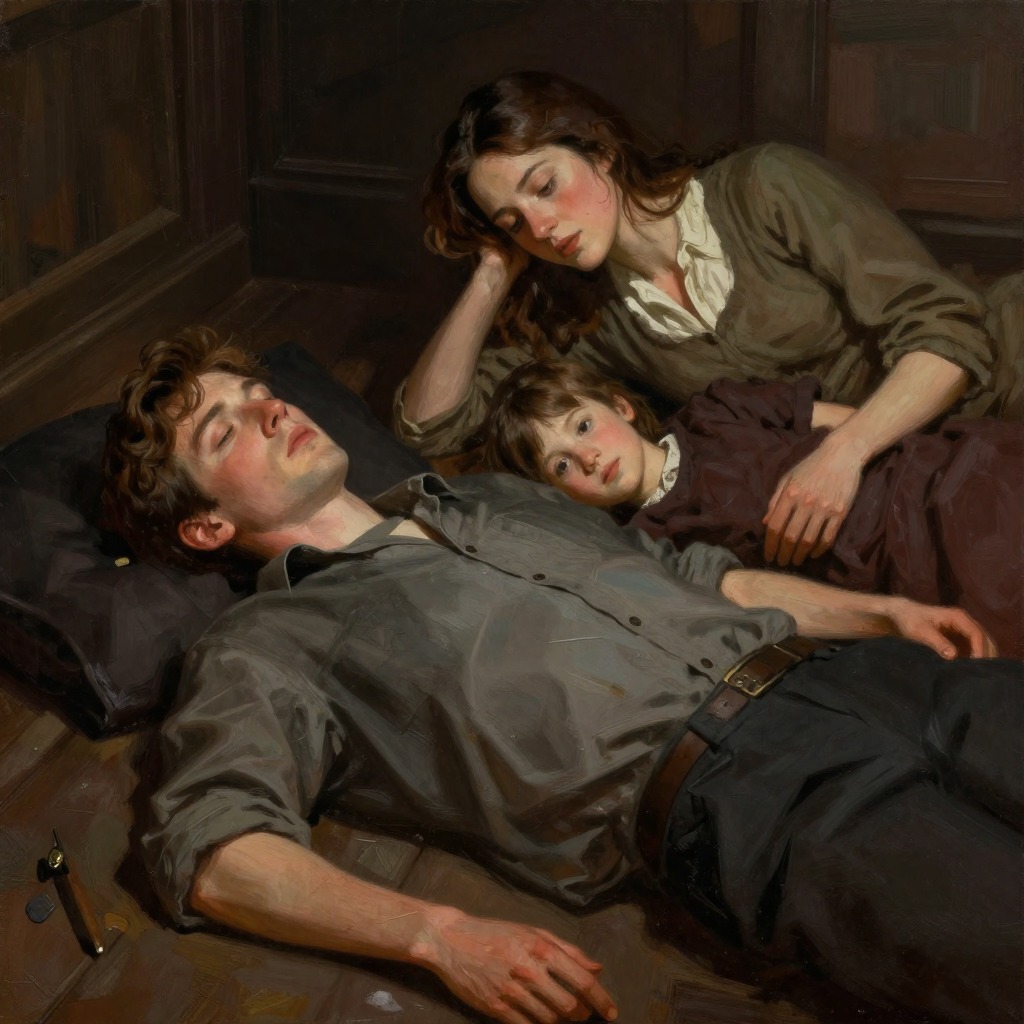
The BodyDennis Lachance, called Denny, was Gordon Lachance's older brother by ten years. He was killed in a Jeep accident at Fort Benning, Georgia, in April 1960, while serving in the United States Army. An Army truck hit the Jeep broadside; Dennis was killed instantly, and his passenger remained in a coma. The death occurred just before Dennis would have turned twenty-two, and Gordon had already picked out a birthday card for him. Dennis's death is the emotional wound at the center of Gordon's childhood, the event that made Gordon feel like the Invisible Boy in his own home and that his parents, already older—his father was sixty-three, his mother fifty-five—fell to pieces and never fully recovered.
Life and Relationship with Gordon
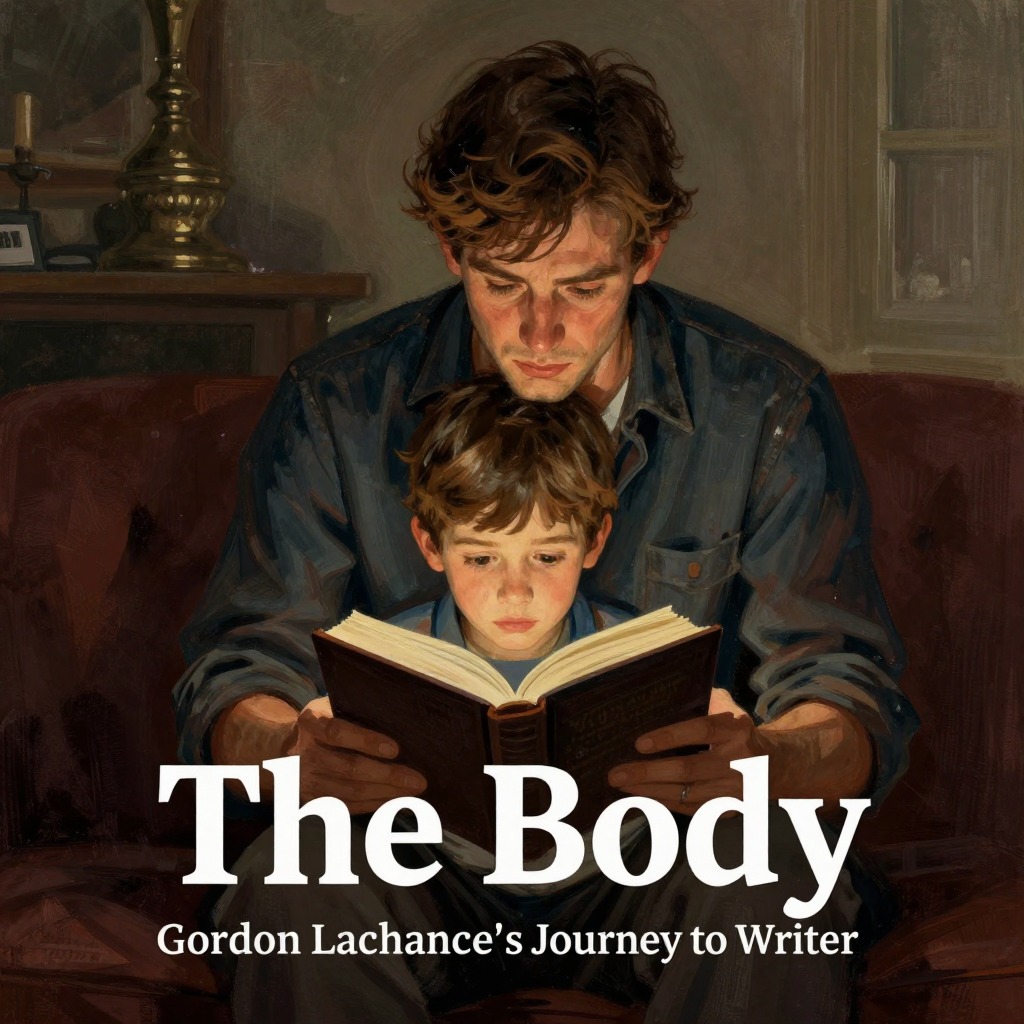
Dennis was a star athlete, an All-Conference halfback in high school, and the focus of his parents' attention. At the supper table, the conversation always revolved around Denny: how many strikeouts he had, who asked him to dances, whether the Army was the right choice. Gordon, sitting at the same table, would ask for the butter and be ignored, his parents continuing to talk to Dennis as if Gordon had not spoken. Once, when Gordon was nine, he deliberately said "Please pass those goddam spuds" just to see if anyone would notice; his mother responded by asking Dennis about a call from Auntie Grace. The night Dennis graduated with honors from Castle Rock High School, Gordon played sick, stayed home, bought a bottle of Wild Irish Rose, drank half of it, and vomited in his bed. Despite this painful dynamic, Dennis was not cruel to Gordon. He rarely argued with him and never fought him; he took Gordon along sometimes of his own free will, and those were among Gordon's happiest memories. Dennis taught Gordon how to play cribbage and how to do a box-shuffle, skills the other boys envied. He also read Gordon bedtime stories—not the usual ones, but tales of Bluebeard and Jack the Ripper, and a version of Billy Goat's Gruff where the troll won. Gordon later reflected that his feelings for Dennis evolved into "an almost clinical awe," and that when Dennis died, he was "mildly shocked and mildly sad," comparing it to hearing that Dan Blocker had died—he had seen them both about as frequently.
Death and Aftermath
Dennis was buried in a closed coffin with an American flag on top; the flag was later folded and given to his mother. His room was preserved in "suspended animation"—Ivy League pennants on the walls, senior pictures of girls tucked into the mirror, stacks of True and Sports Illustrated on his desk. Gordon found this preservation terrible, not sentimental. He dreaded going into Dennis's room, especially the closet, imagining that Dennis would be there, pallid and bloody, the side of his head walloped in, croaking, "It should have been you, Gordon." This childhood fear later surfaced in Gordon's early story "Stud City," where the protagonist Chico has a similar vision of his dead brother Johnny in the closet. Gordon acknowledged that the story was the first he ever wrote that felt like his own, and that it contained too much of Dennis, too much of Castle Rock, too much of 1960—and that was why he never showed it to his parents.
Narrative Role and Thematic Significance
Dennis's death is the absent center of the novel, the event that makes Gordon's parents emotionally unavailable and drives Gordon toward his friends and his writing. Gordon's grief is complicated: he cried at the funeral, but later realized that most of his tears were for his parents, not for Dennis, whom he knew only as "just a guy." The loss of Dennis also fuels Gordon's sense of being overlooked, a feeling he later identified with the protagonist of Ralph Ellison's Invisible Man. In the novel's final chapter, Gordon, now a successful writer, reflects on the urge to go back and find Ray Brower's lost blueberry bucket, and the thought that follows—"Which boy do you mean?"—ties together the two dead boys, Dennis and Ray, and the living boy Gordon once was. Dennis's death, though it happened before the story's main action, is the foundational loss that shapes Gordon's identity as a storyteller and as a survivor.