Mr. Chambers
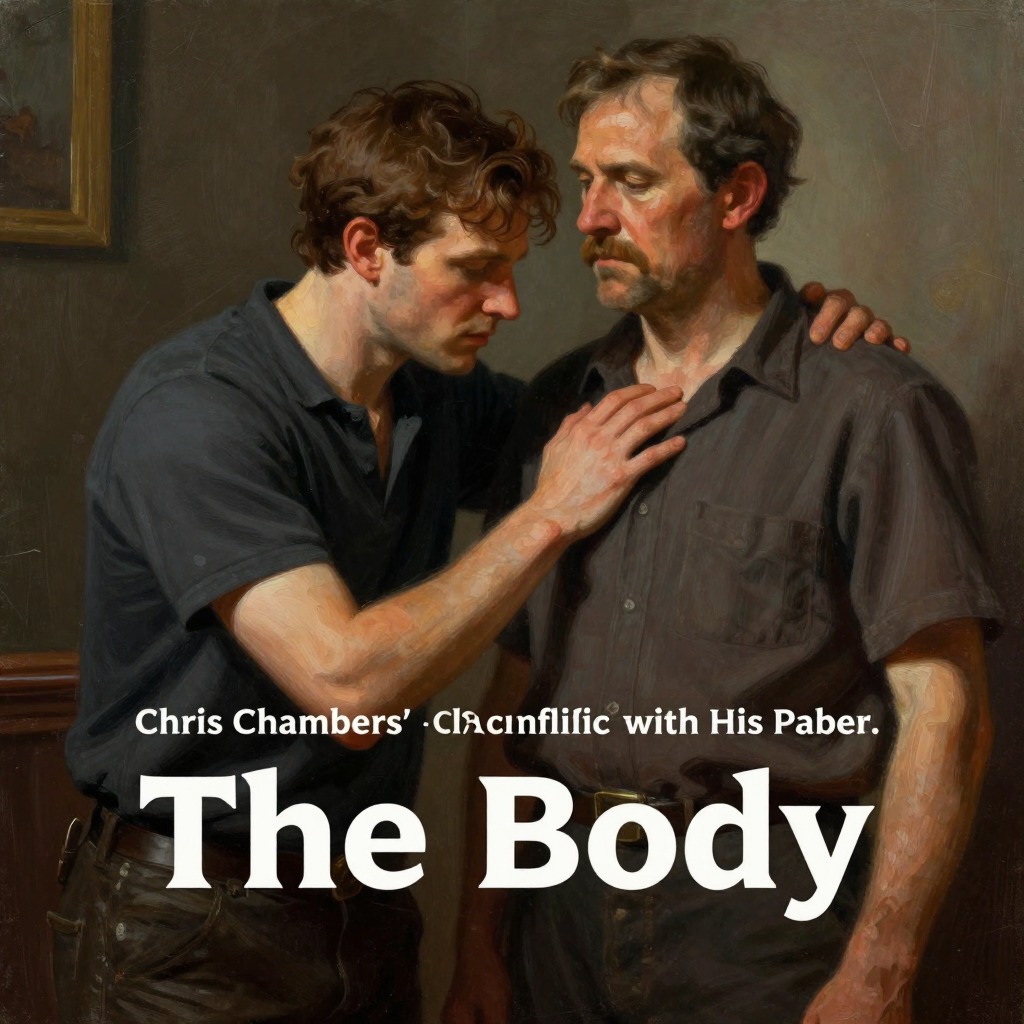
The BodyMr. Chambers is the alcoholic, abusive father of Chris Chambers, and his violent, unpredictable rages form the central domestic horror from which Chris spends his childhood trying to escape. A drunk who relies on welfare "off and on—mostly on," he spends most of his time at Sukey's Tavern with other local rumpots, and his "mean streak" is a constant, cyclical threat that shapes every aspect of Chris's life at home and at school.
Identity and Background
Mr. Chambers is a man defined by his drinking and his violence. He is a regular at Sukey's Tavern, where he drinks with Junior Merrill and other local alcoholics. The family lives in a three-room house—little more than a shack—with no indoor plumbing and broken windows covered with plastic. The Chambers family is regarded by the town as "poor white trash; shanty Irish," and Mr. Chambers embodies that reputation through his behavior. His eldest son, Frank, ran away at seventeen, joined the Navy, and ended up serving a long prison sentence in Portsmouth for rape and criminal assault. His next-eldest son, Richard (called Eyeball), dropped out of high school in the tenth grade and runs with Ace Merrill's juvenile delinquent crowd. Mr. Chambers's violence is not merely a personal failing but a generational inheritance that the town expects Chris to replicate.
Violence and Abuse
The abuse Mr. Chambers inflicts on Chris is systematic and severe. Chris is "marked up every two weeks or so" with bruises on his cheeks and neck, a swollen eye "as colorful as a sunset," and once a "big clumsy bandage on the back of his head." On other occasions Chris simply does not come to school at all; his mother calls him in sick because he is "too lamed up to come in." The worst documented beating occurs after Chris is suspended from school for three days on suspicion of stealing milk money. When Mr. Chambers hears about the suspension, he breaks Chris's nose and his right wrist, putting Chris in the hospital for an overnight stay. The town truant officer, Bertie Halliburton, knows the pattern: if Chris is truant, he hauls him back to school; if Chris is home because his father has beaten him, Bertie "just went away and didn't say boo to a cuckoo-bird." The violence is so routine that it is treated as a fact of life rather than a crime.
Relationship with Chris
The relationship between Mr. Chambers and Chris is one of pure antagonism. Chris "hated him like poison" and never talks about him except in the most guarded terms. When Chris decides to enroll in college-preparatory courses in junior high, his father hounds him relentlessly, accusing Chris of thinking he is "better than his old man" and of wanting to go to college "so you can turn me into a bankrupt." On one occasion, Mr. Chambers breaks a Rhinegold bottle over the back of Chris's head, sending Chris to the Central Maine General Emergency Room for four stitches. The father's violence is not just physical but psychological: he actively tries to prevent Chris from escaping the cycle of poverty and abuse that defines the Chambers family. Chris's response is a quiet, determined resistance. He steals his father's .45 pistol from his bureau—a loaded weapon Mr. Chambers keeps despite his drunkenness—and carries it on the trip to find Ray Brower's body. When Eyeball later breaks Chris's arm in two places, Chris does not name his brother to the police; instead, he has a neighbor tell his mother to remove the lightbulb from the cellar socket, ensuring that the evidence of the beating cannot be seen. Chris's silence is a survival strategy learned from years of living under his father's roof.
Narrative Role and Significance
Mr. Chambers functions as the embodiment of the deterministic trap that Castle Rock represents for its lower-class children. He is the reason Chris believes he will never escape: "I'm never gonna get out of this town," Chris tells Gordon, and his father's violence is the most immediate proof of that belief. The town's expectations—that a Chambers boy will turn out bad—are reinforced by Mr. Chambers's behavior, and Chris must fight against both his father's abuse and the town's low expectations. Mr. Chambers's alcoholism and violence are not presented as exceptional but as typical of the "shirttail" families in Castle Rock, a structural condition that the educational system and the truant officer tacitly accept. Chris's eventual death—stabbed in the throat while trying to make peace in a Portland restaurant—is a tragic irony: the boy who survived his father's beatings and his brother's assaults dies not from the violence he was born into but from the very peacemaking instinct that made him different from his family. Mr. Chambers, by contrast, remains alive, a static figure of the life Chris refused to accept.