Ray Brower
The BodyRay Brower is the twelve-year-old boy from Chamberlain, Maine, whose dead body becomes the object of a quest by four Castle Rock boys—Gordon Lachance, Chris Chambers, Teddy Duchamp, and Vern Tessio—over the Labor Day weekend of 1960. His corpse, struck and killed by a freight train on the GS&WM Railroad tracks near the Back Harlow Road, is the silent center around which the novella's themes of mortality, lost innocence, and the painful transition from childhood to adulthood revolve. Though he never appears alive, his death catalyzes the story's central journey, its moral confrontations, and its lasting psychological impact on the narrator, Gordon Lachance.
Disappearance and the Search
Three days before Vern Tessio burst into the treehouse with his news, Ray Brower had gone out with one of his mother's pots to pick blueberries near his home in Chamberlain, a town about forty miles east of Castle Rock. When he did not return by dark, the Browers called the county sheriff, and a search began—first around the boy's house, then spreading to the surrounding towns of Motton, Durham, and Pownal. Cops, deputies, game wardens, and volunteers all joined the effort. The radio news reports that the boys heard on their Philco, tuned to WLAM in Lewiston, made it clear that the search was not expected to find him alive; they were already dragging the ponds in Chamberlain and the Motton Reservoir. The area between Chamberlain and Castle Rock was still undeveloped in 1960, with places that had not been logged since before World War II, making it possible to walk into the woods, lose direction, and die there.
The Circumstances of Death
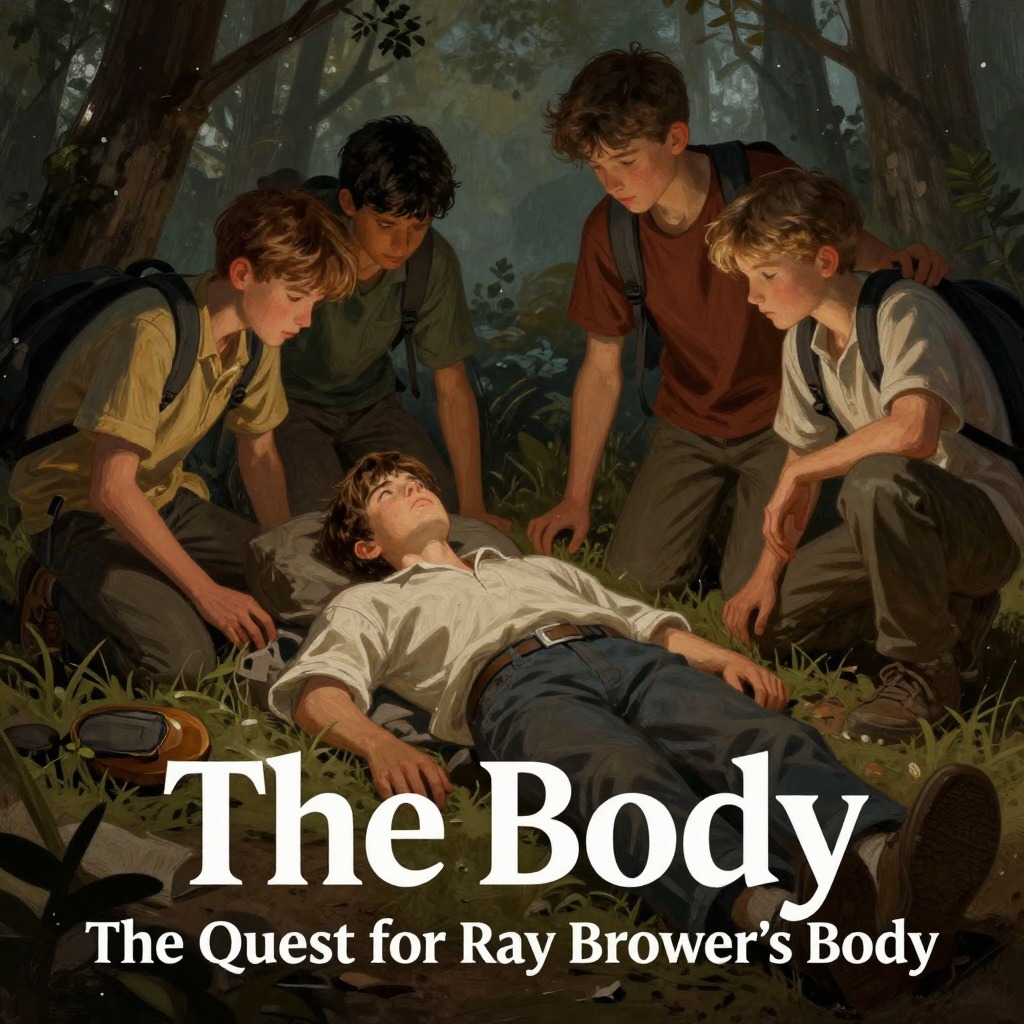
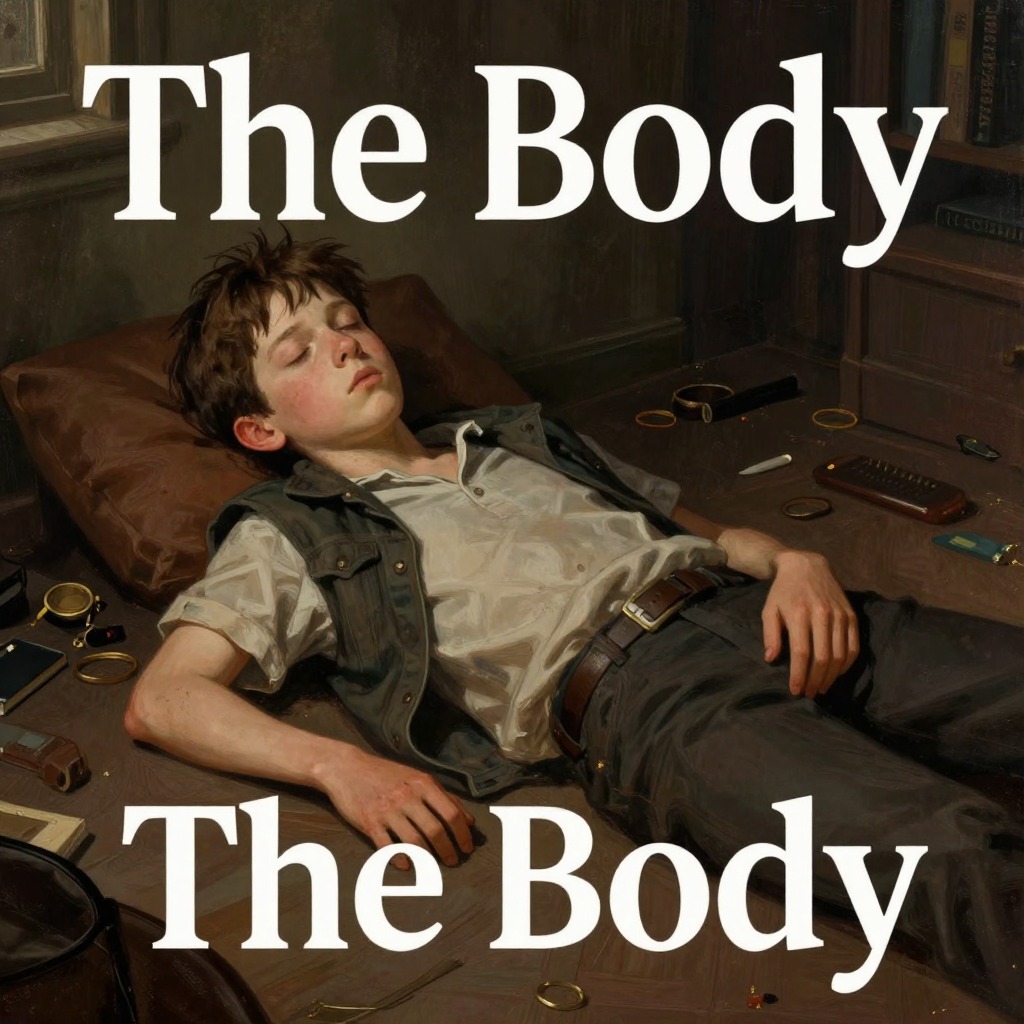
Ray Brower's body was discovered by the four boys in a boggy patch of undergrowth at the bottom of a washout on the GS&WM railroad embankment, near where the Back Harlow Road dead-ends at the Royal River. He had been hit by a train. The impact was violent enough to knock him out of his Keds sneakers, which were found caught in blackberry brambles a few feet away from his body. He was lying face down when first seen, with only a single pale white hand visible, sticking out of a tangle of brambles. When the boys turned him over, they saw that his torso had begun to swell and there was a faint gassy odor about him. His eyes were open but out of sync—one rolled back so far that only a tiny arc of iris was visible, the other staring straight up. The right side of his face was lacerated and darkly bruised, and there was a dried froth of blood above his mouth and on his chin. A beetle came out of his mouth and trekked across his cheek. Black ants trundled back and forth across his hand. The boys also found his bare feet and, a few feet behind him, his filthy low-topped Keds caught in the brambles, a detail that drove home the force of the impact that had killed him.
The Body as Prize and Symbol
Ray Brower's corpse becomes a contested prize between two groups of boys. Billy Tessio and Charlie Hogan, who had been joyriding in a boosted car with their girlfriends, had seen the body first and, panicked, decided to say nothing. When Vern Tessio overheard them from under the porch, the secret spread. The four younger boys set out to find the body and report it, hoping to become heroes and get their pictures in the paper. But Billy and Charlie's story leaked to Ace Merrill and his gang, who set out in two cars to claim the discovery for themselves. The confrontation in the pouring rain, with Chris Chambers holding his father's .45 pistol, ends with the younger boys abandoning the body rather than risk reform school or worse. In the end, Ace Merrill made an anonymous phone call to report the location, and neither group got the credit. The body was found, but the story of how the boys had spent their Labor Day weekend never came out.
Narrative and Thematic Significance
Ray Brower never speaks or acts in the story, yet his death is the engine of the plot and the catalyst for the boys' rite of passage. For Gordon Lachance, the adult narrator, the image of the dead boy recurs throughout his life. He imagines Ray Brower's final hours—lost, frightened, perhaps clutching his blueberry bucket as a link to home, then throwing it away as real terror set in. The narrator confesses to a recurring fantasy of returning to the old GS&WM line to search for that bucket, a symbol of his own living connection to the past and his need to understand which boy he really was: the one who walked away or the one who stayed dead. The memory of Ray Brower's body, and especially the detail of his sneakers knocked off by the train, becomes a touchstone for the narrator's understanding of mortality, the thin film between rational adulthood and the capering myths of childhood. The most important things, the narrator reflects, are the hardest things to say, and Ray Brower's silent corpse embodies that truth.