United States Army
The BodyThe United States Army casts a long shadow over the lives of the boys in Castle Rock, functioning as both a symbol of heroic aspiration and a vector of profound family trauma. Its presence is felt most acutely through the story of Norman Duchamp, Teddy's father, and through the death of Dennis Lachance, Gordon's older brother, shaping the characters' identities, their understanding of masculinity, and their dreams of escape.
Norman Duchamp and the Legacy of Normandy
Teddy Duchamp's identity is inextricably bound to his father's service in the Army. Norman Duchamp, a veteran who "stormed the beach at Normandy," is the source of Teddy's deepest pride and his deepest wound. Teddy constantly invokes his father's military past, claiming that his own reckless acts, like dodging trucks on Route 196, are akin to the heroism of the Normandy invasion. When Teddy attempts to dodge a train on the railroad trestle, he yells, "Just like the beach at Normandy!" This connection is not merely boastful; it is a desperate attempt to find meaning and valor in his father's violent legacy. The reality of Norman Duchamp's service is far darker: after the war, he suffered a severe mental breakdown, was classified as a "section eight" case, and was committed to the Togus VA Hospital. His trauma manifested in horrific domestic violence, most notably when he held Teddy's head down on a hot cast-iron stove burner, permanently disfiguring his ears and causing hearing loss. Despite this, Teddy remains fiercely loyal, defending his father against anyone who calls him a "loony." When Milo Pressman, the dump keeper, taunts Teddy by calling his father a "loony up in Togus," Teddy flies into a rage, screaming, "My dad stormed the beach at Normandy, you fucking wet end!" The Army, for Teddy, represents a noble ideal of courage and sacrifice that stands in stark, painful contrast to the broken, abusive man his father became.
Dennis Lachance and the Cost of Service
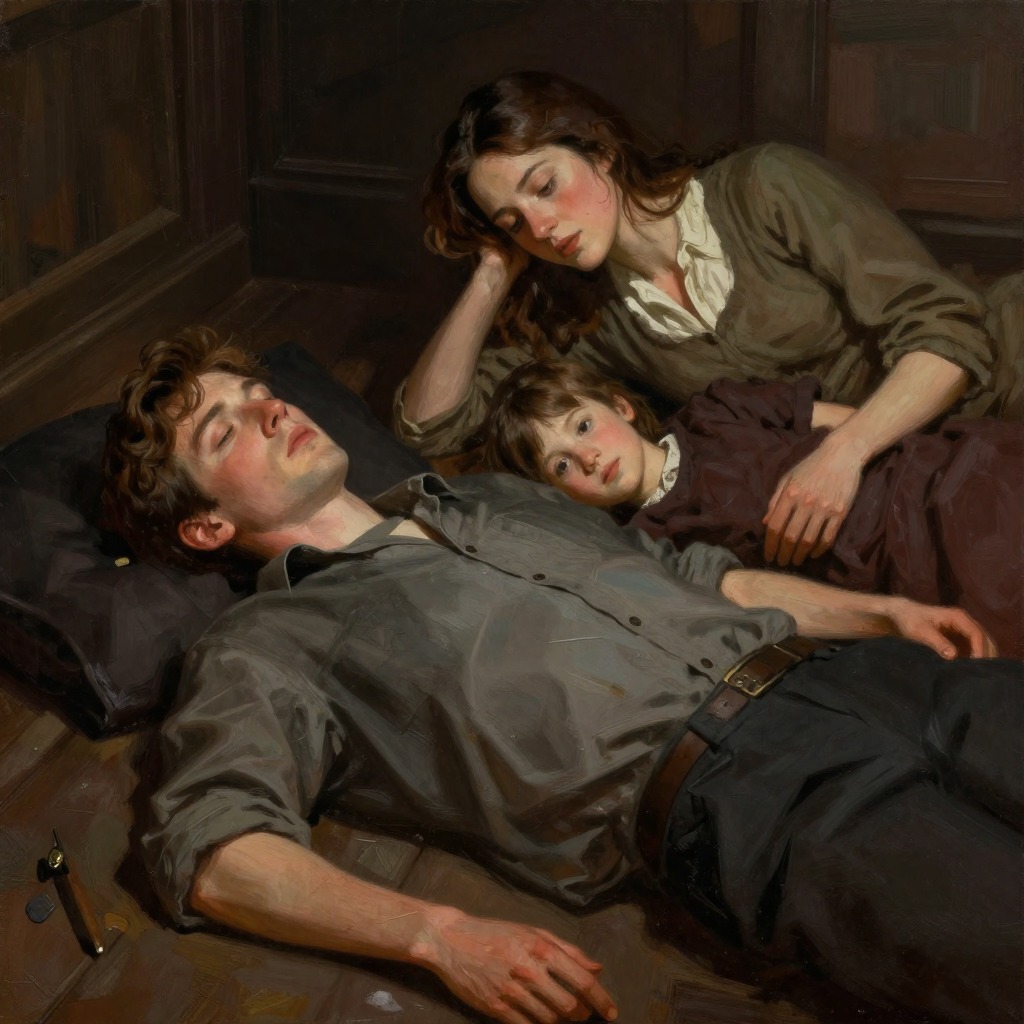
The Army is also the direct cause of a devastating loss in the Lachance family. Gordon's older brother, Dennis, was killed in a Jeep accident at Fort Benning, Georgia, while he was in Basic Training. An Army truck hit the Jeep broadside, killing Dennis instantly. This event shatters Gordon's parents, leaving them emotionally hollow and unable to properly attend to their younger son. Gordon reflects that his parents "just fell to pieces" and that four months had not been enough to put them back together. Dennis's death creates a void in the family, making Gordon feel like an "Invisible Boy" in his own home, as his parents remain fixated on their lost golden child. The Army, in this context, is not a source of pride but an engine of arbitrary, senseless death, a force that takes a beloved son and leaves a family in ruins.
The Army as a Symbol of Escape and a Lost Future
For the boys, the Army also represents a potential path out of the limited, predetermined futures of Castle Rock. Teddy's entire life goal is to join the military, a dream that is brutally crushed when he is classified 4-F by the draft due to his poor eyesight and hearing aid. This rejection is a devastating blow, contributing to his downward spiral. The novel also uses the Army as a benchmark for a conventional, masculine rite of passage. The adult Gordon Lachance, reflecting on the journey to find Ray Brower's body, compares it to other fundamental life events, including "going into the Army." The Army, therefore, is a complex symbol: a place of heroic sacrifice for Teddy, a place of tragic death for Dennis, and a lost opportunity for escape for both Teddy and, in a different way, for Chris Chambers, who dreams of a life beyond the mill town's expectations. It is an institution that both creates and destroys the men of Castle Rock, leaving a legacy of pride, trauma, and unfulfilled longing.