
From Illiteracy to Authorship
The Book ThiefThis flow traces Liesel Meminger’s intellectual development from inability to read toward confident literary creation.
increasing Bearing strength in each event
 decreasing
Bearing strength in each eventdecreasingThe Three Articles
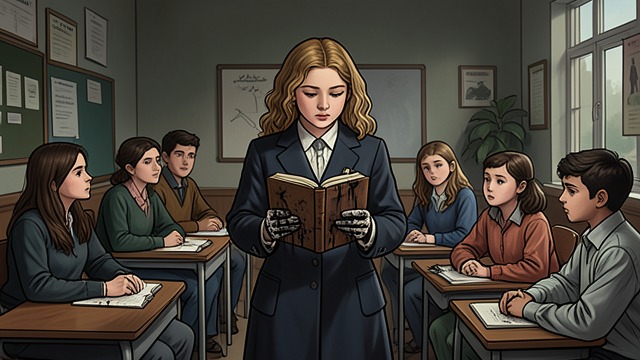
The Three Articles
School Humiliation
Liesel can identify only a few German articles while classmates read publicly. Her failure leaves her feeling physically enormous and intellectually exposed.
Desire to Improve
The humiliation does not end her interest in words. It gives her a private challenge that Hans later helps her accept.
Painted Alphabet

Painted Alphabet
Starting from Scratch
Hans Hubermann abandons the difficult grave-digging text and draws letters on sandpaper. The alphabet becomes manageable through objects, sketches, and humor.
Learning Through Affection
Liesel’s progress depends on the safety of the lesson. The alphabet is memorable because every letter carries Hans’s voice and presence.
Wall of Words
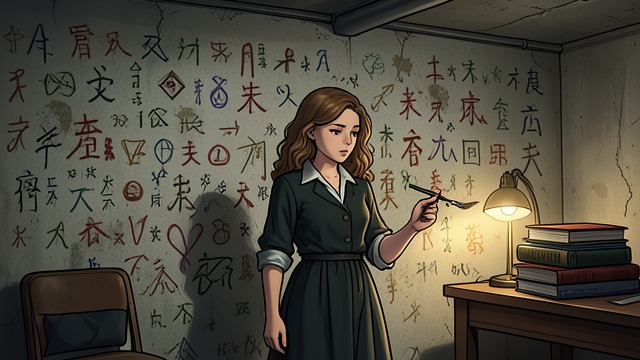
Wall of Words
Paint as Text
Liesel spells words and paints them across the basement wall. The room gradually becomes a record of acquired language.
Private Authority
The wall belongs to no classroom or official. It is a place where Liesel can make mistakes, correct them, and claim language as her own.
Reading in Public
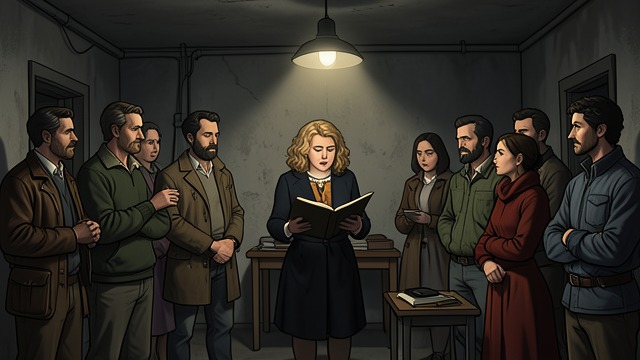
Reading in Public
A New Competence
Liesel reads aloud in the Fiedlers’ basement while adults and children wait through a raid. Her voice no longer represents school failure.
Communal Authority
The frightened room listens because Liesel can give shape to fear. Literacy has become a social power rather than a private achievement.
Writing the Self

Writing the Self
The Blank Pages
Ilsa Hermann gives Liesel a black book and encourages her to write. Liesel initially watches the pencil before beginning.
Narrative Control
She records the dead, the living, and her own failures. Authorship lets her shape experience without pretending that words can undo it.
Early 1939
Late May 1939
Summer 1939
September 1942
September 1943
