Liesel writing The Book Thief
The Book ThiefLiesel writing The Book Thief is the decisive act through which a girl who first encountered books through theft, instruction, and loss becomes the author of her own account. The manuscript gathers the basement, the books that marked her life, Max Vandenburg’s images, the violence surrounding 33 Himmel Street, and the emotional contradictions of language into a form that can endure after the people and places themselves have been destroyed.
The Gift That Begins the Manuscript
Three days after Liesel has offended Ilsa Hermann in the library, Ilsa comes to 33 Himmel Street without her usual bathrobe and offers an unexpected reconciliation. She gives Liesel a small black book whose lined pages contain no story. Instead, it is an invitation to write. Ilsa recognizes that Liesel can write well and urges her not to punish herself for what she has done or for the pain she carries. The gift changes the meaning of the book thief’s relationship with books: reading is no longer only something received, borrowed, or stolen, but a practice through which Liesel can make something of her own.
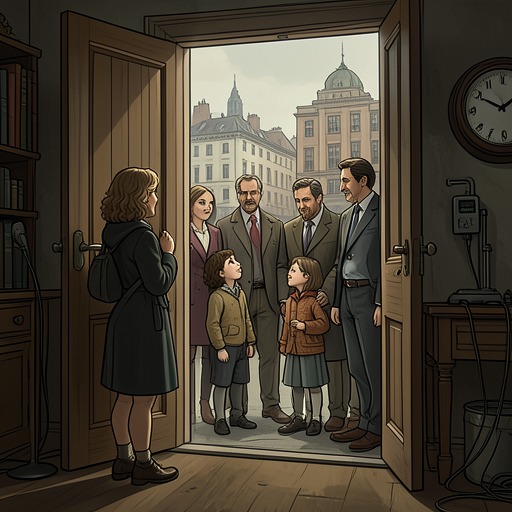
The notebook also gives Liesel a reason to return to the basement, the place that has first held her lessons with Hans Hubermann and later sheltered her time with Max Vandenburg. Its physical associations make the writing inseparable from secrecy, domestic intimacy, and danger. Ilsa therefore gives Liesel more than paper. She gives her a private working place and a way to understand that words have helped bring her into being. The manuscript begins in an environment that is both refuge and reminder: the basement preserves memory, but it also contains the knowledge of what must remain hidden.
The Work of Remembering
At night, while Mama and Papa sleep, Liesel goes downstairs, lights the kerosene lamp, and sits with a small paint can for a seat and a larger one as a table. At first she merely watches the pencil and paper. She makes herself remember and refuses to look away, turning writing into a deliberate confrontation with experience rather than an escape from it. The physical awkwardness of the process matters: her hand is sore by the third page, and the effort of putting memory into language is presented as bodily labor.
On the first page she writes the title, The Book Thief, followed by the words “a small story” and her own name, Liesel Meminger. The act of naming establishes authorship with unusual directness. She is not simply the subject of a story told by another voice; she identifies herself as the person responsible for arranging it. Yet the modest subtitle also registers the distance between the small scale of her chosen title and the enormity of the world she is trying to contain. Her story is located in one girl’s life, but that life has been shaped by war, persecution, concealment, and death.
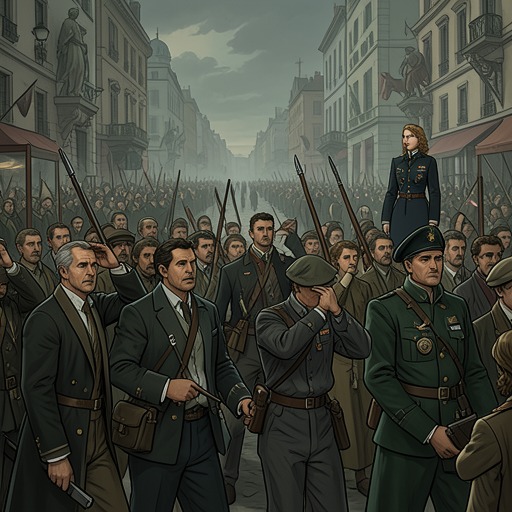
The first section she writes is titled “THE RIB-CAGE PLANES.” The image connects the machinery of bombing with the human body and places the threat of the outside world inside the structure of her narrative. Writing proceeds under conditions of interruption and fear. The family has learned to behave as though nothing has changed even after Max Vandenburg arrives at 33 Himmel Street; Hans must continue playing the accordion often enough to avoid suspicion, while the household manages the terror of hiding a Jewish man in Nazi Germany. Liesel’s manuscript grows within that performance of ordinary life, making private memory a counter-record to the public pretense that everything remains normal.
Structure and Completion
By the next air raid, on October 2, Liesel has finished the manuscript. Only a few dozen pages remain blank. The book is divided into ten parts, each named for a book or story and each describing how that work affected her life. This structure makes literature the organizing principle of memory. Events are not preserved as an undifferentiated sequence; they are grouped according to the books through which Liesel learned to read, understood other people, and came to recognize the force of words.
The ten-part design also turns reading into a history of formation. Books are not passive objects in Liesel’s account. They alter her relationships, provide language for fear and affection, and link the basement’s intimate world to the political world outside it. The manuscript’s title recalls her thefts, but its deeper subject is the movement from taking words to producing them. What began as a child’s illicit attachment to books becomes an attempt to explain how those books helped her live.
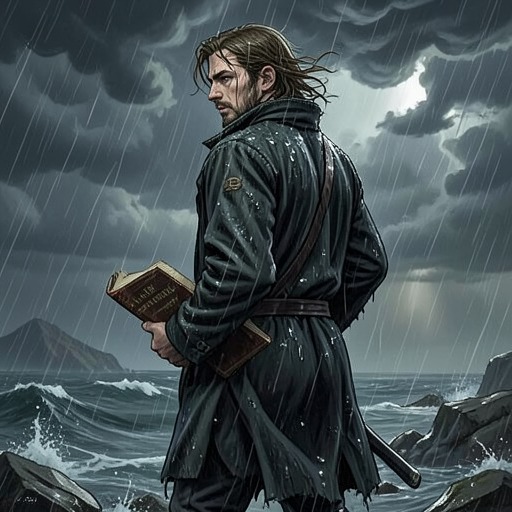
The completion of the manuscript is shadowed by the narrative’s knowledge of what is about to happen. Five nights after Liesel walks down Himmel Street in the rain, the first bomb falls from the rib cage of a plane. The text leaves open the precise page she is reading at that moment, but the uncertainty intensifies the connection between writing and catastrophe. Her work is nearly complete when the world that supplied its people, rooms, and memories is destroyed. The manuscript survives as a fragile object at the edge of annihilation.
Final Words and Meaning
The last surviving line records a contradiction rather than resolving it: “I have hated the words and / I have loved them,”. Liesel’s conclusion refuses to separate language’s capacity for harm from its capacity for connection. Words have been used to command, deceive, persecute, and mobilize violence, yet they have also enabled teaching, consolation, imagination, and self-recognition. Her final formulation therefore answers the entire course of the writing: language is neither innocent nor useless, and loving it requires remembering what it can do when placed in human hands.
Liesel writing The Book Thief also changes the relationship between suffering and narration. Ilsa Hermann tells her not to punish herself, but the manuscript does not pretend that writing removes punishment or pain. It makes room for both pain and happiness. The act of composition becomes a form of survival because it allows Liesel to shape experiences that otherwise remain overwhelming, while the completed book becomes a witness to those who cannot tell their own stories. In this sense, writing is not presented as a cure for trauma; it is a disciplined way of carrying memory forward.
The manuscript’s completion also completes Liesel’s movement from object to author. She begins as a child displaced by family loss and placed in the care of Hans and Rosa Hubermann. She learns through books, thefts, lessons, conversations, and the hidden life of the basement; she then converts those accumulated experiences into a book bearing her name. Her authorship does not erase her dependence on others. Instead, it preserves the relationships and losses that made the writing possible, including Ilsa Hermann’s gift, Hans’s teaching, Max Vandenburg’s presence, and the threatened household at 33 Himmel Street.
In the larger narrative, The Book Thief manuscript is both an ending and a surviving object. Its ten parts preserve the effects of books on Liesel’s life, while its final line preserves her divided judgment of language itself. When the bombing destroys the street and the people who inhabit it, the manuscript stands as the material form of memory left behind. Liesel’s writing thus gives the story its most important reversal: the girl once known for taking books leaves behind not merely a collection of stolen words, but an authored account capable of returning those words to the world.