Rudy’s bread-giving during the Dachau parade
The Book ThiefRudy’s bread-giving during the Dachau parade is one of Rudy Steiner and Liesel Meminger’s most dangerous acts of compassion. During the third parade of prisoners being taken down Munich Street toward Dachau, Rudy obtains bread, leads Liesel ahead of the column, and distributes the pieces along the road. Their gesture is small enough to fit in a bag and brief enough to end in flight, yet it places the children in direct opposition to the machinery of persecution surrounding them.
Causes and Background
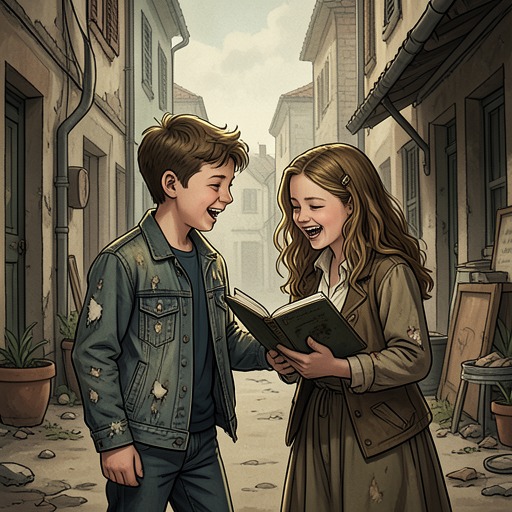
The act grows out of the children’s earlier relationship with hunger and theft. Liesel Meminger’s first theft begins with The Grave Digger’s Handbook, an object taken from the cemetery after her brother’s burial and remembered as the beginning of her career as a book thief. Later, hunger makes theft less symbolic and more practical. Depressing pea soup and Rudy’s appetite draw the two children toward older fruit stealers, whose apples introduce them to the possibilities of watching closely, moving together, and taking what ordinary life refuses to provide.
That history matters because Rudy’s later action is not simple lawlessness. His understanding of theft has begun to distinguish private survival from organized power. When he tells Liesel that she is not really a thief because Ilsa Hermann lets her enter and leaves her cookies, he contrasts their actions with the army’s seizure of their fathers. In his view, the genuine theft is institutional: soldiers and wealthy Nazis take people, families, and futures. The bread on the road therefore reverses the regime’s logic. Instead of taking from the vulnerable, Rudy gives to them, even though the state has made giving itself punishable.
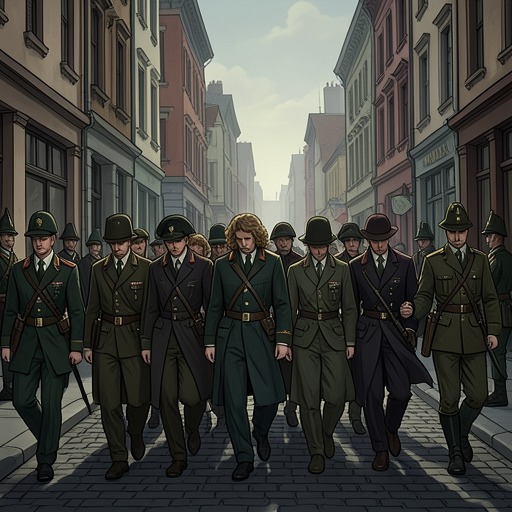
The immediate setting is the third prisoner parade. Earlier, Liesel had hurried to Munich Street to determine whether Max Vandenburg was among the prisoners, torn between the desire to know that he was alive and the possibility that his absence might mean freedom. In mid-December, another group of Jews and other prisoners is brought through the street toward Dachau. The parade makes the children’s private concern for Max collide with a public spectacle of state violence.
What Happens
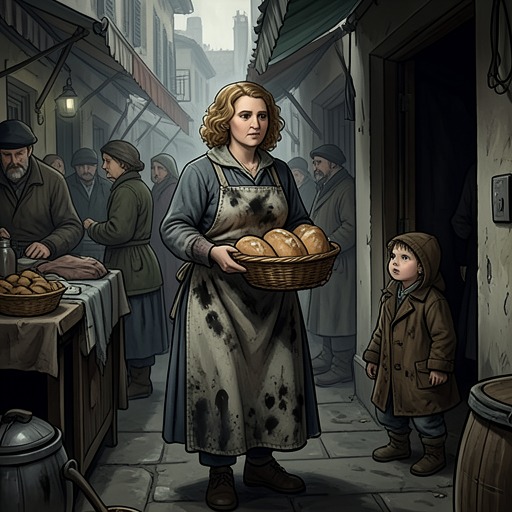
Rudy walks purposefully down Himmel Street, returns from number thirty-five carrying a small bag and two bicycles, and asks Liesel whether she is willing to join him. They ride ahead of the parade toward Dachau and stop on an empty stretch of road. Rudy passes Liesel the bag and tells her to take a handful. When she hesitates, he places bread in her palm and invokes Hans Hubermann’s earlier example: her father had done the same kind of thing.
The action is organized with the speed of a childish plan but the stakes of an adult crime. Rudy insists that they will not be caught if they move quickly, then begins distributing the bread. Liesel joins him, and the two friends hand pieces to the prisoners before taking their bicycles and hiding among the Christmas trees. The cold, straight road and the approaching soldiers turn the scene into a narrow corridor between an act of mercy and its immediate punishment.
The first soldier does not notice the bread because he is not hungry. The first prisoner does. His ragged hand reaches down, retrieves a piece, and pushes it deliriously into his mouth. The contrast is stark: the guard possesses authority without need, while the prisoner responds to food as though it were an event beyond expectation. Liesel wonders whether the prisoner might be Max Vandenburg, and the uncertainty intensifies the gesture’s emotional force. The children are not merely feeding an anonymous crowd; they may be reaching toward someone whose survival has become inseparable from their own fear and hope.
The soldiers soon see that a prisoner has lowered a hand. Everyone is ordered to stop, and the road is examined closely. The prisoners chew as quickly and silently as possible, collectively swallowing what they can before the discovery becomes proof. A soldier picks up pieces of bread and studies both sides of the road. Then he identifies the children among the trees and advances toward them.
Rudy and Liesel run in different directions beneath the branches. The soldier’s breath draws close to Liesel, but she avoids the accompanying hand. Her punishment is a kick and an order to keep running because she does not belong there. She continues for at least another mile, with branches cutting her arms and pinecones rolling beneath her feet, before returning roughly forty-five minutes later to the rusty bicycles. Rudy has gathered the remaining bread and is chewing a stale, stiff portion. His warning that she should not have come so close is both practical advice and an acknowledgment of how nearly their compassion became capture.
Consequences and Aftermath
The immediate consequence is bodily danger rather than heroic victory. No prisoner is freed, the parade continues, and the children retreat to the cover of Christmas trees. Their action cannot interrupt the system transporting people to Dachau. It can only alter, for a moment, the prisoners’ experience of the road: a hand reaches down, bread is seized, and starving people swallow in silence while soldiers search for the source.
The episode also makes the moral structure of Nazi Germany visible through a reversal of ordinary categories. The children are treated as offenders for giving food, while the armed authorities are the agents of deprivation and forced movement. Rudy’s later definition of theft clarifies what the scene dramatizes: the regime’s violence is not merely a harsher version of petty stealing but an organized taking of fathers, homes, bodies, and human status. Against that theft, the children’s bread becomes an act of restitution, however inadequate and dangerous.
For Liesel and Rudy, the event deepens their friendship through shared risk. Rudy initiates the plan, supplies the bread, and pushes Liesel to act; Liesel hesitates, remembers Hans Hubermann’s example, and participates despite knowing that the gesture could bring a whipping. Her trace of a grin after the distribution shows that the act contains not only fear but a momentary recovery of agency. They cannot control the parade, yet they can decide what their hands will do beside it.
Narrative and Thematic Significance
The bread-giving belongs to the book’s recurring structure of theft and exchange. Liesel’s first theft opens what the narration calls the gates of thievery; her later experiences teach her that the label of thief depends on who has the power to name an act. Rudy’s bread-giving exposes the instability of that label. A child who steals fruit because of hunger and gives bread to prisoners may be condemned by the same society whose institutions have produced the hunger and the prisoners.
The event also brings the children into direct contact with death and historical violence. Their earlier adventures around soccer, apples, bicycles, and neighborhood streets have not prepared them for the procession of Jews toward Dachau, yet the parade forces the ordinary world and the machinery of extermination into the same physical space. The children’s response is neither a political speech nor an organized rebellion. It is a handful of bread placed into open hands, an improvised ethical answer to a system that has reduced those hands to evidence of disobedience.
The episode’s uncertainty is essential. Liesel does not learn whether the first prisoner is Max Vandenburg, and the soldiers’ punishment prevents the gesture from becoming a clean scene of rescue. Its meaning lies instead in the choice to act without certainty. Rudy does not know whether the bread will reach Max, whether the prisoners can eat it, or whether he and Liesel will escape. He gives anyway. In a narrative where Liesel will eventually write The Book Thief, the act anticipates the book’s larger concern with preserving human presence through small, vulnerable interventions: words, food, memory, and the refusal to let an official story define what a person is worth.