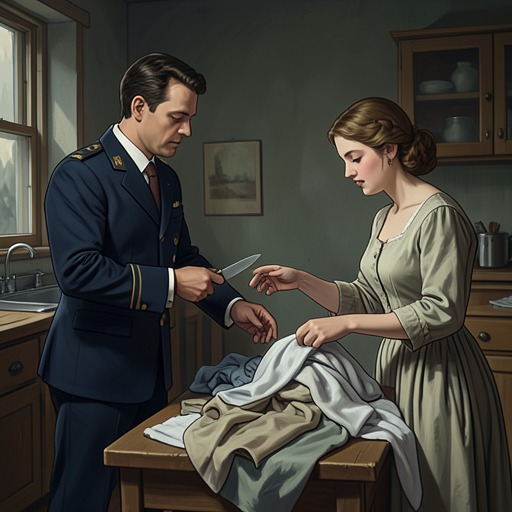
So much good, so much evil. Just add water.
The Book Thief“So much good, so much evil. Just add water.” is a compact expression of moral contradiction. It appears as the narrator reflects on Rudy Steiner’s response to a priest’s painful fall during a bread-stealing episode, then projects that moment forward to Rudy’s later identity as someone who gives bread rather than steals it. The phrase turns an ordinary substance into a disturbing moral solvent: goodness and evil are already present in human beings, and circumstances can bring either quality to the surface.
Immediate Context
Rudy Steiner and his companions have been involved in stealing food, but the incident acquires a different emotional charge when a priest falls heavily. Rudy says that he is no longer hungry and assumes that the priest is not hungry either. His reasoning extends beyond the immediate scene: he understands that the priests would not receive food if there were not enough available at home. Hunger therefore links the thieves and the person harmed by their theft, making the act morally unstable rather than simple.
The next exchange sharpens that instability. Rudy insists that the priest hit the ground hard, while the response not to be reminded of it acknowledges the pain and guilt attached to the event. Rudy cannot resist smiling, however. His smile does not erase the injury or transform the theft into innocence; instead, it places pleasure, embarrassment, sympathy, and wrongdoing in the same moment. The expression that follows names precisely this coexistence.
Meaning and Contradiction
The phrase sets “good” and “evil” beside each other without allowing either to explain the whole person. Rudy has participated in stealing, yet he is capable of recognizing another person’s hunger and feeling disturbed by the consequences of his actions. The narrator refuses a clean moral division between victim and offender, or between childhood mischief and genuine harm. The same human being can occupy opposing moral positions within a single episode.
“Just add water” gives the formulation its strange force. Water is associated with mixture and transformation, so the phrase suggests that human conduct is not produced by abstract moral labels alone. Add pressure, deprivation, fear, opportunity, or compassion, and the existing contradiction becomes visible in action. The expression is witty in form but severe in implication: moral complexity does not require a grand theory when the smallest change in circumstances can activate either generosity or cruelty.
Rudy’s Reversal
The narrator immediately connects the expression to Rudy’s future. In later years, Rudy will be a giver of bread rather than a stealer. This projected reversal does not cancel his earlier thefts; it makes them part of a larger pattern of moral development. The distinction between taking bread and giving bread becomes a concrete measure of change, while the remembered incident supplies the contradiction from which that change emerges.
Rudy’s transformation is therefore presented less as a conversion from evil to good than as proof that both capacities were present all along. The boy who steals food can become the person who offers it. His later generosity gives retrospective significance to his discomfort after the priest’s fall, but it does not simplify him into a naturally virtuous child. Instead, the reversal confirms the narrator’s claim that human beings contain incompatible impulses and may express different ones as circumstances change.
Narrative and Thematic Significance
The expression functions as a brief aphorism attached to a specific scene, but its reach exceeds that scene. It converts Rudy’s reaction into a general statement about the contradictory human being, using the immediate contrast between bread theft and bread-giving as its evidence. The narrator’s forward glance also makes the line prophetic: the reader is told that Rudy’s future actions will repeat the moral problem in an altered form.
Its final effect is deliberately unresolved. The episode contains hunger, injury, guilt, amusement, and the possibility of compassion; none is allowed to dominate completely. By placing the expression after Rudy’s smile and before his later generosity, the narrative preserves both the harm done and the goodness that may follow. The phrase thus becomes a thematic key for reading human behavior in the story: good and evil are not safely separated, and the circumstances that bring one forward may be the same circumstances that expose the other.