Stalingrad
The Book ThiefStalingrad is presented less as a conventional location than as a recurring geography of war, where ideology, weather, injury, and death converge. It is the destination toward which Hans Hubermann Jr. is tragically carried, the source of a stranger’s mutilated hand, and the setting of Robert Holtzapfel’s death. Through these connected fragments, Stalingrad becomes a place that exposes the physical consequences of political obedience and military violence.
A Battlefield Reached Through Obedience
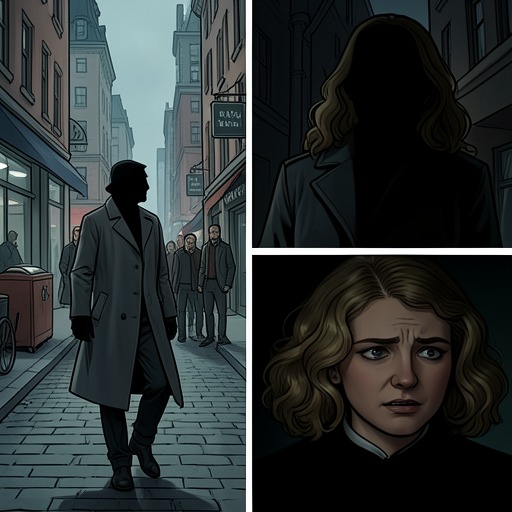
Hans Hubermann Jr. disappears from Himmel Street after leaving in the name of the Führer. The narrative refuses to soften what follows: his departure begins another story whose steps lead tragically to Russia, specifically to Stalingrad. The city therefore enters the book through absence before it is described directly. A son vanishes from his family, and the name of the battlefield supplies the grim direction of that disappearance.
Stalingrad is also situated in the campaign of 1942 and early 1943. Each morning, its sky is described as bleached white, like a bedsheet. During the day, the sheet is splashed with blood until it becomes full and bulging toward the earth; by evening, it is wrung out and bleached again for the next dawn. The repeated cycle turns the sky into a vast register of casualties. The image is lyrical, but its subject is material: the city is a place where death occurs continuously and is renewed with each day.
Cold, Time, and the Body
The battlefield’s violence is echoed in Max Vandenburg’s hidden life. For Max, there is cool cement and too much time, while the minutes become cruel and the hours punishing. Though he is not physically in Stalingrad in these scenes, the city’s war presses into his imagination through his repeated visions of boxing with the Führer. His body deteriorates under confinement: he is constantly cold, his hands swim with weakness, and exercise that once helped him maintain himself begins to fail. He cannot warm himself beside the fire, loses weight, sleeps into the morning, and eventually approaches collapse.
This connection makes Stalingrad more than a distant military setting. It is part of the same war system that leaves bodies exposed to cold, exhaustion, fear, and suspended time. Max’s cement floor and Robert Holtzapfel’s frozen battlefield are different spaces, but both reveal how war reduces human life to endurance measured in minutes, temperature, breath, and physical strength.
Wounded Survivors and the Meaning of the Name
The city’s name later returns in an encounter with a man whose hand has been badly injured. When Liesel asks what happened to it, he first answers with the single word “Stalingrad.” He then explains that Stalingrad happened to his hand: he was shot in the ribs and had three fingers blown off. His injured hand remains in his pocket as he shivers in the German wind, and his contempt makes clear that ordinary cold has become trivial beside what he endured there.
The exchange compresses a whole battlefield into a damaged body. Stalingrad is not merely recalled as a date or military operation; it is carried home in missing fingers, a gunshot wound, and an altered response to weather. The city becomes an answer that precedes explanation, as if its name alone should be sufficient to account for mutilation.
Robert Holtzapfel and the Frozen War Story
Stalingrad is also the setting of Robert Holtzapfel’s death, a fate remembered through Frau Holtzapfel’s household. The narrative imagines her kitchen through the Russian winter, snow falling from the ceiling, and the fate of her second son rather than through its domestic objects. Robert’s legs are blown off at the shins, and he dies while his brother watches in a cold, stench-filled hospital.
The account places the injury precisely in Russia on January 5, 1943. Dead Russians and Germans lie throughout the city while surviving soldiers fire into the blank pages before them. Russian, bullets, and German are said to interweave, making the battlefield a collision of language as well as armed force. Robert crawls through shock toward a disfigured figure, his hands caked in blood, while he heaps snow onto the place just above his shins where the last explosion severed his legs. Steam rises from the ground amid the smell of rotting snow. The scene denies any clean separation between landscape and body: snow, blood, heat, and decay become one environment.
Narrative and Historical Significance
Stalingrad gathers several forms of suffering that the novel repeatedly places beside one another: the disappearance of a family member, the wasting of a hidden refugee, the mutilation of a returning soldier, and the death of a young man witnessed by his brother. Its significance lies in this network of consequences. The battlefield is far from Himmel Street, yet its effects enter homes through absent sons, injured hands, damaged families, and stories that cannot remain confined to the front.
The narration also deliberately slows the reader’s movement through violence. Rather than treating Stalingrad as a strategic label, it enlarges the whiteness of the sky, the accumulation of blood, the cold cement, the wounded hand, the missing legs, and the rotting snow. Familiar military history is made strange by being rendered through bodily particulars and recurring images of cleansing that never erase what happened. Stalingrad thus stands as a place where the scale of war becomes legible: the city contains armies and thousands of dead, but its human meaning is carried by individual bodies and by the families left to remember them.