The bombing of Himmel Street
The Book ThiefThe bombing of Himmel Street is the decisive catastrophe of the novel, transforming the street from a damaged wartime neighborhood into a field of rubble and making Liesel Meminger its only survivor. The event is both a literal air raid and a narrative revelation: while the sleeping residents die, Liesel remains alive because she is underground, reading through the story of her own life and correcting its mistakes.
Causes and Background
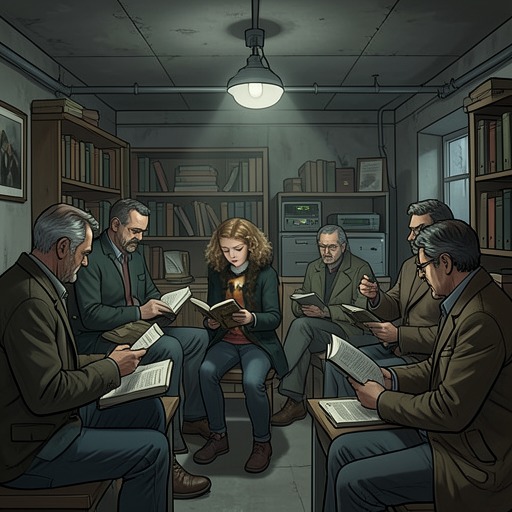
The bombing follows a pattern of recurring air-raid danger. Earlier, twenty-two people had crowded into the Fiedlers’ deep basement six houses from Himmel Street, including the Steiner family, Frau Holtzapfel, Pfiffikus, a young man, and the Jenson family. The shelter was dank and cold, with jagged walls, a single dangling light globe, and sirens muffled by the earth. Its poor conditions created fear, but the sound of three warning sirens also offered a measurable promise of safety. The neighborhood’s survival depended on improvised domestic spaces rather than secure public infrastructure.
The next raid is announced on the night of September 19, when a radio voice lists Molching as a possible target. Himmel Street again becomes a trail of people moving toward shelter. Hans Hubermann leaves behind his accordion, despite Rosa Hubermann’s reminder that he should take it; he reasons that he had not taken it during the previous raid and had survived. The decision exposes the unstable mixture of logic and superstition produced by war. The community has routines for responding to danger, but no routine can make the danger predictable.
What Happens
During the raid, Liesel opens The Whistler and begins reading aloud to concentrate and shut out the noise. At first, the words fail to overcome the din, and Rosa Hubermann shouts at her, asking what she has said. Liesel ignores the interruption and continues. When she reaches the second page, Rudy Steiner notices what she is doing and directs his brother and sisters to listen. Hans Hubermann comes closer as well, and quiet gradually spreads through the crowded basement. By the third page, everyone is silent except Liesel.
This reading is not merely an attempt at personal comfort. It becomes a collective act that reorganizes the shelter. The book gives the people inside it a shared focus while the air raid threatens to dissolve their sense of control. Liesel’s voice cannot stop the bombs, but it changes the human atmosphere beneath them: apprehension is temporarily shaped into attention, and frightened individuals become listeners.
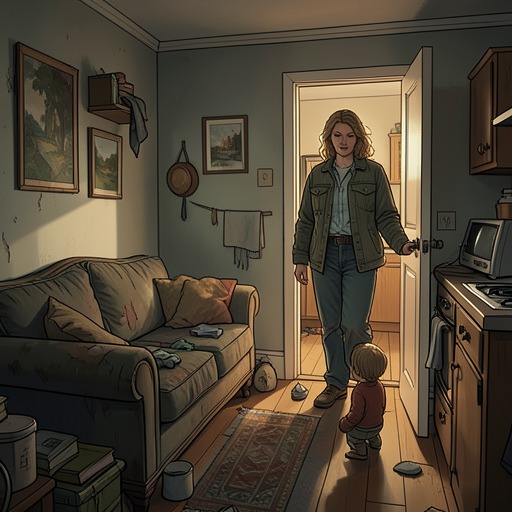
The final attack comes on October 7. It is raining on Himmel Street when the world ends for Liesel Meminger. The bombs fall, the clouds bake, and the cold raindrops become ash; hot flakes descend over the street. Himmel Street is flattened. Houses are thrown from one side of the street to the other, and a framed photograph of the Führer lies battered on the shattered floor. The destruction reaches indiscriminately through the sleeping neighborhood. Rudy Steiner, Mama and Papa, Frau Holtzapfel, Frau Diller, and Tommy Müller are all asleep when they die.
Survival and Immediate Aftermath
Only one person survives. Liesel is alive because she is sitting in a basement reading through the story of her own life and checking it for mistakes. The room had previously been judged too shallow to provide adequate protection, yet on that night it is deep enough to preserve her. The detail gives her survival a precise physical cause while also binding it to the novel’s central concern with words: reading is at once the activity that keeps her awake, the work through which she records experience, and the circumstance that separates her from the dead.
Hours later, after an uncanny silence settles over Molching, the local LSE hears an echo beneath the wreckage. Somewhere underground, Liesel is hammering a paint can with a pencil. The rescuers hear the sound again and begin digging. Her survival therefore becomes audible before it becomes visible; the damaged community finds her through the small, repeated noise of her continued activity.
The bombing also exposes the full cost of the wartime world around Himmel Street. Hans Hubermann and Alex Steiner had not been sent to fight directly: Alex had been assigned to an army hospital outside Vienna, where he repaired uniforms, socks, and shirts for soldiers suffering in Russia, while Hans was sent first to Stuttgart and later to Essen for the undesirable home-front work of the LSE. These arrangements had kept them away from the front, but the bombing demonstrates that distance from combat does not protect families from war’s reach.
Narrative Significance
The event is presented as an announced ending before its full account arrives. The narrative repeatedly offers glimpses of the end, claiming that the reader may be better prepared for what follows, while the heading identifies the catastrophe as “THE END OF THE WORLD (Part I).” This framing makes the bombing both an event in the chronology and a controlled disclosure by the narrator. The disaster is not allowed to arrive as an unmediated surprise; it is approached through warning, repetition, and the knowledge that the street’s ordinary life is already moving toward destruction.
The bombing also reverses the usual meaning of communal shelter. The basement is imperfect, cramped, cold, and previously considered too shallow, but it becomes the site of Liesel’s survival. At the same time, the wider street, where familiar domestic life continues in sleep, becomes lethal. The contrast makes survival appear neither as a simple reward nor as a triumph over the dead. Liesel’s life is preserved by an accidental conjunction of place, timing, and reading, while the people who shaped that life are erased around her.
Consequences and Meaning
After the bombing, Himmel Street is no longer primarily a home but a ruin whose scattered objects testify to the lives removed from it. The Führer’s damaged photograph embodies the collapse of the political image that had presided over the neighborhood, yet the destruction itself has been produced by the war that image represents. The survivors’ work begins with excavation, and Liesel’s first sign of continued life is the sound of a pencil striking a paint can: language, memory, and material wreckage meet in a single stubborn rhythm.
The catastrophe gives the novel its most severe contrast between the power and helplessness of words. Liesel’s reading creates silence and solidarity in the shelter, but it cannot save the people outside it. What it can do is preserve a consciousness capable of witnessing the loss. The bombing therefore changes the status of her writing from a private practice into a lasting record of Himmel Street and its dead. Its significance lies not in suggesting that literature defeats violence, but in showing how words remain after violence has destroyed the world that gave them meaning.