
Freeman’s Pursuit of a Reliable Account
The Book of MirrorsThis thread follows Roy Freeman as he reopens the case, tests the late confession against old evidence, and uncovers Derek Simmons’s role while confronting the limits of certainty and memory.
increasing Bearing strength in each event
 decreasing
Bearing strength in each eventdecreasingA Confession Reopens the Case
A New Lead
The Old Detective Returns
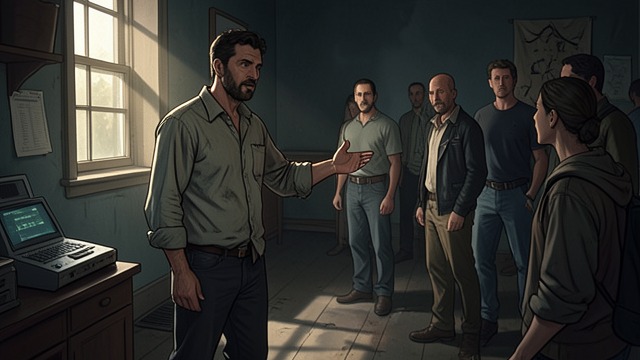
Roy Freeman learns that Frank Spoel has confessed to killing Joseph Wieder. Having already revisited the case after John Keller contacted him, Freeman travels to Potosi Correctional Center to hear Spoel’s account directly.
A Personal Reason to Continue
Freeman has recently learned that he has Alzheimer’s disease and wants to keep his mind active. He also believes he failed to solve the original case and regards the renewed investigation as a chance to understand what happened before his memories worsen.
The new confession arrives at a moment when Freeman’s professional regret and personal vulnerability reinforce each other. He is not simply checking a claim: he is trying to restore a case and a part of his own identity before both become inaccessible.
The Visitor Spoel Could Not Identify
The Unfinished Confession
Spoel’s Sequence
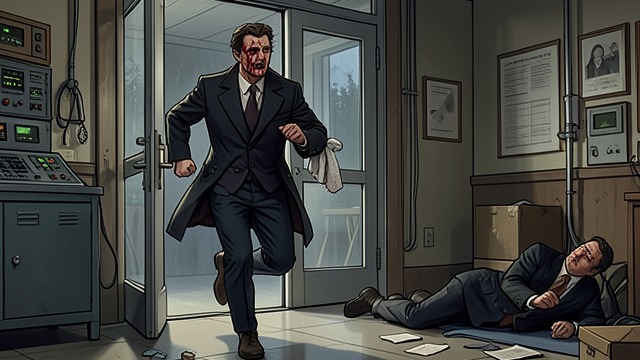
Spoel says he entered Joseph Wieder’s residence after Richard Flynn had left and struck Wieder with a towel-wrapped bat. He then fled through the glass door, believing he had only injured the professor.
The Unanswered Arrival
Spoel maintains that someone unlocked the front door after the attack and entered while Wieder was still alive. That person did not call an ambulance, and Spoel cannot say who it was or what happened inside after his own escape.
Freeman identifies the unknown visitor as a crucial gap rather than a minor inconsistency. If Spoel’s account is true, the person who arrived afterward may have changed the outcome of the crime and the meaning of the apparent evidence at the scene.
A Conflict with Simmons’s Story
Two Witnesses in One Yard
The Incompatible Timelines
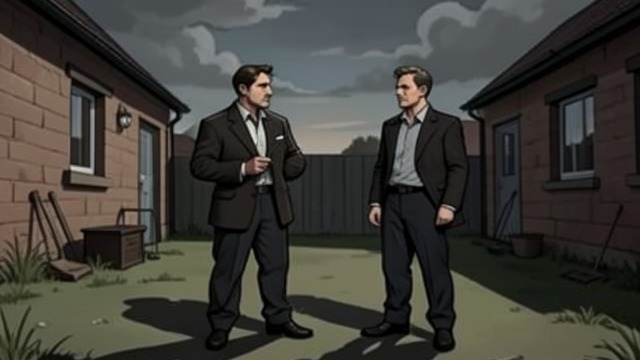
Freeman compares Spoel’s account with the version Derek Simmons gave investigators and repeated to Keller. Both men claim to have watched the house from outside, but their descriptions of the people present, the timing, and the argument differ sharply.
A Suspect Reconsiders His Memory
Freeman confronts Simmons and challenges the idea that he could not remember his earlier life. Simmons remains evasive, insists that Richard Flynn was the killer, and ends the conversation without explaining the contradictions.
The failed interview leaves Freeman without an admission but gives him a reason to examine Simmons’s prior case rather than treating him as a merely unreliable witness. The investigation’s focus turns from competing recollections to the records that might connect Simmons to Wieder before the murder.
The Call Log Connection
A Past Link Reappears
Evidence in an Old Record
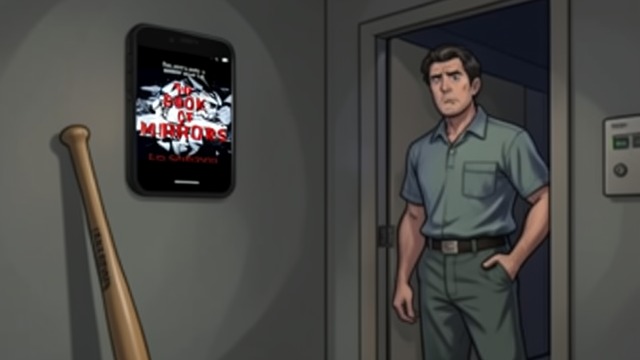
Freeman reviews the case file concerning Anne’s death and notices Derek Simmons’s call records. A number associated with Joseph Wieder appears in the list, although investigators at the time did not recognize its significance.
The Decisive Detail
Freeman also recalls Simmons’s reference to a specific baseball moment and checks the date, realizing that the detail points to a memory from 1979 that Simmons could not plausibly have learned merely by reconstructing his biography. Together, the call log and the remembered detail undermine Simmons’s account of total amnesia.
The discovery shifts Freeman’s theory from “Simmons may have misremembered” to “Simmons may have concealed what he knew.” It also links the murder of Anne to the expert who later assessed Simmons, creating a motive that the original investigation did not uncover.
A Confession and a Second Suspicion
The Case Changes Again
Simmons Admits the Final Blow
Freeman returns to confront Derek Simmons with the call record and the recovered-memory clue. Simmons says he discovered Wieder beside the injured professor, believed Richard Flynn had attacked him, and then struck Wieder once with a leather sap before leaving.
Anne’s Death Remains Unsettled
Freeman challenges Simmons’s account of his wife’s murder, pointing to evidence that Anne may not have been the cruel, unfaithful woman Simmons remembered. He suspects that Simmons’s recollections of her betrayal and of Wieder’s affair may have been shaped by delusion or by trauma, but Simmons does not confess to killing Anne.
Simmons is arrested after Freeman’s confrontation, resolving who delivered the fatal blow to Wieder without resolving every element of the night. Freeman leaves with the murder substantially explained, but with the death of Anne still obscured by the same unstable relationship between memory, guilt, and invention.
Years after Keller’s investigation, before Frank Spoel’s execution
During Freeman’s interview with Frank Spoel
After Freeman returns from Missouri
After Freeman reviews the 1982 case file
Near the end of Freeman’s investigation
