
Richard Flynn: From Aspiring Writer to Unfinished Confessor
The Book of MirrorsRichard Flynn’s path from an ambitious Princeton student through love, suspicion, and a vanished literary future to a final manuscript whose account of the past remains entangled with uncertain memory.
increasing Bearing strength in each event
 decreasing
Bearing strength in each eventdecreasingA Writer in Waiting
A Writer in Waiting
Ambition and displacement
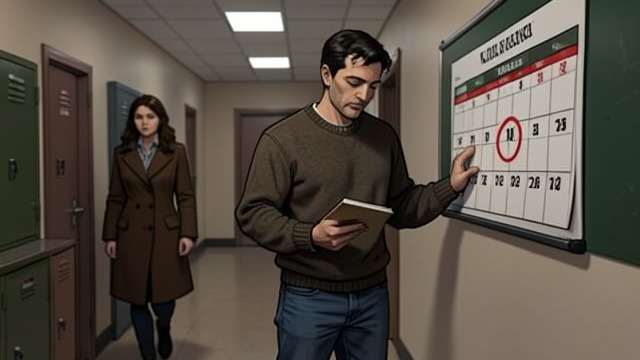
Richard Flynn arrives at Princeton University in Princeton carrying the literary ambitions of a Brooklyn upbringing and an increasingly uneasy sense that he does not belong. He writes short stories, begins a novel, and measures his days against the possibility of becoming a serious writer.
The death of his father and his mother’s move to Philadelphia deepen his feeling that the home he came from is disappearing. College offers opportunity, but it also leaves him isolated among classmates whose privilege and habits he resents.
A precarious future
Flynn’s dream is both a source of purpose and a refuge from uncertainty. He earns ordinary grades to protect time for writing, while repeated rejection makes the future he imagines feel increasingly fragile.
That vulnerability matters because the arrival of Laura Baines soon gives his life a new emotional center. His hopes as a writer and his longing for belonging will become closely tied to the relationship he believes he has found.
Love and New Recognition
Love and New Recognition
A shared life
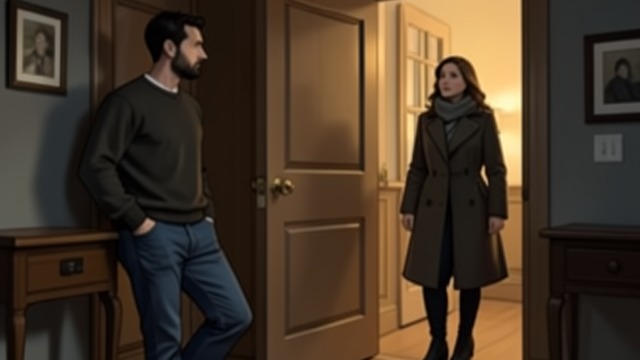
Flynn meets Laura Baines after she moves into the same house, and their conversations turn an accidental arrangement into intimacy. Her confidence, humor, and curiosity draw him out of the loneliness he has carried since his family’s upheaval.
When the two become lovers, Flynn experiences the relationship as more than attraction. He imagines that their growing closeness may supply the memories and emotional permanence he wants for the rest of his life.
Entry into Wieder’s world
Through Laura, Flynn meets Joseph Wieder and is offered paid work organizing the professor’s library. The job brings money and access to a world of books, intellectual prestige, and apparent possibility just as Flynn’s literary future seems uncertain.
But he quickly notices that Wieder asks probing questions and guards the details of his research. Flynn’s admiration therefore grows alongside suspicion, placing him in a household where love, employment, and the professor’s influence begin to overlap.
A Love Recast as Betrayal

A Love Recast as Betrayal
Suspicion takes hold
Flynn’s confidence in Laura falters as he hears conflicting accounts of her past and begins to question her closeness to Joseph Wieder. His doubts sharpen when Timothy Sanders visits and denies the story Laura had told about their relationship and time in New York.
Rather than settle the conflict through an open conversation, Flynn reads the encounter as proof that Laura has manipulated him. His fear of being used turns memories of their intimacy into a catalogue of possible deceptions.
The night of the murder
Believing Laura may be with Wieder, Flynn takes the keys to the professor’s house and sets out during a snowstorm. He later becomes a police suspect, while his manuscript and public statements leave uncertainty about when he arrived, what he witnessed, and what he concealed.
The novel never makes Flynn’s version of the night a stable account. His emotional certainty is powerful, but it is also part of the problem: the story he tells about Laura and himself may reflect remembered events, imagined explanations, or both.
A Literary Opening Closes
A Literary Opening Closes
Recognition arrives
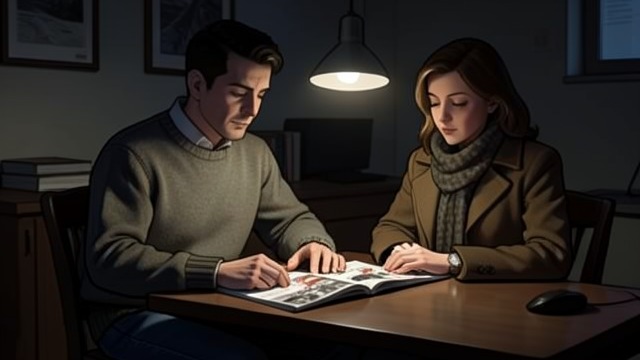
Shortly before the murder, an editor at Signature magazine accepts all three of Flynn’s stories. For a moment, publication seems to validate the future he has imagined, and he celebrates the news with Laura as though their shared life is opening toward lasting success.
Then the murder changes the meaning of everything. Flynn is questioned by detectives and reporters, becomes associated with the case, and leaves Princeton to continue his studies at Cornell. The copies of the magazine that should have marked his first success never reach him.
Withdrawal from writing
Flynn does not publish again, although he writes for a time. His early promise gives way to an uneventful career in advertising and a private life increasingly shaped by his separation from Laura and his unwillingness to revisit Princeton.
The trajectory is not simply that of a dream abandoned. The unresolved murder becomes a force that narrows his sense of what can be said, while his own account of the past remains unavailable to anyone who might challenge it.
The Last Manuscript
The Last Manuscript
The past returns
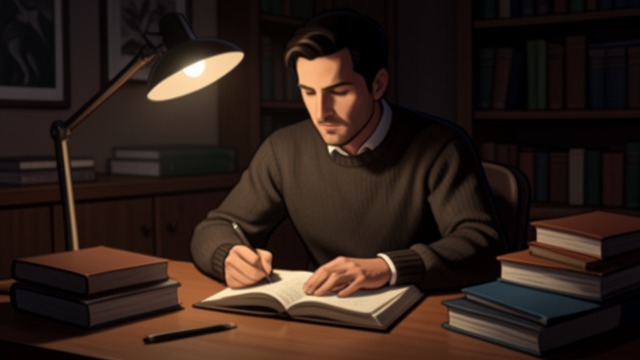
Decades after the murder, a new discovery revives Flynn’s memories of the winter at Princeton. He begins writing The Book of Mirrors manuscript, presenting his story as an account of events that changed his life and asserting that he has at last learned the truth.
The completed manuscript reaches literary agent Peter Katz, but Flynn is already gravely ill. His partner, Danna Olsen, cannot find the full text on his computer, and Flynn dies before he can explain what he has written or see it published.
A legacy without resolution
Flynn’s account survives in fragments and in the manuscript Danna eventually sends to Peter. Its claims help prompt John Keller’s investigation, yet later discoveries overturn the apparent explanation Flynn’s narrative encourages.
His final achievement is therefore also a final uncertainty. He recovers his ambition as a writer, but leaves behind a story that cannot be treated as a transparent confession: even his strongest memories may have been shaped by longing, injury, and the act of telling.
Fall 1987, before meeting Laura Baines
Fall 1987, from meeting Laura Baines to his first visit with Joseph Wieder
December 1987, after Flynn speaks with Timothy Sanders
Winter 1987–1988, from publication acceptance to life after the murder
Twenty-six years after the murder, during Flynn’s final illness
