
John Keller: The Reporter Caught in the Story
The Book of MirrorsJohn Keller’s investigation begins as paid work on Richard Flynn’s missing manuscript, becomes entangled with his relationship with Sam, and ends with a revised understanding of both the case and the limits of his own conclusions.
increasing Bearing strength in each event
 decreasing
Bearing strength in each eventdecreasingA Reporter Between Careers
A Reporter Between Careers
Professional uncertainty
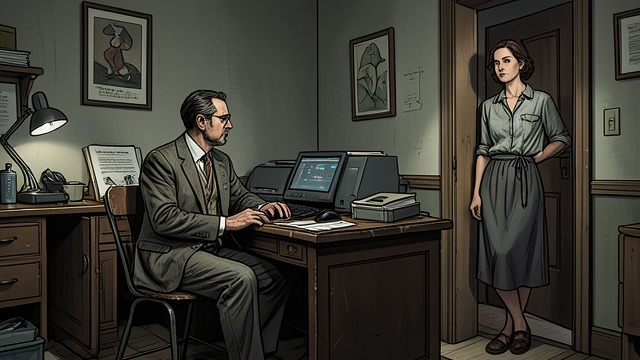
John Keller has moved through an occult magazine, newspaper reporting, and unstable freelance work. He once hoped that literary ambition alone would carry him forward, but financial insecurity and changes in the publishing world have narrowed his options.
A broken-chair repairman’s chance connection leads Keller to Ampersand, and his later reporting career grows from that unexpected opportunity. By the time the main investigation begins, he is experienced at gathering stories but unsure where his next lasting job will come from.
A personal foothold
Keller lives in the family apartment in Hell’s Kitchen and is dating Sam, a television producer who insists their relationship has no strings. Their arrangement appears manageable because neither demands that the other make a lasting commitment.
This combination of professional restlessness and emotional distance makes Peter Katz’s offer attractive. The case promises a story with commercial potential and a task that might restore Keller’s confidence as a reporter.
The Missing Manuscript Assignment
The Missing Manuscript Assignment
Accepting the investigation
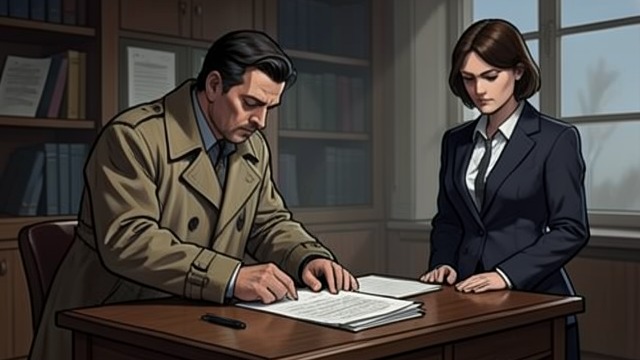
Peter Katz asks Keller to locate the rest of Richard Flynn’s manuscript or reconstruct the story behind Joseph Wieder’s unsolved murder. Keller accepts because the case combines a missing book, a famous victim, and a chance to turn scattered records into a compelling narrative.
He begins with public reporting and searches for the people Flynn named. The task seems like a conventional reporting assignment, but the fragment itself warns that its narrator may be confessing, misleading, or attempting to control the story after death.
A widening field of inquiry
Keller finds that Laura Baines has become Laura Westlake, locates Derek Simmons, and starts contacting former colleagues and witnesses. Every source expands the case while contradicting some part of Flynn’s account.
His work shifts from finding a manuscript to judging the reliability of people who remember a murder differently. The reporting begins to test Keller’s assumptions as much as the evidence he gathers.
A Relationship Breaks Under Pressure
A Relationship Breaks Under Pressure
Work fills the silence
As Sam recovers from illness, Keller becomes more conscious of how much he misses her. The investigation gives him a vivid purpose, and he starts to imagine the case as a story that might reveal a hidden structure beneath its conflicting accounts.
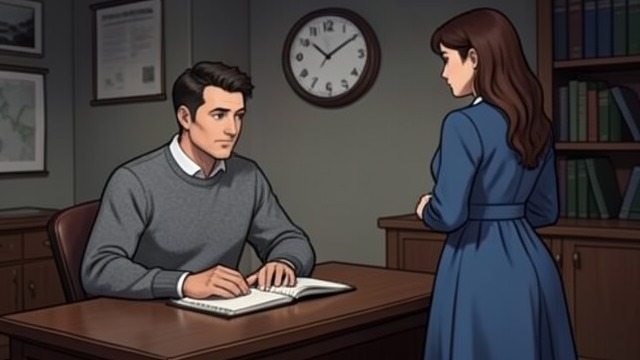
Sam, however, has begun to reconsider the future she wants. She tells Keller that she wants marriage and children and has another potential partner in mind, exposing the mismatch between her original promise of casual intimacy and the attachment that has developed.
The cost of missed signals
Keller realizes he had wanted more from Sam but never said so. Her decision makes him question whether his absorbed attention to the case helped him overlook the relationship’s changing terms.
The breakup weakens his motivation to continue. He remains curious about the murder, but the investigation no longer feels like a route to personal renewal; it begins to look like another story he may be unable to finish.
A Theory Abandoned
A Theory Abandoned
A persuasive reconstruction
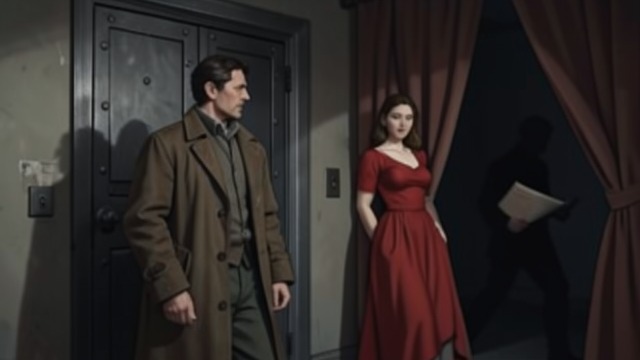
Sarah Harper tells Keller that Laura Baines sought co-author credit, learned that Wieder’s proposal omitted her name, and began manipulating the professor and Flynn. She also says Laura arrived at her home after the murder and received a false alibi.
Keller fits those claims to the missing manuscript and Laura’s later career, building a theory in which Laura arranged the murder and Flynn acted as her accomplice. The account feels coherent, but it rests on Harper’s recollection and circumstantial parallels rather than proof.
Refusing to publish without support
Keller gives Peter his findings but recognizes that he cannot substantiate the accusation. He places his documents in a box and tells Danna Olsen that he will abandon the investigation, accepting that a convincing explanation is not necessarily a publishable truth.
The retreat leaves the case unresolved for Keller. He has found a narrative that fits the clues, but not a reliable way to distinguish it from another reconstruction shaped by grievance and memory.
The Story Reopens Without Him
The Story Reopens Without Him
A new confession
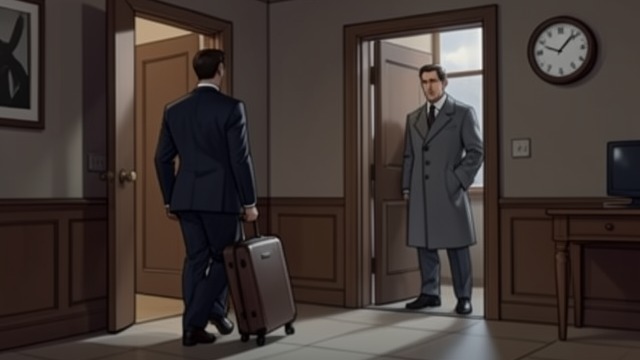
Keller is preparing to leave for a television writing job when Roy Freeman tells him that Frank Spoel has confessed to the murder. The confession reopens the case Keller believed he had left behind and gives Freeman a reason to revisit the original police records.
Keller does not take up the investigation again. Freeman follows the discrepancy between Spoel’s account and Derek’s statements, eventually discovering that Derek delivered the fatal blow after Spoel’s attack.
A revised legacy
After the arrest, Keller moves to the West Coast and begins a new life in television. The case that once consumed him is resolved through another investigator’s return to evidence Keller could not fully interpret.
When Danna finally sends Peter the complete manuscript, Keller’s earlier theory is exposed as only one version among several. His experience leaves him with a more modest understanding of reporting: careful investigation can uncover facts, but a narrative that feels complete may still be wrong.
2007, before Peter Katz hires him
Early 2010s, after Peter Katz shares Flynn’s manuscript fragment
During Keller’s early investigation, after Sam’s illness
After Sarah Harper describes Laura Baines’s alleged role
A few months after Keller abandons the investigation
