Department of Psychology
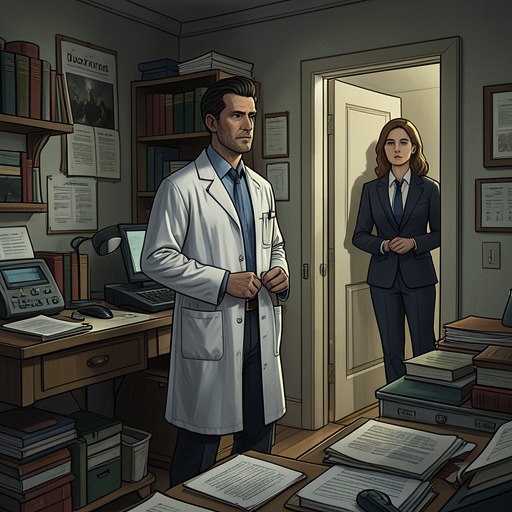
The Book of MirrorsThe Department of Psychology is the academic setting for several competing accounts of Joseph Wieder’s final years at Princeton University. The evidence identifies its personnel and an impending change in faculty, while leaving uncertain what research the department conducted and how far its own interests shaped the controversy around Wieder’s work.
Faculty and Academic Setting
In the late 1980s, John L. Monroe was preparing his doctoral thesis and working as one of Wieder’s assistants. He continued to teach at Princeton when John Keller interviewed him decades later. Monroe’s position made him a witness to the department’s academic life, but not a neutral one: he described Wieder as a shameless appropriator of others’ work and dismissed his theories as weak science aimed at an uninformed public. His hostility complicates the account he provides, even as he supplies details about the professor’s publishing plans and the department’s future staffing.
Wieder’s Departure and Succession
Monroe said that Wieder was expected to leave Princeton in the summer of 1988 and that the Department of Psychology had already begun looking for a replacement. This anticipated departure places the department’s staffing transition alongside the unresolved question of why Wieder’s planned book was never published. Monroe recalled that the university’s board had discussed the book and that Wieder had been accused of using university resources to collect material for a work intended for his own benefit. The account reports an accusation and board discussions; it does not establish the allegation as fact or show that the department itself initiated the dispute.
Research and Institutional Uncertainty
Keller also received an account from another former colleague who could not recall any special research programme the department might have been pursuing during Wieder’s tenure. That failure of recollection leaves the question open rather than proving that no programme existed. It sits beside Laura Baines’s earlier, uncertain understanding that Wieder had been recruited to supervise an agency-developed project involving the alteration of traumatic memories, a programme he was reluctant to discuss and whose relationship to the department is not established.
The surviving evidence therefore gives the department a limited but consequential presence: it was a workplace preparing for a successor, and its members’ memories offered sharply different views of Wieder. Keller’s investigation proceeds through such partial recollections and allegations, without producing a complete account of the department’s research or its role in the disputes surrounding the professor.