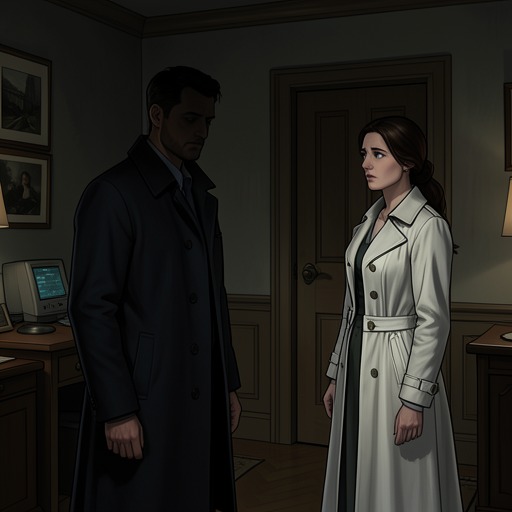
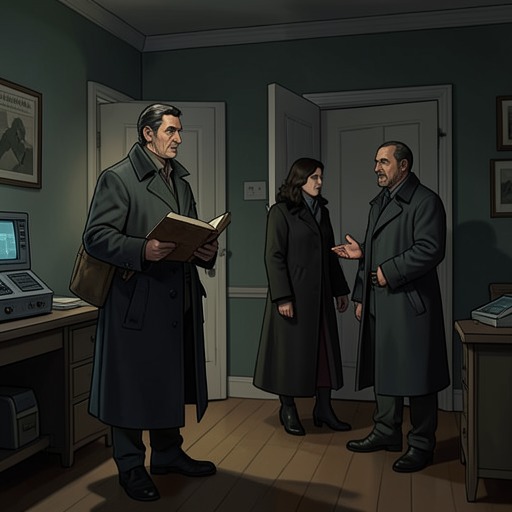
Derek Simmons’s Attack and Amnesia at Trenton State Hospital
The Book of MirrorsDerek Simmons’s attack at Trenton Psychiatric Hospital turned a period of confinement into a rupture in his identity: after emerging from a coma, he could not recognize anyone or remember even his own name. The amnesia gave Joseph Wieder a new place in his life—as the doctor who seemed to care for him—while leaving Simmons’s earlier history and its connection to the Wieder murder inaccessible to him. The attack’s consequences extended beyond the hospital, shaping his release, his later recollections, and the weight investigators gave his testimony.
Background and Hospitalisation
After Anne was murdered, Simmons was accused of killing her and declared legally insane. He was committed to Trenton Psychiatric Hospital. Wieder visited him there, ostensibly because of a professional interest in his case, and promised that he would arrange a transfer to the more comfortable Marlboro Hospital within three months. The attack occurred before that transfer could take place, interrupting the course Wieder had described.
The Attack and Loss of Memory
Another patient attacked Simmons at Trenton, leaving him in a coma. When he regained consciousness, he recognized no one and did not know how he had ended up in hospital; he could not even recall his name. Medical staff conducted tests and concluded that the amnesia was genuine, not feigned. The episode therefore did more than obscure particular details: it severed Simmons from the personal history through which he might have understood his arrest, his marriage, and his connection to Wieder.
Care, Transfer, and a New Life
During the period of amnesia, Wieder appeared to Simmons as a friendly, attentive doctor. He offered to treat him without charge and to secure his transfer to Marlboro. Simmons stayed there for several months without recovering his memory. He gradually learned basic facts about his identity and past, including who his parents were and where he had attended high school, but those disclosures brought back a history he found bleak: his mother’s death, his hospitalisation, a miserable job, an unfaithful wife, and the accusation of murder. He gave up trying to recover more and resolved to begin again after leaving the hospital.
Wieder chaired the panel that approved Simmons’s release. Since Simmons had nowhere to go, Wieder found him accommodation near his own house and gave him work as its handyman. Simmons could still repair things, even though he could not remember when or how he had learned those skills. This distinction between practical ability and autobiographical recollection became part of his new life: some capacities endured when the story of the person who had acquired them did not.
Wieder’s care also shaped how Simmons understood him. Wieder ensured that he took his treatment, paid him a regular wage for repairs, took him fishing, and spent evenings with him at least weekly. On one occasion, he took Simmons to the university and hypnotised him, without telling him what the session had revealed. For Simmons, who had lost access to his former identity, Wieder’s sustained kindness became the basis of an intimate trust.
Memory’s Return and Its Consequences
In March 1987, Simmons saw a television news item on NY1 about a man from Bergen County who had died by suicide. He recognized the man, Stan Marini, as a former member of the maintenance crew at Siemens, where Simmons had once worked. The recognition mattered because Simmons believed he was recalling something no one had told him and that he had not read. He described the memory’s return as a buried mass suddenly surfacing, arriving with the speed of a film accelerated far beyond its normal pace. The report did not restore his identity all at once, but it offered him evidence that memories from his earlier life remained beneath the amnesia.
The attack’s consequences also affected how Simmons’s account of Joseph Wieder’s murder was received. He later insisted that he had known who killed Wieder and had told the police, but believed his history of psychiatric commitment and medication made his statement easy to dismiss. His recollections implicated Richard Flynn and suggested that Laura Baines had either assisted or witnessed the killing; Simmons also said he had withheld her name from the police because he feared publicity would tarnish Wieder’s reputation. These were claims he made, not independently established facts. Their force was further complicated by contradictions between his account and Frank Spoel’s, including disagreement about who had been at the house and whether Laura had been present. A detective remembered Simmons as ill and amnesiac and regarded his statement as offering little that investigators could use.
Narrative Significance
The event makes memory loss both a personal catastrophe and a problem of evidence. Simmons’s coma and amnesia explain why his identity and testimony could not be treated as straightforward records of the past, but they do not by themselves establish that his later recollections were false. The novel repeatedly distinguishes a memory’s vividness or certainty from its reliability: Joseph Wieder’s experiment with hypnotically suggested memories of getting lost in a mall shows how suggestion can produce detailed recollections, while Simmons’s later recognition of Stan Marini gives him a reason to believe that some memories have returned without such prompting. His story leaves the reader to weigh these different sources of memory rather than treating either conviction or diagnosis as conclusive.