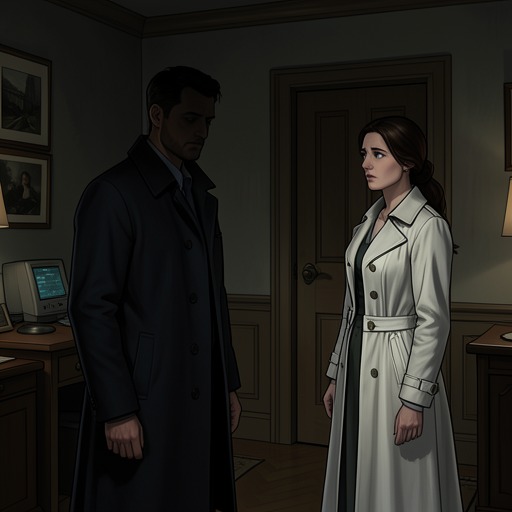
Derek Simmons’s Leather Sap
The Book of MirrorsDerek Simmons’s Leather Sap is the blackjack Derek says he used to strike Joseph Wieder after finding him badly injured in his house. Its significance lies in the distinction Derek draws between the violence already done and his own final blow: the sap turns a visit made amid uncertainty into an act he later admits, then an object he deliberately casts away.
Identity and Acquisition
Derek describes the weapon as a leather sap and says he had found it a few months earlier in the glove box of a car he was repairing. The account establishes no prior connection between the object and Joseph Wieder, or any special history for it; it enters the story as an item of opportunity, available because Derek had kept it. Derek characterizes it as an effective weapon, indicating that he understood its practical use before carrying it to Wieder’s house.
The object’s ordinary concealment in a car’s glove box contrasts with its later role in a killing. At first it is simply something Derek has come across and retained. Once he takes it from that background into the house, its usefulness becomes inseparable from the choice he makes there. The sap does not act on its own, but its presence gives physical form to the gap between Derek’s uncertain intentions and the violence he ultimately commits.
The Visit to Wieder’s House
Derek’s account places the sap within a sequence shaped by suspicion and preparation. On his way home, he had already considered Richard Flynn a likely suspect because he believed Flynn loved the woman Joseph Wieder was pursuing and might therefore have a motive. Derek then went to a bar around eleven, consciously arranging to be seen there. He prompted the owner to believe it was midnight when he left, creating an alibi around a time supplied by Derek himself rather than independently checked by a clock or watch.
He says he still did not know what he would do when he went to Wieder’s house. He was unsure whether the student had left and considered that bad weather might have led Wieder to invite him to stay overnight. Carrying the sap into those uncertain circumstances makes the weapon more than a tool encountered at the scene: Derek had brought it with him, although his account does not settle whether he had already decided to use it.
Derek says he quietly unlocked the front door and entered with a flashlight. The room lights were on; Wieder was on the floor, and the windows stood open. Derek closed the windows and turned off the lights. These actions alter the scene before the sap is used and show him moving through the house rather than immediately summoning help. He was convinced Flynn had attacked Wieder after an argument, but that belief was an assumption, not knowledge of what had happened.
The Blow and Its Circumstances
Derek presents the sap’s decisive use as a moment of recognition and choice. He recalls leaning over Wieder with the flashlight beside him, then seeing Wieder open his eyes and look up. The sight brought back Derek’s memory of following Joseph Wieder and Anne into a hotel room and listening outside the door. He also recalled Anne’s mockery and his belief that he had rescued her from life on the street. The weapon’s use is thus connected in Derek’s telling to a personal grievance that had not been resolved by his earlier suspicions about Richard Flynn.
Derek says he took out the blackjack and hit Wieder once, hard. He describes this as finishing what another person had begun, distinguishing his own action from the attack that had already left Wieder gravely injured. That distinction does not remove his responsibility for the blow: he had entered armed, recognized that the man on the floor might die, and chose to strike him. The sap marks the shift from a visit in which Derek claims not to know what he would do to a deliberate act against a vulnerable person.
Derek later learned that Richard Flynn had not been the person who initially beat Wieder. That correction dismantles the explanation Derek had formed at the house, though his confession does not identify the original assailant. The sap’s role remains specific within the account: it was Derek’s weapon for the final strike, not evidence that he had caused the earlier injuries.
Disposal and Narrative Significance
After the blow, Derek says he locked the door, threw the blackjack into a lake, and went home. The disposal separates the object from the scene and makes concealment part of its narrative function. The account does not establish that the sap was recovered; what it preserves is Derek’s claim that he discarded it. The weapon therefore survives in the story chiefly through testimony, as an absent object whose history must be reconstructed from the person who used it.
Derek says that before sleeping he imagined Wieder dead and felt no remorse. He returned to the house the next morning, and maintained that he did not learn Flynn was not the initial attacker until the investigator came to see him. He also says that before a reporter’s visit he had hardly thought about the episode. Those later statements frame the sap’s use as an act he had mentally buried, even as his account makes its consequences explicit. Wieder died two hours after the attack, according to the medical examiner; Derek insists he believed Wieder had died at once. The difference between that belief and the reported interval underscores what the concealed weapon represents: not a complete explanation of the death, but a material link between Derek’s chosen blow, his departure without calling for help, and the story he eventually tells.