Joseph Wieder
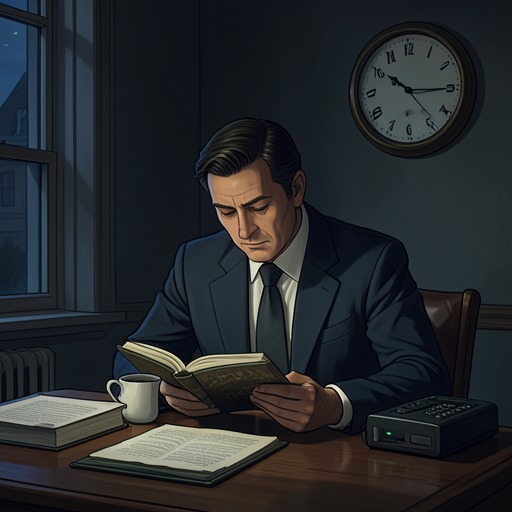
The Book of MirrorsJoseph Wieder is a renowned psychology professor whose work on memory gives him both intellectual authority and a fraught place in the lives of the people around him. Murdered in his Princeton home in December 1987, he becomes the still point around which competing stories of violence and responsibility revolve: a respected researcher, a mentor and caregiver, and a man whose private conduct may have exposed him to danger. His significance lies not only in the unsolved killing, but in the unsettling proximity between his study of memory and the novel’s struggle to establish what anyone can reliably remember.
Identity and Background
Wieder was a prominent academic with a doctorate in psychiatry from Cambridge and a career that included teaching at Cornell. By the time of his death he had published eleven books, including an autobiographical work, Remembering the Future: Ten Essays about a Journey to Myself, published by Princeton University Press in 1984. His public reputation rested on scholarship and expertise, but the cases he encountered also brought him into contact with criminal allegations, psychiatric diagnoses, and contested claims of lost memory.
One case helped shape his interest in the problem. Wieder argued that John Tiburon, accused of murdering a neighbour, was feigning amnesia, while two other experts believed Tiburon was psychotic and genuinely unable to remember. Investigators later found Tiburon’s journal, which detailed his crimes and showed that he had collected information about psychoses that might help him evade conviction. The discovery vindicated Wieder’s judgment and demonstrated why apparent memory loss could not be accepted at face value. He continued to serve as an adviser and increasingly concentrated on repressed memories, hypnosis, amnesia, and the assessment of dangerous offenders in prisons and forensic psychiatric hospitals.
Research on Memory
Wieder’s central research project examined how memories are formed and how mental stimuli produce responses. Laura Baines, who specialized in cognitive psychology and worked under his supervision, contributed mathematical expertise to the project. The collaboration joined her strength in mathematics to a field in which quantitative methods were important but difficult for Wieder, whose own background was less suited to exact sciences.
After examining hundreds of cases of alleged repression, Wieder proposed that severe psychological trauma could trigger a kind of mental self-protection. In his account, the mind might erase a traumatic memory or alter it into a more bearable form, much as the body’s immune system attacks an invading virus. He imagined the brain as possessing a kind of discard mechanism, but did not treat this process as harmless. If it occurred spontaneously, he reasoned, it could damage memory irreversibly, removing benign recollections along with traumatic ones. The attempt to escape one injury could therefore create another, potentially worse one.
That danger led Wieder to consider whether a therapist might learn to activate and manage the process deliberately. The possibility is presented as a research question, not as a proven treatment. It also exposes a tension at the heart of his work: the wish to relieve suffering by controlling memory carries the risk of destroying more than the patient meant to lose. In a novel where recollection can be both evidence and self-protection, Wieder’s theories make memory a clinical subject and a source of narrative uncertainty.
Students, Patients, and Professional Relationships
Laura introduced Richard Flynn to Wieder in the fall of 1987, when she was living with Flynn and conducting research under the professor’s supervision. Wieder wanted an electronic record of his library, and Flynn, who needed money, offered to organize it. The arrangement brought the young writer into Wieder’s home and gave him direct access to the professor shortly before the murder. Years later, Laura recalled that Flynn had been considered a suspect after Wieder was killed. Their working connection thus links Wieder’s academic life to the manuscript that reopens questions about the case.
Wieder also had a continuing relationship with Derek Simmons, the handyman who worked at his house. He offered Simmons practical care as well as professional attention. On the day before the murder, Wieder was packing for a holiday trip to the Midwest and had Simmons repair a downstairs toilet; he invited him to lunch, ordered Chinese food, and urged him to keep taking his medication. He also promised to continue looking after Simmons even if he left the country for a time. This ordinary gesture of care later becomes difficult to separate from the darker history Simmons describes.
Simmons said he had been committed to Trenton Psychiatric Hospital after being accused of murdering his wife, Anne, and being declared legally insane. He claimed Wieder visited him under the pretext of professional interest and promised to arrange a transfer to Marlboro Hospital. He also alleged that he had discovered Anne and Wieder were lovers, and said he had used that knowledge to threaten to involve the professor in his murder case and press for an insanity finding. These claims are Simmons’s account, not an independently established explanation of Wieder’s private life. They nevertheless suggest how care, professional authority, and possible self-interest could coexist in the same relationship.
Murder and Conflicting Accounts
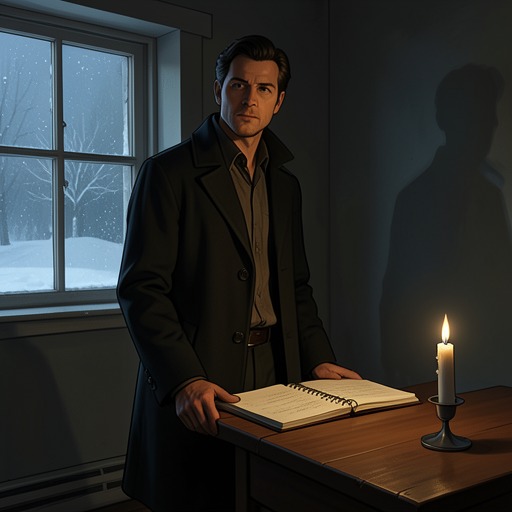
Wieder was killed at his home on the night of December 21–22, 1987. Simmons discovered his body and called emergency services at 6:44 the following morning. The medical examination placed the death at about 2 a.m. and attributed it to blood loss from repeated blows with a blunt object, probably a baseball bat. Investigators reconstructed an attack that began as Wieder sat on the living-room couch. He rose and tried to flee toward a window overlooking the lake, fending off blows that fractured both forearms; during the struggle the television fell from its stand. A final blow to his left temple caused severe brain injury, and Wieder died after cardiac arrest. The investigators inferred that the assailant was probably right-handed. Despite extensive investigation, the police never identified a perpetrator conclusively.
Simmons later admitted striking Wieder with a blackjack after finding him alive in the house. He said he had gone back to retrieve his forgotten toolbox, seen lights on in the living room, and approached the house from the backyard. In his account, Wieder was at the table with Flynn. Simmons described his blow as finishing what another man had started, then said he locked the door, threw the blackjack into the lake, and went home. The medical examiner’s conclusion that Wieder survived for two hours after the attack makes Simmons’s claim that he died at once consequential: an ambulance might have saved him. Simmons acknowledged hearing that conclusion but maintained that Wieder had died on the spot. His admission therefore resolves one part of the mystery while leaving the sequence and responsibility for the fatal injuries entangled in disputed recollection.
Narrative Role and Significance
Wieder is absent from the later investigation as a living participant, yet his influence persists through research, recollection, and testimony. A manuscript about the events of 1987 makes him one of its central figures, while those investigating its claims must weigh what its writer says against the memories of people connected to Wieder. The case becomes a test not only of who struck him, but of how much can be known from accounts shaped by fear, self-interest, injury, and time.
His professional theory of memory supplies a particularly sharp irony. Wieder studied how trauma might erase or reshape recollection, while the people around his murder offer memories that may be incomplete or contested. His own work warns that forgetting can be protective yet destructive; the investigation shows that remembering is not automatically a route to certainty. The professor’s life and death thus bind the novel’s psychological questions to its crime plot: the man who sought to understand how memory changes the past becomes the subject of a case in which the past cannot be reconstructed without doubt.