Joseph Wieder–Derek Simmons relationship
The Book of MirrorsJoseph Wieder–Derek Simmons relationship was at once clinical, practical, and deeply consequential: Wieder assessed Simmons after his wife’s murder, treated him during hospitalization, and later helped him build a life outside an institution. The relationship also shaped the investigation into Wieder’s own death. Simmons claimed he had seen the killer, yet the illness that had made Wieder his advocate was also used to discount him as a witness.
Clinical Assessment and Treatment
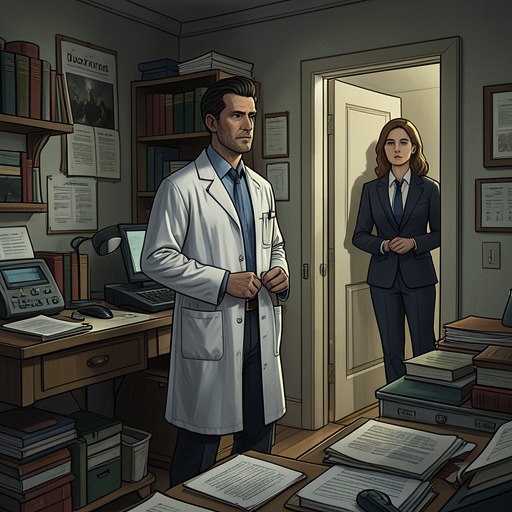
Wieder entered Simmons’s life after Simmons was accused of murdering his wife, Anne. Simmons’s attorney sought a finding of not guilty by reason of insanity, while Simmons himself continued to insist on his innocence. Wieder was one of three experts asked to assess him, and, according to Laura Baines, gave the case exceptional importance. After examining Simmons several times, he concluded that Simmons had a rare dissociative disorder and had been wrongly diagnosed with schizophrenia when young.
Wieder’s explanation centered on fugue states, in which a person could lose self-awareness, memory, and a sense of identity. He considered it possible that, under stress and in the altered consciousness of waking suddenly, Simmons could have acted as though he were another person and later remembered nothing of the act. This did not establish what had happened the night Anne died; it offered a clinical account of how Simmons might have lacked access to his own actions. Wieder’s report persuaded the court to commit him to Trenton Psychiatric Hospital rather than resolve the case through the ordinary criminal process.
With the hospital’s and Simmons’s lawyer’s agreement, Wieder continued treating him there. The treatment included hypnosis and a then-revolutionary mixture of anticonvulsant drugs. This care was interrupted when another patient attacked Simmons, inflicting a serious head wound. The injury left him with profound retrograde amnesia: he could form new memories, but his earlier memories could not be recovered. The distinction mattered to their relationship thereafter. Wieder could continue to help Simmons, but he could not restore the life that Simmons could no longer remember.
From Hospital Care to Everyday Support
A year after the attack, Wieder insisted that Simmons be transferred to the less restrictive Marlboro Psychiatric Hospital. There he helped Simmons reconstruct a workable personality and routine. The recovery was necessarily incomplete. Simmons retained his name and physical appearance, and could write and work as an electrician, but he could not recall learning either skill. His past remained inaccessible even as practical abilities persisted.
When a judge approved Simmons’s discharge in spring 1985, Wieder recognized that legal release did not mean Simmons could manage alone. Simmons had no employment prospects, no reliable family support, and a father who had moved away without leaving a forwarding address. Wieder rented him a small one-bedroom apartment near his own home and paid him to maintain the house. Simmons lived by himself; neighbors regarded him as strange, and at times he shut himself away for days or weeks. During those periods Wieder brought him food and made sure he took his medication.
The arrangement extended their connection beyond diagnosis and hospital treatment. Wieder supplied housing, income, and repeated assistance with basic care, allowing Simmons a measure of freedom while accounting for the limitations imposed by his condition. Keller, who encountered Simmons doing repairs at Wieder’s house, saw him as shy, reclusive, and gentle. Simmons spoke of Wieder with reverence and understood how much he owed him. He had also adopted a shelter puppy, Jack, whom he walked each evening. These details show a life made possible not by restored memory, but by a dependable structure of help around its absence.
Unequal Knowledge and the Unsettled Past
The care Wieder gave Simmons did not settle the question of Simmons’s responsibility for Anne’s death. The account of the case presented to Laura included evidence that Anne had been seeing another man and had returned home in the early morning; investigators came to believe that Simmons killed her after an argument and then called for an ambulance. Wieder’s dissociative-disorder diagnosis supplied a possible explanation for Simmons’s claimed lack of memory, not proof that he had not killed her. The relationship therefore rests on an unresolved distinction between care for a vulnerable patient and certainty about the crime of which he was accused.
Wieder’s broader work helps explain the professional setting in which he approached Simmons. After consulting on cases involving disputed amnesia, he became increasingly interested in repressed memory, hypnosis, and the possibility of deliberately managing traumatic memories. He also recognized that spontaneous memory erasure could damage a person further, removing benign memories along with traumatic ones. The evidence does not establish that Simmons’s treatment was itself part of the separate project Wieder supervised, but it places their clinical relationship within Wieder’s wider and potentially fraught research into memory and intervention.
Witness to Wieder’s Death
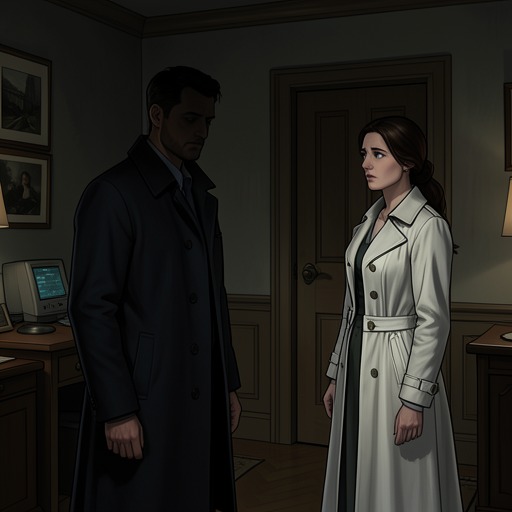
Years later, Simmons told Keller that he knew who had killed Wieder and had tried to say so at the time. He believed his statement had been disregarded because he had previously been accused of murder, confined in a psychiatric hospital, and given medication. In his view, those facts would have made lawyers and investigators treat him as delusional or unreliable. The very history that explained why Wieder had cared for him had become a reason others might refuse to hear him.
Simmons described believing that Richard Flynn had returned and killed Wieder, with Laura either assisting or witnessing the crime. He said he had not told police about Laura because he feared the press would damage Wieder’s reputation. His account was not independently confirmed, and it conflicted with Frank Spoel’s version of who had been at the house and what had happened. When Keller confronted Simmons with those discrepancies, Simmons suggested that Spoel might have forgotten or might be lying, but did not resolve the contradiction. The relationship thus concludes not with a definitive vindication of Simmons’s testimony, but with a sharp reversal: Wieder had once argued for a more careful understanding of Simmons’s mental state, while the investigation after Wieder’s death had to confront how that same history could undermine Simmons’s credibility.