Sarah Harper Sends Laura Baines’s Book to Richard Flynn
The Book of MirrorsSarah Harper’s decision to send Richard Flynn a copy of Laura Baines’s book turns a belated discovery into an uncertain intervention in the Wieder case. Sarah believed the celebrated book was the manuscript Joseph Wieder had planned to publish, and she suspected Laura had taken it before the murder. By mailing it to Flynn without explanation, Sarah supplied a clue but left its meaning—and its effect on him—open.## Discovery of the Book Sarah’s action began with a chance discovery in the library of a rehabilitation centre where she had stayed. The book, published in 1992, was Laura Westlake’s first, and a photograph on its cover made Sarah recognize the author as Laura under a changed name. The recognition joined a public success to a past Sarah had never resolved: Westlake’s book had received unanimous praise, and, Sarah said, her entire subsequent career had been built on it.
The discovery came after a long separation. Sarah had not seen or spoken to Laura again after returning to Princeton in the fall of 1988. During the intervening period, Laura called Sarah at home a few times, but Sarah did not want to speak with her. Sarah had taken a sabbatical while physically and mentally low, told her parents she had suffered a bad breakup, and gone to therapy. When she returned, the murder was already old news, and no one asked her about the case. Against that silence, the book’s appearance offered a material link to a past that had otherwise receded from discussion.
Sarah concluded that the book was the work Wieder had intended to publish. This was her judgment, not a confirmed identification of the manuscript: she knew the book’s author and history, but the surviving account does not establish how she compared it with Wieder’s missing work. Its significance for her lay in the conjunction of the recognizable author, the timing of its publication, and the vanished manuscript.## Sarah’s Theory of the Manuscript Sarah suspected Laura had stolen Wieder’s manuscript before the killing. She was uncertain whether the theft had played any part in the murder, and her further suggestion—that Laura might have manipulated Flynn into committing it—remained a suspicion rather than established fact. The book, therefore, did not settle the case for Sarah; it sharpened the question of what Laura had taken and what Flynn knew.
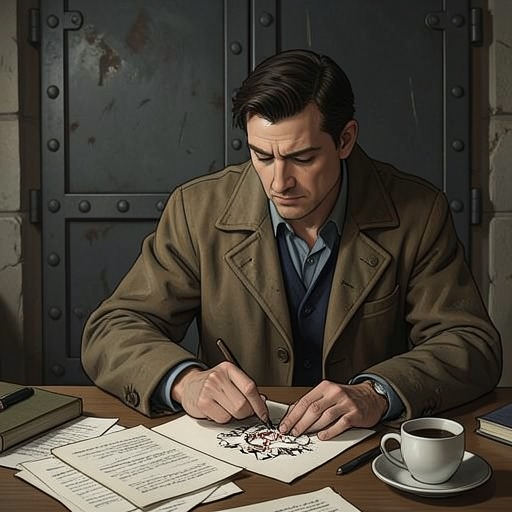
Sarah believed Flynn probably did not know that Laura had taken Wieder’s manuscript. In her reconstruction, he may still have understood the events as a love triangle that ended badly for everyone, rather than as a story involving a stolen book. That distinction matters to the mailing: Sarah sent the book to someone who, she thought, lacked the information that would connect Laura’s later success to Wieder’s missing work. She did not tell Flynn what she believed or enclose any account of her suspicions.## The Mailing to Flynn Finding Flynn’s address required Sarah to work from sparse identifying details. He lived in the city, where, she said, there were many people named Flynn. Sarah eventually tracked him down through his education: she knew that he had majored in English at Princeton and graduated in 1988. She placed a copy of Laura’s book in an envelope and sent it to him without a covering letter.
The absence of a letter left the book to function as an unexplained prompt. Sarah did not specify what she expected Flynn to recognize or do, and she could not confirm whether he understood why the volume had arrived. Her account presents the act as deliberate—the address was sought and the copy dispatched—but with its intended message withheld. The object carried the connection Sarah had made between Laura’s career and Wieder’s lost manuscript, while the lack of explanation left Flynn to supply any interpretation himself.## Uncertain Aftermath Sarah later learned that Flynn had died. She did not know whether receiving the book had led him to put the whole story on paper. She could only propose that writing it might have been his way of retaliating against Laura for lying to him. The possible chain from Sarah’s anonymous-seeming package to Flynn’s account is therefore unresolved: the sequence invites a connection, but Sarah expressly stops short of claiming causation.
When the interviewer suggested that Laura had escaped consequences because Sarah and Richard had covered for her, Sarah did not offer an official statement. She said that Laura had known how to take advantage of the feelings of people who cared about her, then left the use of her information to the interviewer. Her refusal limits the evidentiary force of what she has disclosed even as her account alters its significance: the book is not merely a later success but, in Sarah’s view, a possible trace of the missing manuscript and a reason Flynn may have written. The mailing thus brings evidence into the story without resolving either Laura’s responsibility or Flynn’s response.