
Looking and Being Looked At
The Box ManRepeated acts of observation transform voyeurism from apparent power into exposure, rivalry, and uncertainty.
increasing Bearing strength in each event
 decreasing
Bearing strength in each eventdecreasingThe Observation Slit
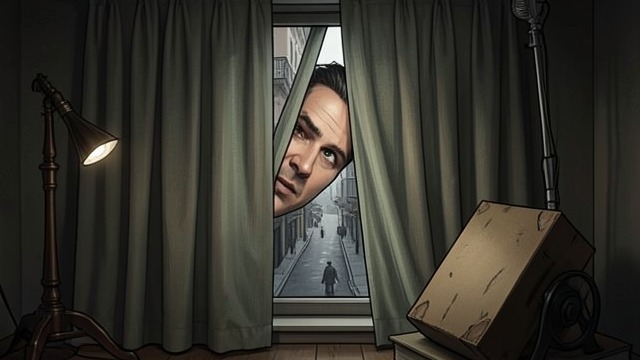
An Eye in the Wall
A controlled view
The narrator explains how a slit in a vinyl curtain lets the box man observe the street while concealing its interior. Tilting the box adjusts the opening and gives the wearer a form of expressive control.
Defense becomes display
The slit is not only a peephole but a threatening look directed outward. The box offers protection by converting the hidden wearer’s eye into a visible signal of resistance.
A Watches the Watcher
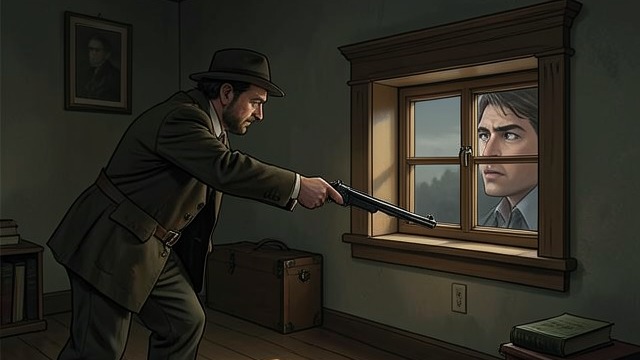
A Returns the Gaze
A’s attempted control
A points an air rifle at the box below his window, but the box man directs the observation slit back toward him. A finds himself watched while trying to decide where to shoot.
Fear reverses direction
The concealed face makes A’s power uncertain. The encounter shows that looking at someone does not guarantee access to their identity or control over their response.
The Photographer’s Habit
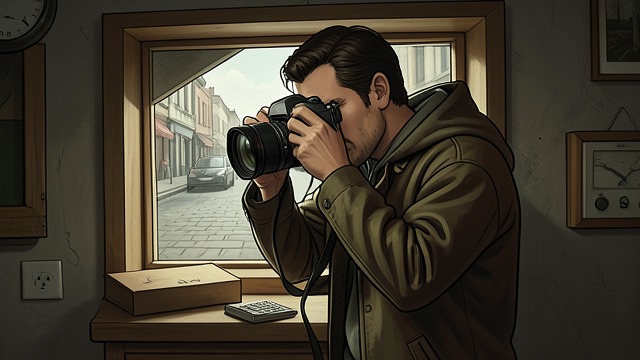
Looking as a Profession
Cameras and concealment
The narrator identifies himself as a photographer who used the camera to inspect places and people. His professional practice gives him a technical vocabulary for looking but does not settle its ethical limits.
A portable hole
He later imagines the box as a way to keep watching without being seen. The desire to observe becomes central to his identity rather than a temporary professional habit.
The Nurse in the Mirror
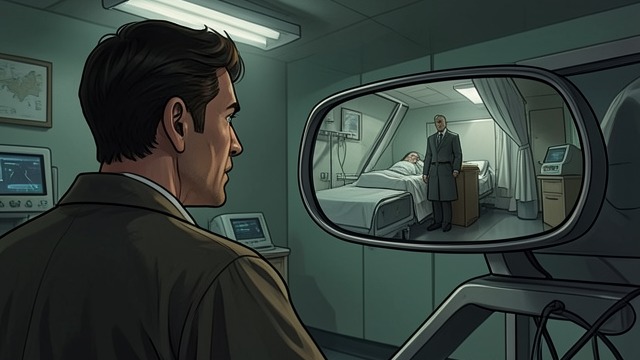
A Viewer Enters the Scene
Reflection and distance
The narrator uses a rearview mirror to peer into a hospital room and sees Toyama Yoko with another box man. His view is mediated by glass and reflected angles.
Jealousy replaces mastery
Although he can see the scene, he cannot know what it means or participate in it. The act of looking makes him feel more excluded, not more powerful.
The Look Returns
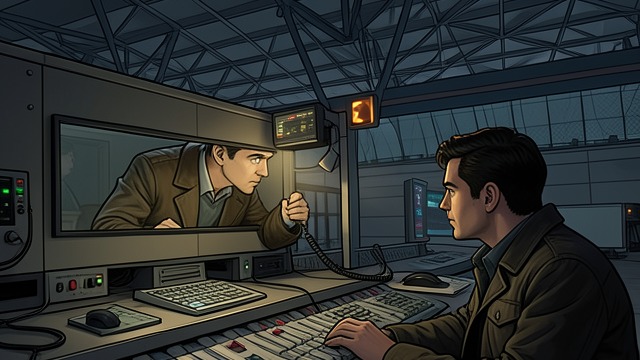
The Fake Man Stares Back
A mirrored technique
The fake box man turns his observation slit toward the narrator, reproducing the very gaze that the narrator once used against others. The narrator recognizes himself in the gesture.
The observer is exposed
The encounter erodes his distinction between watcher and watched. By the climax, looking has become an unstable relation in which each person can be both subject and object.
During the opening instructions for making a box
During A’s confrontation with the box man
Before the narrator becomes a box man
After the bridge meeting, at the hospital window
During the clinic confrontation
