
The Failed Courting of the Narrator
The Box ManA stylized courtship turns into a test of whether the narrator can accept reciprocal intimacy rather than remain safely behind a performance.
increasing Bearing strength in each event
 decreasing
Bearing strength in each eventdecreasingAn Audience Is Required
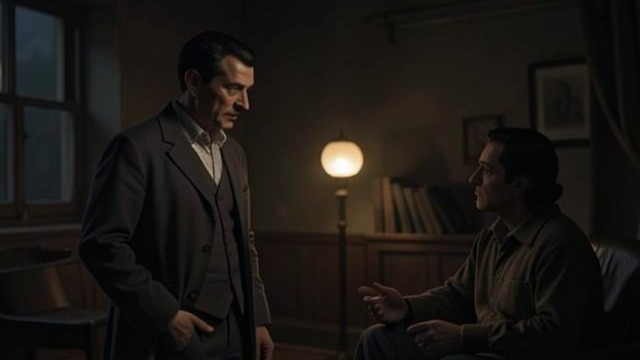
A One-Man Performance
Love as speech
The narrator announces a love that begins after loss and asks whether his listener will let him continue. He frames the encounter as a performance in which the other person has a role.
Intimacy on his terms
By narrating rather than acting, he can shape the atmosphere without risking an immediate response. The speech introduces the tension between artistic control and genuine reciprocal contact.
Time for Only Five Minutes
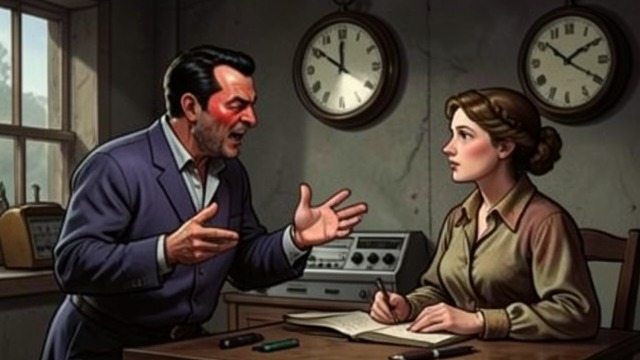
A Limited Invitation
The listener sets a boundary
The narrator’s companion permits him five minutes and warns him not to waste time. The exchange turns courtship into a timed event, with the speaker conscious of the approaching end.
Pressure heightens performance
The short limit encourages the narrator to intensify his language about heat, desire, and transformation. It does not, however, guarantee that his listener shares the feeling he describes.
A Claim About Love

Lost Love as a Beginning
Desire without ordinary growth
The narrator distinguishes his love from a relationship that gradually develops. He describes it as beginning with the recognition that it is already lost.
Protection through abstraction
The formulation lets him treat pain as beautiful and potentially free of grief. Its elegance may protect him from confronting the ordinary risks of being accepted or rejected.
The Performance Ends
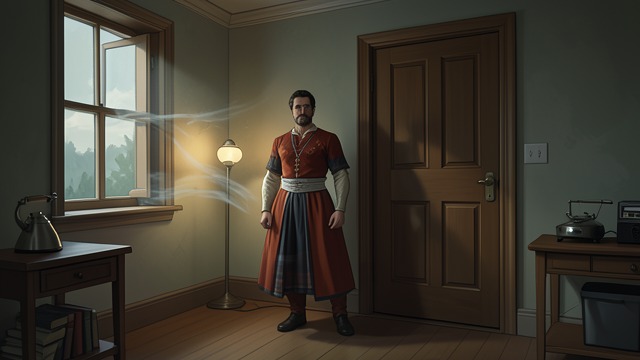
No Curtain Bell
The scene closes
The courtship is declared over without a bell, and the narrator insists that failure does not mean he was wrong. He values the experience of the fiery wind more than a successful conclusion.
A private victory
This conclusion allows him to preserve the meaning of his attempt even as the relationship does not progress. The narrative’s theatrical language both reveals and conceals his disappointment.
The Door Closes
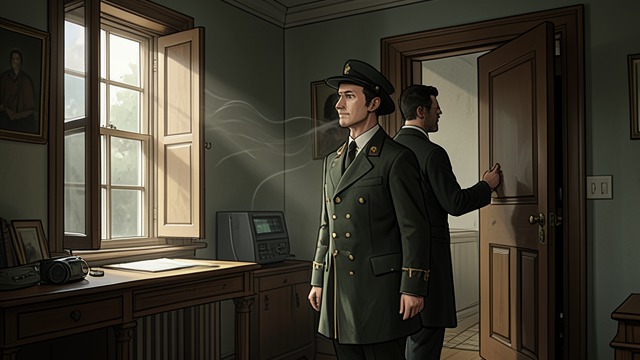
Separation Without Anger
A quiet departure
The narrator hears the front door close and says he feels neither anger nor bitterness. He interprets the sound as carrying sympathy rather than hostility.
Words no longer help
He believes that words could not restore the relationship, because the stage at which they were useful has passed. His account preserves closeness as a memory even while he accepts separation.
At the beginning of the five-minute courtship
During the middle of the courtship performance
Near the end of the five-minute exchange
At the end of the allotted five minutes
After the failed courtship
