
The Executioner’s Moral Burden
The Box ManThe narrator’s plea for assistance in dying shifts responsibility toward an imagined executioner without resolving his own divided will.
increasing Bearing strength in each event
 decreasing
Bearing strength in each eventdecreasingA Room Like a Coffin
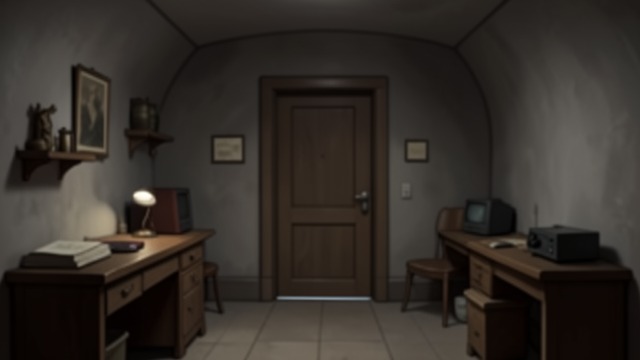
The Narrator Chooses the Room
A voluntary confinement
The narrator insists that he is not dead and says he requested the windowless room. Its proportions and lack of daylight suit his wish to retreat.
A setting shaped by death
The room’s ordinary purpose and the narrator’s stated preference make his position ambiguous. He is alive, but chooses surroundings that resemble a coffin and speak to his declining attachment to the world.
A Visitor Is Expected
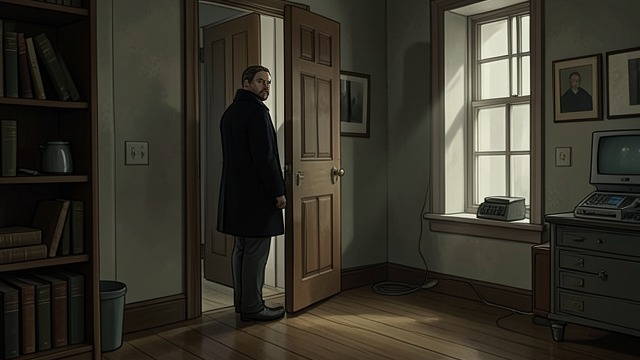
The Executioner at the Door
Footsteps anticipated
The narrator describes hearing a person approach the morgue and imagines the visitor as someone obligated to kill him. He reasons about the door and the visitor’s hesitation.
A relationship constructed
The visitor may be real, imagined, or part of the narrator’s staged account. By addressing the person directly, the narrator turns possible violence into a conversation about shared responsibility.
A Request for Help
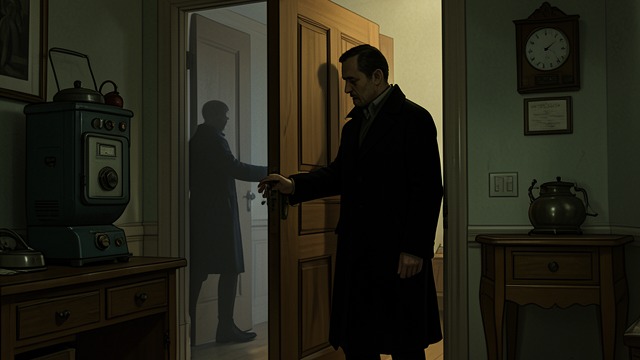
Consent and Contradiction
Death requested
The narrator says that he has chosen death and asks the visitor to help while he remains lucid. He insists that the principal responsibility would still belong to himself.
Desire changes direction
In the same passage, he imagines pursuing and killing Toyama Yoko and clinging to life. The contradiction reveals that his request is not a settled expression of will.
Silence Behind the Door
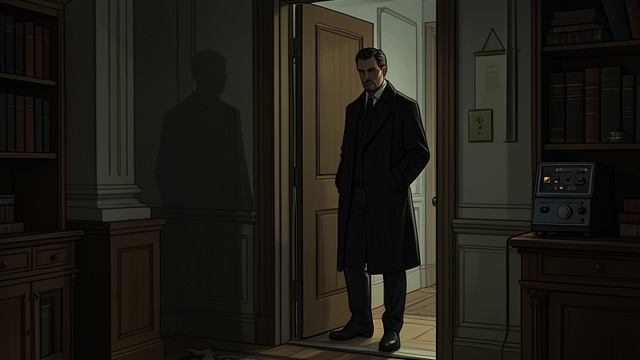
No Answer Comes
Waiting becomes painful
The narrator calls through the door and receives no response. What he took for approaching footsteps may have been wind or an error in interpretation.
Hope destabilizes the plan
The absence of the expected visitor makes the narrator reconsider whether anyone is coming. He returns to the possibility that Toyama Yoko’s presence could keep him alive, showing that his willingness to die depends on changing circumstances.
The Imagined Injection
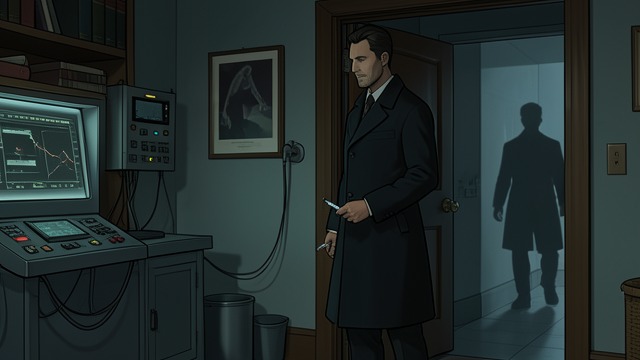
A Death Described in Advance
A detailed procedure
The narrator describes an injection and the handling of his body as though the visitor has entered and acted. He narrates physical sensations and a dream of weightless flight.
Action remains uncertain
The passage ends with death and a staged drowning plan, but the broader novel repeatedly contests the narrator’s reality and chronology. The reader cannot confirm whether the killing occurs.
During the narrator’s account of the morgue
Before the imagined killing
During the narrator’s speech from the bed
After the narrator calls to the visitor
Near the end of the executioner passage
