
From News Addiction to Anti-Installmentism
The Box ManThe narrator’s critique of reassuring news expands into opposition to the modern systems that reward dependable identities and predictable obligations.
increasing Bearing strength in each event
 decreasing
Bearing strength in each eventdecreasingThe Broadcast Habit

A World Delivered in Bulletins
Constant updates
The narrator consumes newspapers, television, and radio, fearing that he will miss a new report. Events arrive in rapid summaries that create an impression of continual transformation.
A desire for control
He knows that news may not bring him nearer to truth, yet follows it compulsively. Information offers a temporary framework for a world he otherwise experiences as unstable.
The Unreported Death

A Change Outside the News
A man collapses
The narrator sees a stranger die on a sidewalk and considers recording the event, then recognizes that it will not become news. The death does not need publication to transform the scene.
The limits of headlines
The experience makes the narrator reconsider whether reported events can capture the scale of personal change. His attention shifts from the volume of information to the difference between witnessing and reading.
Reassurance in Catastrophe

Survival After the Bulletin
Disaster and continued life
The narrator interprets ordinary reports of war, accidents, and rising prices as indirect reassurances that the listener is still alive. News repeatedly announces that the world has not yet ended.
The awaited final report
He suspects that he once listened in hope of hearing the ultimate broadcast. Because news continues, the final event is perpetually postponed.
The Installment Society
Credit Requires a Public Identity
A dependable name
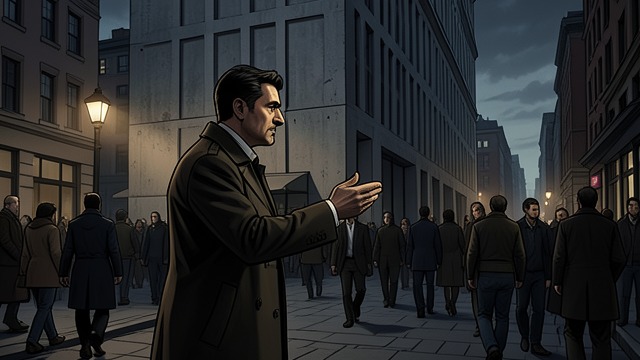
The narrator argues that installment buying depends on a reliable occupation, address, and public standing. Modern convenience therefore rewards people whose identities can be verified and secured.
Refusal as protest
He describes himself as an opponent of installment buying because he rejects the need to mortgage his identity and work. His anti-installment position connects consumer systems to the box man’s refusal of ordinary exposure.
The Box Man Against the Times
Refusing Easy Classification
An alternative to clearance
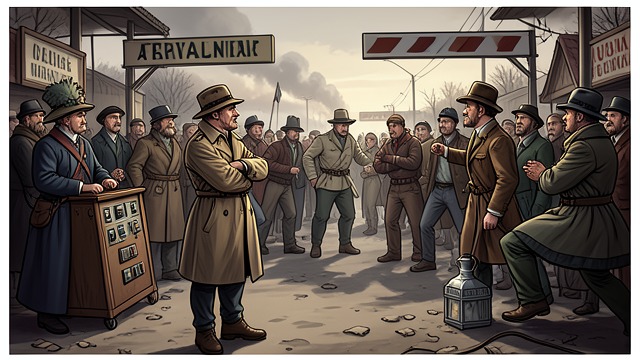
The narrator imagines only a guerrilla or a box man as fully willing to evade the convenience of installment credit. Both figures resist being reduced to dependable records.
A protest without resolution
This refusal offers a symbolic challenge to modern identity systems but leaves the narrator vulnerable to poverty and invisibility. His opposition is a stance, not a practical social solution.
Before the narrator’s withdrawal from ordinary life
During the narrator’s former photography work
After the narrator understands the appeal of news
During the final insertion on modern convenience
Near the final insertion
