
The City as a Map of Fear
The Box ManThe narrator’s changing response to streets and landmarks reveals how place can feel welcoming, hostile, or impossible to navigate.
increasing Bearing strength in each event
 decreasing
Bearing strength in each eventdecreasingThe Box Man Prefers Crowds
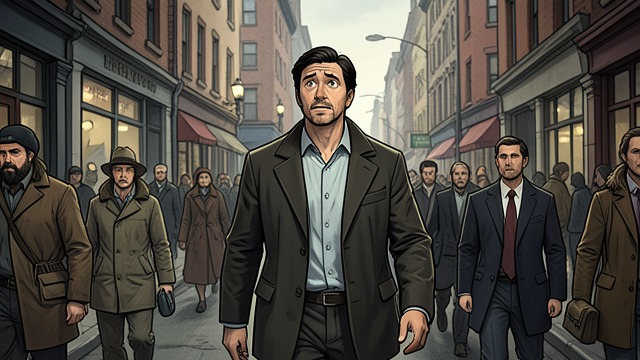
Familiar Urban Confusion
A city that feels honest
The narrator prefers busy districts where several straight roads can pass for a labyrinth. Their crowds and apparent confusion feel more welcoming than the deceptive straight roads of provincial towns.
Place and identity align
The urban setting suits a person who wishes to remain among strangers without becoming fully known. The narrator’s comfort depends on accepting a landscape that does not demand a clear destination.
A Road That Pretends to Be Straight
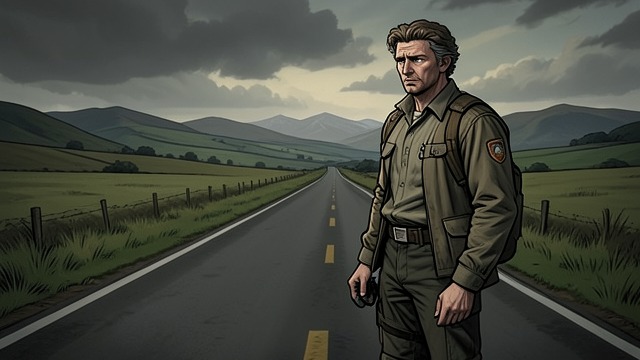
The Provincial Road
A scene without people
After the shooting, the narrator looks at a quiet road and suspects that the scenery is trying to make him surrender. Its calmness feels staged rather than reassuring.
Direction becomes distrust
He prefers crowded urban confusion to this apparently simple landscape. A road can be physically clear while psychologically making him feel lost.
The Slope to the Hospital
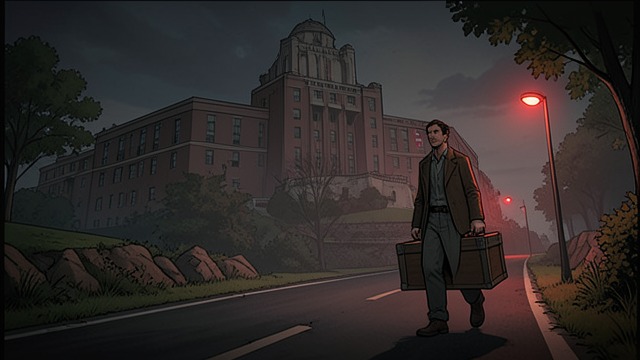
A Familiar Route Feels Far
Walking with the box
The narrator takes a route he has traveled before, but it seems unusually long once he wears the box. The hospital’s red light remains visible while the details of the road recede.
Destination narrows perception
The clear objective changes the way he sees the landscape. The box’s familiar perspective weakens as the narrator moves toward a place where he expects personal consequences.
The Bridge as Execution Ground
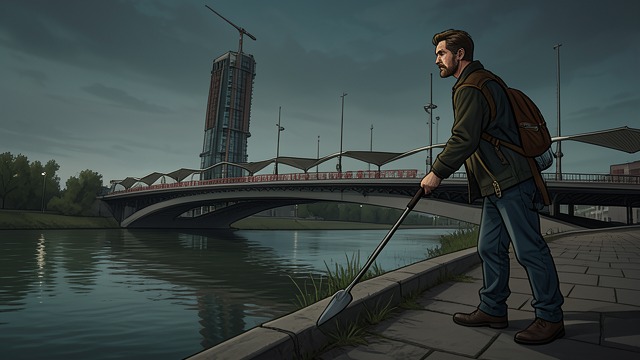
A Site Chosen for Danger
Water and traffic
The narrator studies the canal, tide, whirlpools, and bridge girders while waiting for the buyer. He treats the location’s hazards as part of a possible murder plan.
Geography feeds suspicion
The physical details help him devise a method for protecting his notes, but they also reinforce his expectation that the meeting is an execution. Place becomes evidence for a story he is already prepared to believe.
A Room Reappears as an Alley
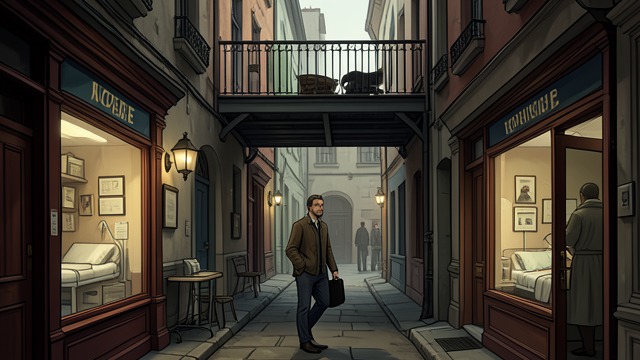
The Hospital’s Unstable Map
Familiar space breaks open
The narrator sees an alley, shops, and an unfinished balcony where he expects a hospital room. The setting shifts into a dead-end space without an obvious exit.
The search continues
He looks for Toyama Yoko but cannot find her within the altered landscape. The city’s geography becomes inseparable from his uncertainty about what is real.
During the narrator’s reflections on towns
After the narrator is shot near the soy factory
The night the narrator returns to the hospital
During the rainy night meeting
Near the end, after the narrator cuts the power
