
The Box Man’s Capacity for Harm
The Box ManThe novel tests the claim that box men are harmless by showing violence, self-defense, and arguments that excuse killing.
increasing Bearing strength in each event
 decreasing
Bearing strength in each eventdecreasingThe Apparition’s Poison
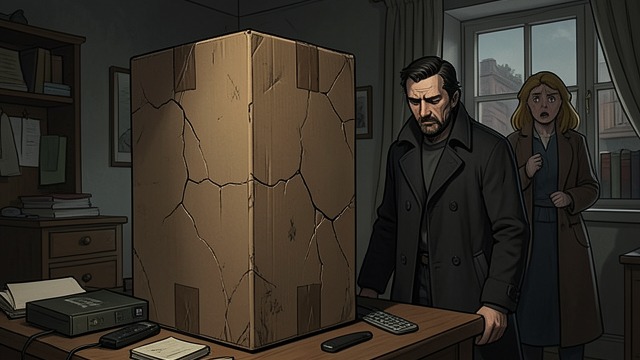
A Threat Without a Face
An unsettling presence
The narrator says a box man possesses a kind of poison that cannot be neutralized by treating him as an amusing spectacle. The covered figure provokes fear despite appearing inconspicuous.
Suspicion precedes action
The box man’s concealment invites ordinary people to imagine danger. The story leaves open whether that fear comes from real threat or from society’s discomfort with an unclassifiable person.
A Chooses the Rifle
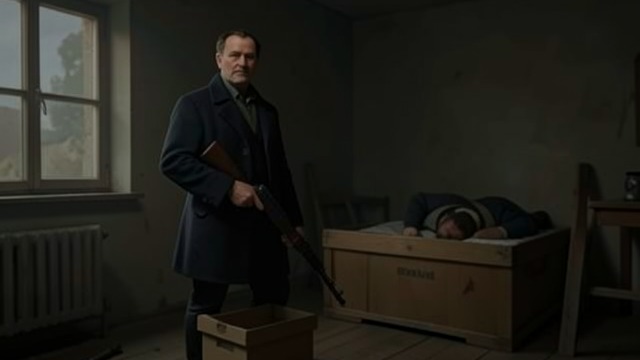
Private Violence Begins
A takes control
A borrows an air rifle when the police and janitor fail to remove the box man. He hopes a warning shot will end the problem without serious consequences.
The weapon does not settle matters
The shot wounds the concealed person but produces no visible surrender. A’s attempt to restore order creates greater uncertainty and eventually draws him toward the box identity himself.
The Narrator’s Self-Defense Plan
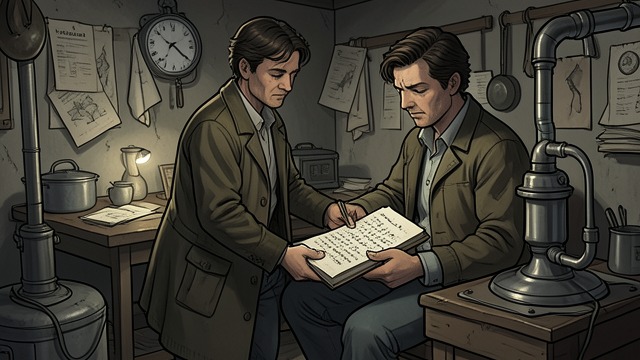
Notes Against a Suspected Attack
Evidence prepared in advance
The narrator keeps detailed notes and devises a plan to send them downstream if the buyer’s substitute attacks him. He treats the environment as part of his defense.
Suspicion produces escalation
His preparations assume an execution plot without confirming one. The narrator’s fear is both a survival strategy and a force that can make peaceful uncertainty feel like imminent violence.
The Clinic Gunfight
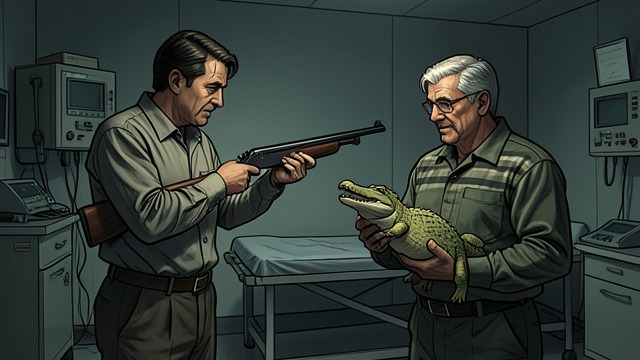
A Box Man Strikes Back
Weapons exposed
The fake box man aims an air rifle at the narrator. The narrator uses a sand-filled crocodile toy to knock the weapon away and attack the man’s leg.
Violence interrupts interpretation
The fight resolves an immediate threat but not the argument over identity or motive. The narrator’s claimed harmlessness has given way to force when his position is challenged.
Violence Recast as Mercy
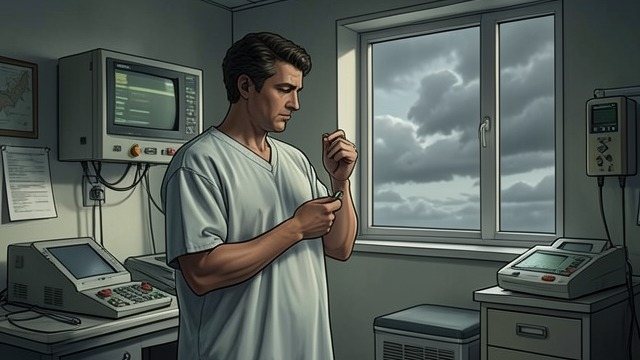
A Moral Argument Under Pressure
Euthanasia broadened
The narrator invokes a court precedent and argues that killing people outside legal protection might be understood as euthanasia. He uses the box man’s exclusion to challenge ordinary categories of crime.
No easy absolution
The claim follows scenes of actual violence and imagined murder. Rather than resolving responsibility, the argument shows how exclusion can be used to justify harm as well as to describe vulnerability.
During the narrator’s early description of box men
After the apartment officials decline to intervene
During the narrator’s wait under the canal bridge
At the climax of the hospital confrontation
During the narrator’s final discussion of law and death
