Homeless Man's Death in the Shinjuku Station Underpass
The Box ManHomeless Man's Death in the Shinjuku Station Underpass is a newspaper-reported death that turns urban anonymity into a stark physical fact. A man sat in a busy public passage for hours and died there without attracting notice; only after patrol members found him did the scene become an official matter. The account gives no cause of death, but its particulars show how a person can be present in the heart of a city and nonetheless pass outside other people’s attention.
Discovery in the Underpass
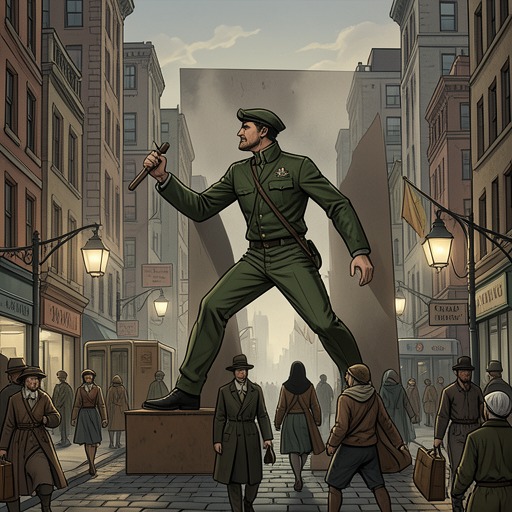
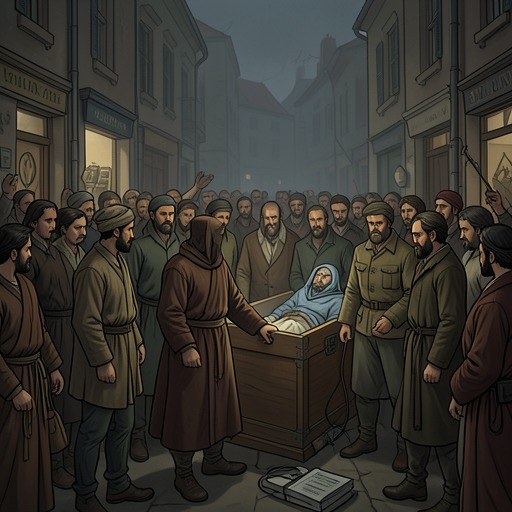
At about seven in the evening on the twenty-third, members of the Shinjuku patrol discovered the body leaning against a pillar in the underground passage at the West Exit of Shinjuku Station in Tokyo. People returning from work and shoppers were moving through the passage. The report places the death not in an abandoned margin but in a route used by several hundred thousand passengers a day. Eyewitnesses said the man had remained seated in the same position since noon. No one had taken notice of him or reported him during the six or seven hours before the police found him. The interval gives the account its force: the death was discovered only after an extended period in which ordinary public movement continued around the motionless man.
A Person Without an Identifiable Life
The report describes the dead man as a forty-year-old vagrant, five feet two inches tall and of medium weight. He wore a long-sleeved floral shirt and work boots, and his hair was in the untidy style associated with a vagrant. These details give the reader a visible figure, but they do not establish who he was. His possessions amounted to 125 yen in change and several sheets of newspaper, perhaps intended for sleeping on. He had nothing that could establish his name, identity, or place of residence. The newspaper sheets suggest a practical use, while the missing identifiers leave his life outside the account: the report can inventory what he carried but cannot connect him to a home or a known name.
The Pillar and the Failure to See
Many people were nearby, as was a line of public telephones. The man was also less than ten yards from a police box. Yet the officer on duty said he had not been visible from the other side of the pillar. That detail locates the failure of attention in the arrangement of the scene as well as in the behavior of passersby: a small obstruction separated the man from the officer’s view, while the surrounding crowd did not prompt anyone to check on him. The headline, Dead by the Roadside, and its claim that the man was ignored by 100,000 people sharpen the contrast between numerical scale and individual recognition. The passage was crowded and heavily used, but no one’s presence amounted to seeing this particular person. The report does not say that the man was deliberately avoided; it records a more unsettling absence of notice.
Anonymity as a Public Fact
The episode resonates with the account’s wider attention to people who remain concealed within ordinary city life. The narrator observes that Box men may be numerous yet scarcely discussed, and imagines an Anonymous City where nameless inhabitants can move without being forced into constant defensiveness. The dead vagrant is not identified as a Box man, and the report gives no basis for treating him as one. Instead, his death supplies a real-world counterpart to the broader concern: concealment may be chosen, but social invisibility can also be imposed by indifference and circumstance. The report’s force comes from the mismatch between the man’s exposed location and his unrecorded identity. He was physically present among commuters, shoppers, telephones, and the police box, yet remained unnoticed for hours and left no name by which the report could restore him to public memory. His death makes anonymity more than an idea about city life: it becomes the condition under which a person can disappear in full view.