Hospital
The Box ManHospital is a place of care whose authority is compromised from the outset: its medical work is carried on by a practitioner using another man's name, while the people connected to it conceal the extent of that arrangement. Later, witnesses link a box-wearing figure to its rooms, and the Box Man Narrator reaches its locked door hoping to distinguish himself from the false identity he believes the girl inside expects.
Clinic and Medical Practice
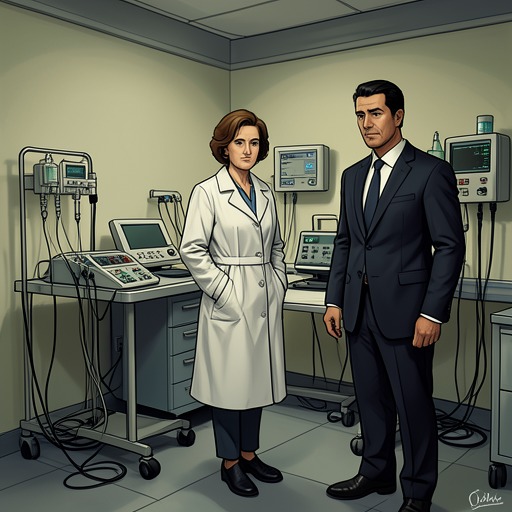
After demobilization, the narrator worked with the Army Medical Captain to open a clinic, assisting in both its management and its treatment of patients. The Captain's drug addiction left him unable to examine or treat them in person; he gave instructions through medical charts, while the narrator performed the practical work. The narrator says he had learned surgery during wartime service and had developed particular skill in operations such as appendectomies.
The arrangement depended on the Captain's credentials. The narrator practiced under the Captain's name and identity, and says that patients trusted his work. In the eighth year of the practice, scrutiny over excessive drug use and public suspicion of the Captain's increasingly abnormal speech and conduct led the pair to close the clinic and move to the city. Later, at Nana's suggestion, the narrator registered himself as the Captain so that the Captain would no longer have to appear in public. The narrator presents the change as a plan to preserve an existing practice, but also acknowledges that working without the proper identity and license was illegal.
Staff, Care, and Concealment
Nana, originally the Army Medical Captain's legal wife, lived with the narrator and helped him as a nurse while keeping the accounts. The narrator says that she and the Captain had agreed to her life with him. Their household and working arrangement changed after he hired Toyama Yoko as an apprentice nurse: Nana objected and proposed that she and the narrator live apart, a proposal he accepted. The account makes the Hospital's operation inseparable from these overlapping domestic and professional relationships.
The narrator describes continuing the illegal practice partly as a form of care for the Captain. He says he supplied drugs because he could not bring himself to abandon a friend whose addiction seemed exceptionally difficult to treat, even while recognizing that administering drugs over time amounted to euthanasia. He also admits that the practice provided his livelihood and that his growing confidence in his skill helped him continue. His eventual declaration that he no longer had an obligation to deceive the world is therefore set against years in which practical treatment, personal loyalty, and unlawful use of medical authority had become difficult to separate.
Rooms, Witnesses, and the Missing Doctor
The Hospital becomes implicated in the mystery surrounding the Army Medical Captain's death. Witnesses report seeing a box man enter and leave, and the narrator says that the figure's apparent connection with the building, together with marks from repeated gunshots, brought him under suspicion. The account does not establish that the box man was the Captain; the narrator says he cannot rule out that the Captain had disguised himself in a box, particularly because he had become misanthropic and seemed to believe he had lost his identity along with his name, address, and license.
The narrator recounts that he and the nurse had promised not to enter the Captain's room unless he rang for them. On the late Sunday night when they became suspicious, they checked the room; he says he had resolved to request a police search if the Captain had not returned by dawn, despite the risk that this would expose his own illegal practice. Elsewhere, the narrative traces an approach through a corridor of plastic tile and up to a small room at the end of a second-floor passage, whose door is described as blending into the walls; the room is identified as Mortuary. The approach is conveyed through sounds the narrator claims to recognize, so the passage makes the building feel at once carefully observed and uncertainly known.
The Locked Entrance and Recognition
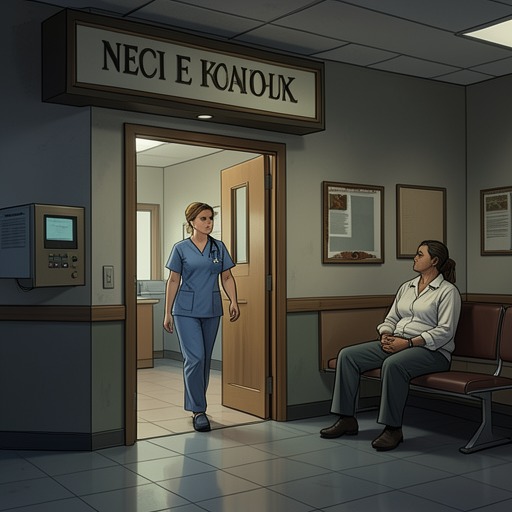
In a later arrival, the Hospital's door is locked and a card announces that there will be no examinations that day. A dog is in the back of the building. After the narrator rings repeatedly, the door opens and a girl ushers him inside, apparently mistaking him for the fake box man or fake doctor. He attempts to correct her, identifying himself instead as the genuine article and as the former photographer who had been waiting under the bridge the previous night. She scrutinizes him with parted lips and a vague expression of surprise.
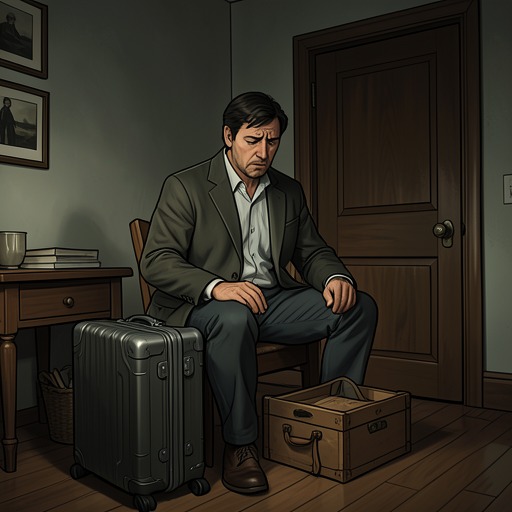
The entrance scene gives the Hospital a final role beyond its compromised medical practice: it is a threshold at which identity must be asserted but is not immediately recognized. The locked door and suspended examinations contrast with the earlier clinic's busy work and the narrator's claim to professional competence. At the same time, the girl's mistake joins the Hospital's history of borrowed names to the novel's unstable distinction between real and false box men. The building offers entry, but not certainty about whom its occupants think they are admitting.