Narrator Spies on the Nurse and the False Box Man
The Box ManThe episode in which the Box Man Narrator spies on the nurse and the false box man turns a planned repayment visit into a crisis of identity. He arrives intending to return 50,000 yen and discuss his promise to throw away his box, but instead glimpses the nurse in a private state of undress with a man wearing a near-exact copy of his own cardboard shelter. He does not confront either of them. The scene’s consequence is inward: the replica makes the distinction between original and imitation seem capable of changing hands.
The Visit and Its Purpose
The Box Man Narrator comes to the clinic less than an hour after the nurse has given him the money. He wants to speak seriously with her, return the 50,000 yen, and ask her to cancel his promise to discard the box. He also considers whether he might help her in some other way, depending on her response. His visit therefore begins with a practical debt and a negotiation about his future, though he is already unsure what those negotiations will involve.
He does not want to ring the night bell or meet the Doctor. Instead, he enters the garden and approaches the building from outside. The nurse’s room is at the back, while a light in another window draws his attention to the room he takes to be the Doctor’s study. The hour has passed midnight. Rather than risk being seen by switching on a light or moving about inside, he looks for a way to see through the high window from below.
A View Made with a Mirror
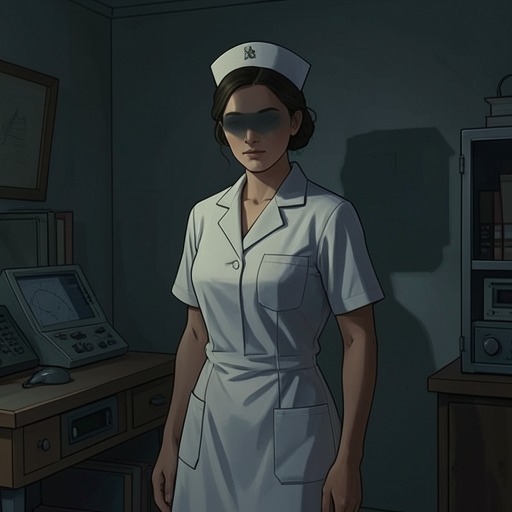
The lower half of the window is frosted, leaving him with only a view of the ceiling. He remembers that a car’s rearview mirror is in his tote bag, wipes away its dirt, and holds it diagonally beneath the narrow opening. The improvised arrangement is awkward: he must stretch one arm and look upward, but it gives him an almost complete view of the room. A desk lamp, old painted walls, a white hospital bed, a crowded bookcase, and a stereo set establish the space as a sitting room and study. These furnishings quickly recede from his attention. What matters is that two people are there.
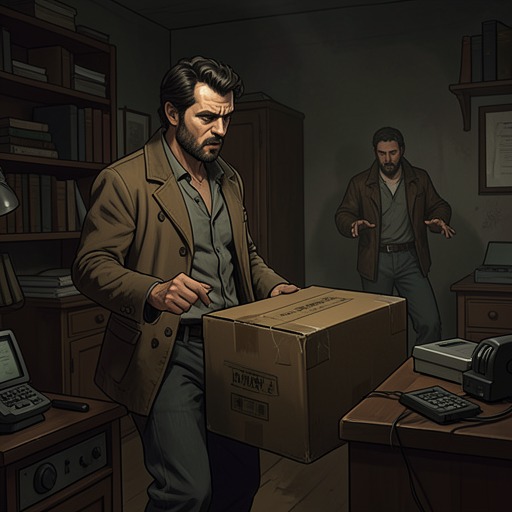
The nurse is standing in the room, and the other person is seated on the edge of the bed wearing a box. From the Narrator’s angle, he can see its back and right side. He recognizes the cardboard, the degree of dirt, the traces of printed commercial lettering, and even the size: it matches his own box so closely that he judges it a deliberate replica. He suspects that the Doctor is inside it, but cannot confirm the wearer’s identity from what he sees. The resemblance is concrete; the person beneath the cardboard remains uncertain.
The Replica and the Reversal of Identity
As the nurse leaves, the other box man tries to follow but stops when the door closes. He turns and shuffles back. The Narrator can now see the front of the box, including a vinyl curtain arranged like his own. There are differences: the other box man has no rubber boots, and his box has none of the small holes that the Narrator has made in his. But he wears canvas around his waist, and the accumulated similarity of box, curtain, and clothing makes the likeness more disturbing than a simple disguise. The replica appears too carefully made to be an ordinary coincidence.
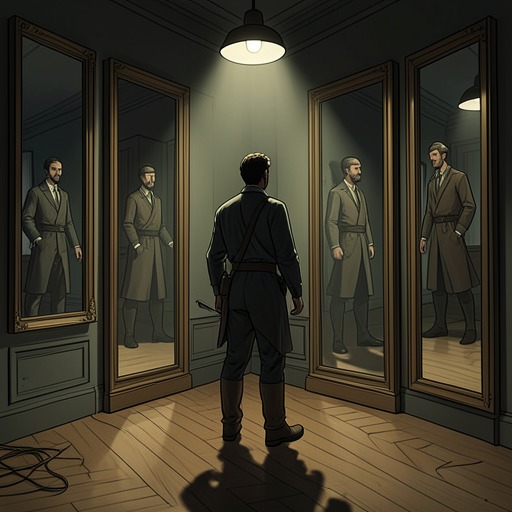
The Narrator had entered the grounds expecting that returning the money might help him reclaim control of his situation. Instead, he wonders whether accepting it has transferred the status of the real box man to the other person, leaving him to occupy the false position. This is his interpretation, not a confirmed change in anyone’s identity, but the replica gives the thought force: another person is now moving about in the shape he has made familiar. The sight of his apparent double acting independently of him makes his own image seem to have escaped his control.
Withdrawal and the Unresolved Choice
He does not interrupt the scene. He decides that there is no advantage in forcing an immediate conclusion and that he can remove his own box whenever he makes up his mind. He leaves the room and tries to look toward the nurse’s quarters, but the high windows and heavy curtains give him little to see. He remains concealed beneath the eaves, waiting without receiving any response. The attempted visit ends without repayment, conversation, or clarification of who the other box man is.
The episode also changes how he frames the next day’s plan. He intends to return at eight, before outpatients begin arriving at ten, and hopes to secure time for negotiations. To make that visit possible, he calculates that he can tear his box into three or four pieces and dispose of it as ordinary rubbish in about five minutes. The prospect is not merely symbolic: his few possessions have been selected for a life organized around the box, including a milky-white plastic board, sixteen by eighteen inches, that serves as table, cooking surface, rain shutter, fan, bench, and work surface. His plan to discard the box would mean dismantling the setting that makes these ordinary tasks possible.
Narrative Significance
The scene turns looking into a source of uncertainty rather than mastery. The mirror enables the Narrator to see into a room he cannot enter unnoticed, but the view does not tell him who occupies the copied box or what the nurse intends. His own carefully adapted equipment—box, curtain, clothing, and observation window—returns to him as an imitation assembled by someone else. What he sees is specific enough to unsettle him, yet incomplete enough that his conclusions remain provisional.
That tension carries into his proposed departure from box life. The sighting does not establish that he has lost his identity, nor does he immediately abandon the box; instead, it makes leaving seem newly possible. He postpones confrontation, keeps the next morning’s visit in view, and considers whether the replica’s presence might free him from the object to which he has organized his life. The episode closes on that unresolved possibility rather than on an answer about the other man.