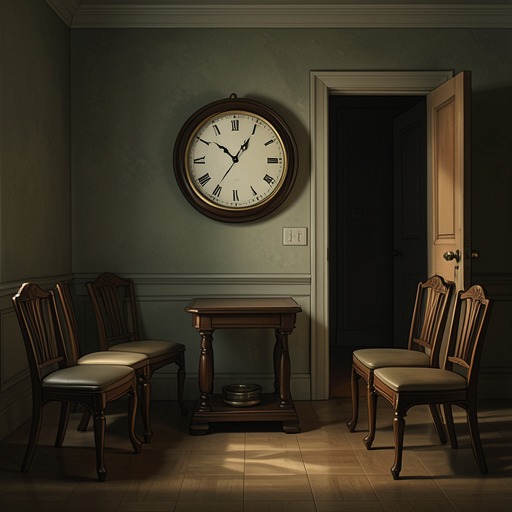
Shell-Grass Dream
The Box ManThe Shell-Grass Dream turns a supposed seaside folk belief into an extended meditation on bodily absence, distorted time, and the fear of being unreal. Its dream fish is first liberated by weightlessness, then tormented by the loss of hands and legs, and finally carried into the air by a storm wave. The narrative never confirms a return to waking life: instead, it sets the fish’s possible permanent dream against the Box Man Narrator’s insistence that he remains a box man, even after repeatedly dozing off.
Origin and Dream Conditions
The account begins with shell weed, described as thorn-leaved grass like twists of firecrackers covering the rocky slope where the narrator is sitting. According to the local story, smelling its fragrance brings a dream of being a fish. The narrator treats the tradition skeptically but considers it plausible: shell weed grows readily in salty, swampy ground and along the seashore, while an explanation attributes the dream’s effects to alkaloids in its pollen. These are said to produce a floating sensation, and irritation of the respiratory membranes might, in turn, create a hallucination of drowning. The proposed explanation remains conjectural; the passage presents it as a possible account, not a demonstrated cause.
The peculiar danger is not simply that the dream occurs, but that waking from it may be difficult. A dream fish experiences time at a markedly slower speed than an awake one: a few seconds on land may seem to stretch into days or weeks underwater. That altered duration gives the dream a disturbing scale. Its course cannot be measured by the sleeper’s ordinary clock, and its eventual ending is correspondingly hard to anticipate.
From Buoyancy to Confinement
At first, fishhood feels like a release. The dreamer glides among undulating seaweed, moves through bands of light filtered by waves, and chases trusting schools of fish. With gravity apparently suspended, familiar bodily burdens—an aching knee, stiff shoulders and neck, a drooping belly, fallen arches—seem to disappear. The dream fish feels at least ten years younger, and the weightless world intoxicates it like alcohol.
That exhilaration wears off. Because the dream fish is not real, its intoxication gives way to boredom, intensified by the dream’s sluggish time and a numbing lack of resistance to the senses. Its body begins to feel less like freedom than a restrictive fish-shaped garment. The soles of its feet, although it has none, seem to seek the resistance of walking; its joints seem to miss the weight of muscles and tissues. It wants to walk and is startled by the realization that it lacks legs.
The deprivation extends beyond legs. The dream fish has no ears, neck, shoulders, or arms, and the absence of hands becomes a particular torment. The passage connects touch with knowledge: to claim to know another person fully, it suggests, would require handling and testing that person rather than relying on sight or thought alone. Yet the fish cannot reach beyond its scaly body. It strains to escape what feels like a bag of scales, but its available motions are only the opening of its gills and the stiffening of its fin. Bodily confinement thus becomes an epistemic frustration: the fish cannot verify the world or another person by touch.
The Fake Fish and the Failed Awakening
In the midst of this distress, the sham fish suspects that it may itself be fake. That suspicion makes its situation stranger rather than clearer. A fish has no vocal cords, hands, or feet, so the passage’s human language for doubt and self-recognition does not fit its body; the resulting double perception is as irritating as an itch. The possibility that the events are all dream sequences further unsettles any stable distinction between an experience and the account of it.
The dream has lasted so long that its beginning can no longer be recalled, although the narrator assumes it must end sometime. Ordinary tests of dreaming do not transfer easily to a fish: pinching the back of a hand is impossible without a hand or nails. A leap from a cliff is offered as another way to force awakening, but the fish’s relation to falling is itself uncertain. A sea fish ordinarily floats rather than falls; the imagined solution is a reverse fall, upward through the air, with the danger of death serving as the equivalent of a terrestrial plunge. Even after reasoning this far, the fake fish hesitates. It waits rather than forcing an outcome, as if recognizing a dream might mean that the dream is already near its end.
Days and weeks pass in the dream before a tropical storm shakes the sea. The indecisive fish does not hurry toward death; it gives itself over to the waves. Then a crest compared to the blades of fifty electric saws sweeps it toward the cliffs and hurls it into the air. The fake fish drowns in the atmosphere. The reversal makes the earlier theory of waking through an upward fall into an actual fatal event, but it does not resolve whether death releases the dreamer. The narration concludes that the fish dies before awakening and therefore may have to keep dreaming even after death, preserved forever as a fake fish. It adds that some fish washed ashore after the storm were said to have suffocated after falling asleep among the shell-weed flowers.
Relation to the Box Man
The narrator then distinguishes the dream’s imagined transformation from his own condition. Although he has dozed off repeatedly, he says he has not become a fish; he remains the same box man. On reflection, however, the fake fish and a box man do not seem conspicuously different. Putting on the box makes the narrator’s fake self into something not quite himself, while the dream fish discovers that its body and identity may be counterfeit. The analogy does not make the two states identical: the narrator presents it as a comparison that sharpens the uncertainty surrounding both.
The narrator speculates that being accustomed to falseness may have immunized him against becoming a fish in a dream. Box men, he concludes, may wake from dreams only to find themselves still the box men they were. In this ending, awakening is not a clean return to an authentic self. The dream’s slow time, missing body, and doubtful fish identity echo a waking existence in which the box has already estranged its wearer from himself. The Shell-Grass Dream remains suspended between an elaborate fantasy and a statement about the narrator’s life: its decisive question is not whether the fish can wake, but whether waking would restore a self that was ever secure.