Suicidal ideation
The Box ManSuicidal ideation is a recurring crisis in the book, not a single, settled wish for death. The Army Medical Captain’s reported decline and the Box Man Narrator’s later written resolve to die are distinct, but both expose the strain between wanting life to end and remaining bound to other people, obligations, and possible futures. The testimony about the Captain is retrospective and self-interested; the Narrator’s notes, by contrast, register a wavering intention in the present. Neither account makes the boundary between a stated wish, an actual attempt, and a death straightforward.
The Army Medical Captain’s Decline
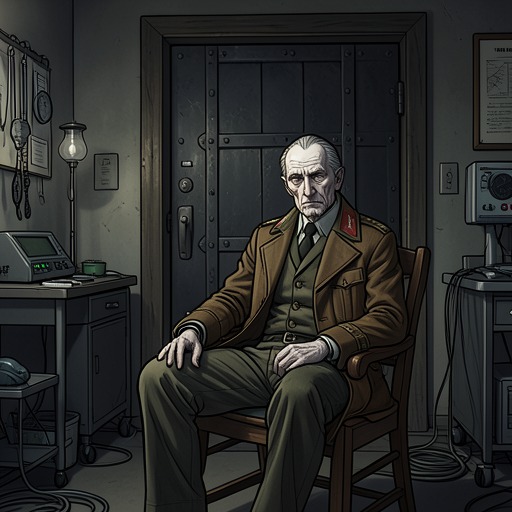
The account of the Army Medical Captain’s suicidal inclination comes from the man who had served as his orderly and later practiced medicine using his name and identity. During the war, the orderly took on much of the patient care while the Captain concentrated on research into producing sugar from wood. The account presents that early arrangement as the beginning of a close professional dependence: under the Captain’s guidance, the orderly acquired experience with complicated operations, while the Captain increasingly relied on him for practical work.
After the war, they opened a clinic together. The orderly says that the Captain’s illness did not improve and that, apart from giving instructions through medical charts, he became unable to examine or treat patients himself. The orderly also describes administering drugs daily, initially in response to the Captain’s pleading, and says the Captain had developed symptoms of addiction by the war’s end. In retrospect, he identifies this dependence as part of the context in which the Captain grew weary of life and increasingly inclined toward suicide. The account does not reduce that crisis to one cause: illness, addiction, and the loss of a functioning professional role all belong to its background.
The Captain’s threat of suicide also shaped the orderly’s choices. According to the testimony, the Captain praised and pressured him to continue practicing, at times suggesting that he might kill himself if the orderly gave up the work. The orderly says that he repeatedly asked the Captain to put the idea aside. He describes the possibility of the Captain’s death not only as a personal danger but as a practical and legal crisis: a death certificate under the borrowed identity would bear the same name as his own. His continuing illegal practice is thus narrated partly as an effort to keep the Captain alive, though the orderly also acknowledges friendship, livelihood, professional ambition, and his own responsibility.
Care, Dependence, and Concealment
The testimony resists a simple division between compassionate care and self-interest. The orderly says he continued giving drugs because he could not bring himself to abandon a friend whose addiction seemed exceptionally difficult to treat. At the same time, he admits that the borrowed medical qualifications secured his livelihood and that his growing confidence and reputation helped keep him in practice. He insists that the Captain had agreed to the arrangement and did not coerce him into it, while also describing the Captain’s pressure and threats as burdens he had to manage.
Nana, the Captain’s legal wife, had been living with the orderly as his common-law wife, helping as a nurse and managing the accounts. The orderly says the Captain knew of and approved their relationship. He also reports that the Captain feared being abandoned and pressed Nana to establish a relationship with the orderly as a way of keeping him from leaving. Later, after the orderly hired Toyama Yoko as an apprentice nurse, Nana proposed that they live apart. These circumstances locate the Captain’s suicidal threats within an unstable household and working arrangement, without establishing that any one relationship or dispute caused his death.
The Captain’s condition also complicated the orderly’s public identity. In the clinic’s eighth year, abnormal speech and conduct became noticeable to outsiders, and the pair faced scrutiny over their drug use. They closed the clinic and moved to another city. As the Captain’s mental state worsened, Nana suggested that the orderly register himself under the Captain’s identity and keep him from public appearances. The orderly presents the Captain as agreeing to this plan. His narrative therefore links the Captain’s despair to a broader withdrawal from public life, while the orderly’s assumed identity obscures who is practicing, who is ill, and who bears responsibility.
The Death and Its Unresolved Meaning
In his account of the corpse, the orderly identifies it as the Army Medical Captain, but does not claim to know exactly how he died. He says the Captain had used a second-floor room and came and went at irregular hours, sometimes by the emergency stairs. A recent quarrel over sweets is mentioned: the Captain had developed a strong preference for them, and the orderly had tried to limit them for health reasons. The orderly expressly doubts that this dispute explains the death.
The body was found with a cardboard box over its head, and the orderly offers possibilities rather than a conclusion. He suggests that the Captain may not originally have intended to die and could have slipped on an embankment made wet by the previous day’s rain. He also says the Captain may have disguised himself as one of the box-wearing homeless people seen around town. In the orderly’s interpretation, the Captain had come to feel that he had surrendered his name, address, and license to the man practicing under his identity, and had become a nobody. The box may therefore suggest an effort to hide, but the account does not establish why it was worn or whether the death was deliberate.
The orderly says the Captain’s room was not checked until late Sunday night, after a long period without being called. He and Nana had promised not to visit unless summoned; by then, the orderly says, he was prepared to request a police search if the Captain had not returned by dawn, even at the risk of exposing his own illegal practice. This detail sharpens the account’s central uncertainty: a private crisis is concealed by an arrangement that restricts ordinary contact, and the same concealment that protects the orderly’s work makes it harder to know what happened to the Captain.
The Narrator’s Written Resolve
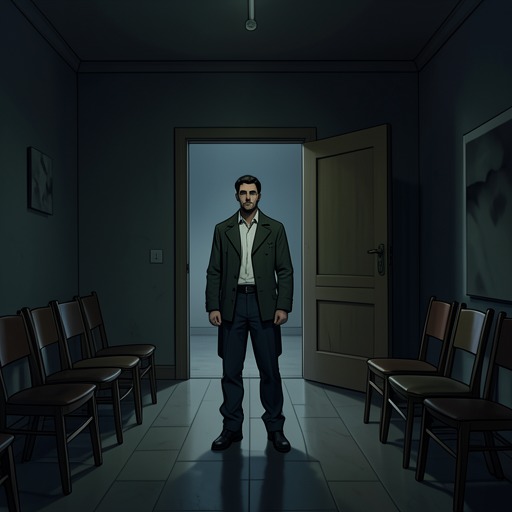
A later first-person account presents a separate crisis in which the Box Man Narrator says he has resolved to die. His notes do not describe an unbroken or secure decision. They register attachment to life, an awareness that his resolve may weaken, and a request for another person’s help while he still understands himself to be asking for it. The writing makes the wish for death inseparable from hesitation: the Narrator recognizes that a decision or aspiration alone does not make death an accomplished fact.
That hesitation is also bound to a contemplated relationship with a girl. The Narrator imagines first seeking her affection and being refused, and then describes an intention to harm her. This disturbing turn does not confirm that he acts on the thought; in the notes, it functions as evidence of how his attachment and appetite interrupt his declared wish to die. The passage makes no stable moral resolution out of that contradiction. Instead, the Narrator’s stated purpose changes as he writes, and his request for help marks a moment when he acknowledges that his own will is not settled.
Euthanasia and the Limits of Explanation
Immediately before turning to euthanasia, the Narrator says he wants to bring his notes to a clear denouement. He then cites a February 1955 precedent of the Nagoya Superior Court. Among the conditions he lists are incurable illness and imminent death, obviously unbearable pain, the aim of relieving that pain, and the lucid person’s consent and specific request. The cited conditions frame death as a question of medical and legal judgment, not merely private intention. Their placement beside the Narrator’s request for help invites comparison, but does not establish that his circumstances satisfy the stated criteria or that his contemplated death is euthanasia under them.
Across the two accounts, suicidal ideation remains entangled with concealment and disputed responsibility. The orderly retrospectively explains why he continued illegal medical practice while trying to keep the Captain alive; the Narrator records a present resolve that repeatedly falters. The Captain’s death is reported, yet its cause and intention remain uncertain. The Narrator’s notes establish a wish and a plea for assistance, but not their eventual outcome. The subject’s significance lies in these unresolved distinctions: care can coexist with self-interest, a death can be feared without being prevented, and a declared decision can remain unstable.