The Doctor's Disappearance and Death
The Box ManThe Doctor's Disappearance and Death is the uncertain sequence in which the Army Medical Captain vanishes from the hospital and is later identified as a corpse wearing a cardboard box. The death exposes the hidden arrangement behind C’s medical practice: C had taken over much of the work while using the captain’s name and credentials, and the captain had become a drug-dependent, increasingly isolated figure. Yet the account never resolves whether the captain intended to die. Instead, the body, the box, and C’s carefully qualified testimony leave the disappearance suspended between accident, concealment, and possible suicide.
Background to the Disappearance
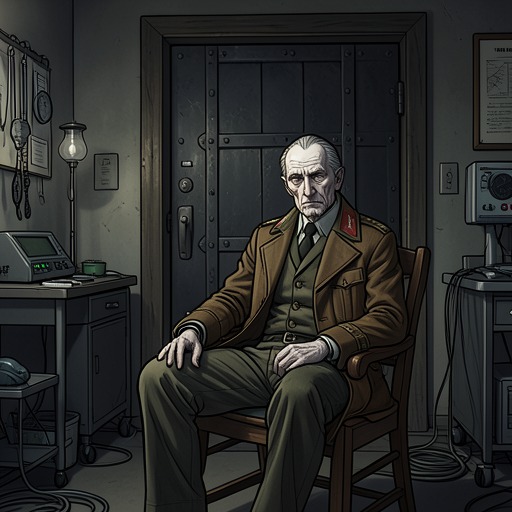
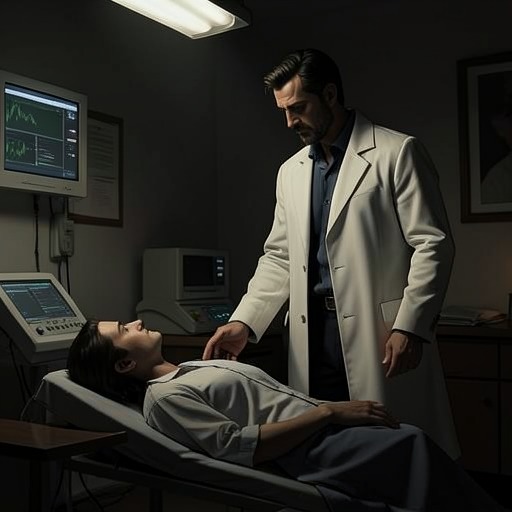
During the war, C served as an orderly under the Army Medical Captain in a field hospital. The captain was absorbed in research into extracting sugar from wood, and C says he gradually took on about half of the examinations and treatments. Under the captain’s guidance, C learned to perform complicated operations. At the captain’s persistent request, C began administering drugs to him; by the end of the war, the captain showed signs of addiction.
After demobilization, the two opened a clinic together. The captain’s condition worsened until he could no longer examine or treat patients in person, while C handled much of the practice. In the clinic’s eighth year, scrutiny over their excessive drug use and growing public suspicion of the captain’s abnormal speech and conduct led them to close the clinic and move to another city. Later, with the captain’s agreement and at Nana’s suggestion, C registered himself under the captain’s identity, while the captain stopped appearing in public. C’s account thus places the disappearance within a long-standing arrangement in which the captain’s name remained active even as the man himself withdrew.
The Captain Leaves the Hospital
By the time of the disappearance, the captain occupied a room on the hospital’s second floor. C says the captain kept irregular hours and often used the emergency stairs, making it impossible for C to account for all his movements. C and the nurse had promised not to visit the room unless the captain rang for them. Although more than half a day could pass without a call, they did not treat each silence as an emergency. It was only late on Sunday night, when they became suspicious, that they checked the room. C says he was prepared to ask the police to search if the captain had not returned by dawn, even though doing so would expose his illegal medical practice.
C cannot identify an immediate cause for the flight. He recounts a recent quarrel over the captain’s growing appetite for sweets, which the captain associated with his earlier research into making sugar from wood. When C tried to restrict the sweets for health reasons, the captain became extremely angry. C nevertheless rejects the quarrel as an adequate explanation for the death. His account makes the captain’s departure legible as a disappearance from an already fragile routine, not as the clearly demonstrated result of a single dispute.
The Body and the Cardboard Box
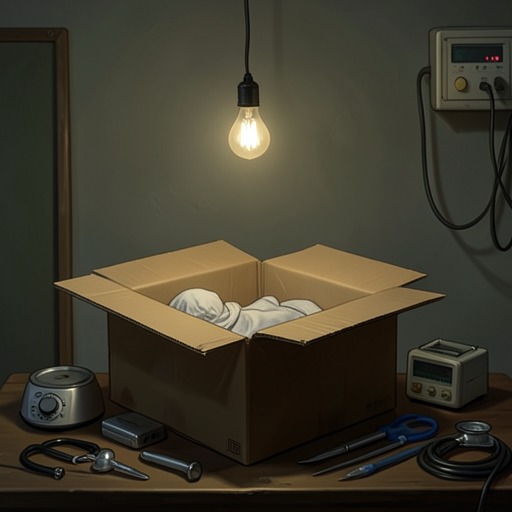
C identifies the corpse with certainty as the Army Medical Captain, explaining that he had used the title for so long that it had become habitual. He also reports that the body wore a cardboard box over its head. Since box-wearing homeless people had been seen around town for several months, C allows that the captain may have adopted their disguise without telling him. C speculates that the captain, having surrendered his name, address, and license to C, may have come to feel that he had become nobody; his intense misanthropy could, in C’s view, have made concealment appealing. These are proposed explanations, not established motives: C explicitly says he has no idea why the captain wore the box.
The autopsy showed scabbed injection marks on the inside of the captain’s arm and on his thighs, physical evidence of his established drug use. C argues that such advanced addiction makes the captain’s unusual behavior less surprising, but this does not settle how he died. Because the captain was wearing the box, C considers it possible that he had not originally intended to die and may simply have slipped while walking on an embankment still wet from the previous day’s rain. The account presents this as a possibility rather than a finding; the circumstances leave the distinction between an accidental fall and deliberate death unresolved.
Testimony, Suspicion, and Consequences
Witnesses had seen a box man enter and leave the hospital, and investigators also noted scars from gunshots sustained over a period of time. Together, these details brought the box man’s connection to the hospital under suspicion and led to C being summoned. C stresses that without the eyewitnesses the body might have been treated merely as unidentified. He also fears that suspicion could expose his continued illegal practice. He says that he and the nurse had respected the agreement not to enter the captain’s room without being called, and presents their late-Sunday check and his willingness to seek police help by dawn as evidence that he had not simply concealed the disappearance.
The affidavit is both a confession and a defense. C acknowledges that he knowingly practiced medicine illegally, but explains that he continued partly to supply the captain’s drugs, partly because he felt friendship and responsibility, and partly because his own livelihood and growing confidence as a practitioner had become bound up with the clinic. He maintains that the captain had encouraged him to continue, even threatening suicide if he stopped, while C himself believed that impersonating a licensed doctor was a crime. At the same time, C asks that an unfinished affidavit be destroyed if events go as planned, and presents his account as a chance to make a clean confession. That self-conscious, self-protective testimony gives the disappearance its unresolved force: C identifies the dead man and supplies a history of dependence and deception, but the captain’s final intention remains beyond his knowledge.