The doctor captain’s recurring undiagnosed illness
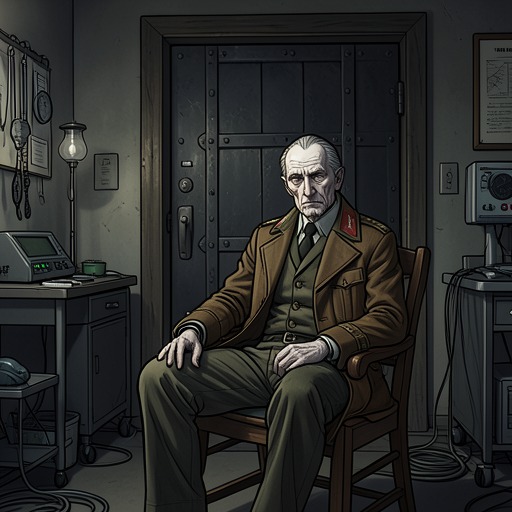
The Box ManThe doctor captain’s recurring undiagnosed illness is described in an affidavit as a condition that began during wartime service, resisted diagnosis, and continued to shape the Army Medical Captain’s life after demobilization. Its cause and medical name remain unknown; its consequences, by contrast, reach beyond the sickroom into a fraught arrangement of care, drug dependence, and unauthorized practice.
Onset and Symptoms
The illness emerged while the Army Medical Captain was working at a field hospital in the year before the war ended. An orderly assigned to him later recalled that the Army Medical Captain had been absorbed in research on producing sugar from wood. Because that work occupied him, the orderly took over a substantial share of patient examinations and treatment, learning to perform complicated operations under the Army Medical Captain’s guidance.
The research supplied a possible context, but not an explanation, for the illness. The Army Medical Captain had noticed goats eating paper, a wood-based material, and hypothesized that an enzyme in their intestines might break down cellulose into starch. He devoted himself to extracting the substance. When he fell ill, the affidavit’s writer could not tell whether goat intestinal bacteria had infected him or whether he had been poisoned by tasting processed wood; the account leaves both possibilities unresolved.
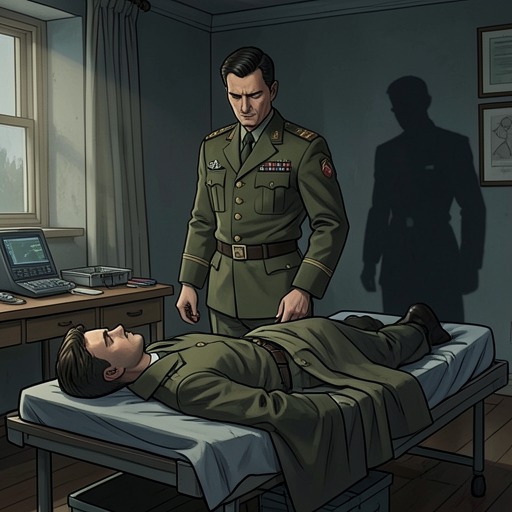
The first described episode was a high fever lasting three consecutive days. Afterward, the symptoms returned in three-day cycles: severe muscular cramps accompanied by spasms and nervous disorders. The pattern gave the illness a striking regularity, but no reliable explanation. The Army Medical Captain could not diagnose himself, and his colleagues eventually gave up trying to identify the condition.
Care and Chronic Course
The affidavit presents the orderly’s care as a response to affection for the Army Medical Captain and to the distress of seeing him suffer. As the Army Medical Captain’s condition seesawed without satisfactory progress, he persistently pleaded for drugs. The orderly began administering them daily, a decision he later described as a serious failure of judgment as well as an act he found difficult to refuse.
By the end of the war, the Army Medical Captain had developed symptoms of drug addiction. The orderly nevertheless remained with him, and the two were demobilized together. The account does not say that the drugs cured or controlled the recurring illness. Instead, it distinguishes the unexplained condition from the growing dependence that became part of its treatment history.
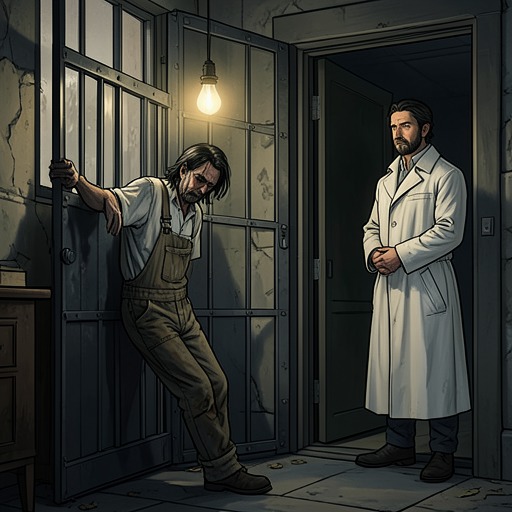
After demobilization, the two opened a clinic together. The Army Medical Captain’s health did not improve: he could give instructions through medical charts, but was personally unable to examine or treat patients. The orderly, who had gained practical experience during their military service, carried out the work. The recurring illness thus changed the Army Medical Captain’s role from active medical practitioner to a figure whose instructions supported another person’s practice.
The Illness and the Practice
The affidavit connects the Army Medical Captain’s need for drugs to the orderly’s decision to continue supplying them, but it also sets out other reasons for their professional arrangement. The orderly says he was not coerced into the illegal practice and accepts responsibility for his own actions. He acknowledges that using another person’s qualifications helped secure his livelihood, while arguing that friendship and a reluctance to abandon a sick companion were central to his decision to remain.
Over time, the orderly’s clinical experience and interest in medicine grew. He says that he studied medical books and specialist reviews, had accumulated twelve years of experience, and came to trust his practical skill. These claims do not resolve the distinction between competence and legal authorization: the affidavit’s writer explicitly concedes that his reasons did not make infringement of the law permissible. The Army Medical Captain’s illness is therefore more than background to the practice. It is part of the account’s explanation for how a need for continuing care became inseparable from a sustained impersonation.
Limits of the Account
The illness is known through an affidavit written by the person who treated the Army Medical Captain and practiced under his identity. That account is unusually specific about the three-day symptom cycle and unusually inconclusive about its cause. The writer had searched medical literature for a name for the condition but found none, and the testimony offers no later diagnosis or recovery.
The affidavit also places the illness within a history of suffering and care without presenting the treatment as an uncomplicated success. Daily drug administration preceded the Army Medical Captain’s addiction symptoms, while his recurring sickness continued and left him unable to practice personally. The writer’s later willingness to confess his illegal work gives the account the force of an admission, but it remains his explanation of choices in which he was deeply involved. The condition’s unresolved medical mystery is thus paired with a clearer moral consequence: an effort to care for the Army Medical Captain helped create a dependence and a professional arrangement that the writer ultimately recognized as unlawful.