The eighth year of the doctor’s practice
The Box ManThe eighth year of the doctor’s practice is the decisive hinge in the narrator’s account of his illegal medical career: scrutiny and the Army Medical Captain’s deteriorating condition led to the clinic’s closure and relocation, but not to an end to the narrator’s work. Recounted retrospectively in an affidavit, the year links practical medical experience, dependence on a borrowed professional identity, and the narrator’s effort to explain—and ultimately acknowledge—the lawbreaking that followed.
Background to the Turning Point
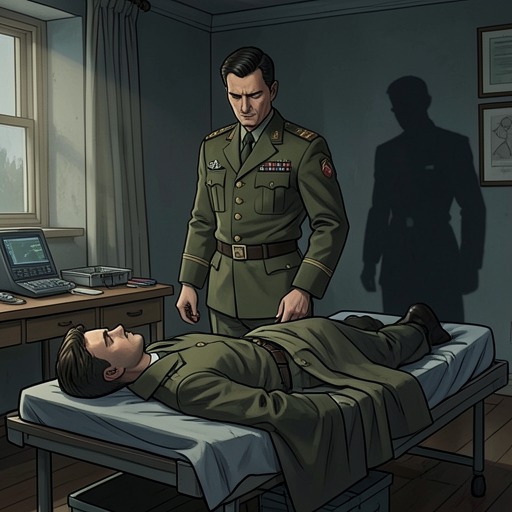
The narrator’s medical work began during the war, when he served as an orderly to the Army Medical Captain in a field hospital. Because the Captain was absorbed in research into producing sugar from wood, the narrator took over a substantial share of patient examinations and treatment. Under the Captain’s guidance, he learned to perform complicated operations. After demobilization, the two opened a clinic, where the narrator continued to assist with its management and practice while the Captain, increasingly unable to examine or treat patients, gave instructions through medical charts.
The narrator says he began administering drugs to the Captain during the war and that the Captain had developed symptoms of addiction by its end. He remained with him after demobilization. In the affidavit, he describes replenishing the Captain’s drugs as an act of friendship and accepts responsibility for doing so, while acknowledging that continued administration prolonged the harm. This history matters to the eighth-year account: the clinic’s dependence on the Captain’s name and the narrator’s work was bound up with the Captain’s illness well before the public difficulties became acute.
Why the Eighth Year Changed the Practice
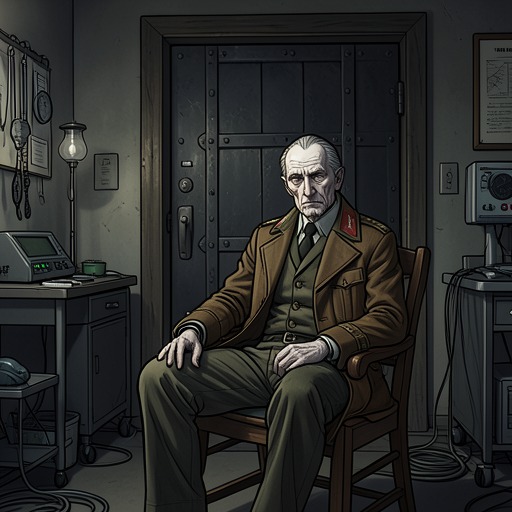
Until the turning point, the narrator had relied on the Captain to handle outside contacts, including attendance at medical meetings. Over time, however, the Captain’s speech and conduct became conspicuously abnormal. Abuse and defamation of him began reaching the clinic, including talk that he was mentally ill. At the same time, the clinic was investigated because of its unusually high drug use, putting the narrator in a position of personal risk as well as public exposure.
After discussing the circumstances with the Captain, the narrator closed the clinic and moved with him to another city. The narrator identifies this as the course of events up to the present in his affidavit. The move therefore answered two connected pressures: the Captain’s increasingly visible condition had damaged the practice’s standing, and the investigation into drug use threatened to expose how it operated. Relocation changed the setting, but did not resolve the underlying problem of who was actually providing medical care.
From Relocation to Borrowed Identity
After the move, the Captain’s mental state worsened and his inclination toward suicide became more pronounced. At Nana’s suggestion, he stopped appearing in public, including at outside events, and the narrator registered himself as the Captain. The arrangement involved formal changes, but, as the narrator describes it, the actual practice remained much the same. Patients continued to trust him, and he believed they would neither sue nor bring a prosecution if his guilt were established. He nevertheless concedes that patient confidence did not make it right to break the law: as a citizen protected by the state, he says, he could not simply disregard its rules.
The narrator’s account makes the eighth year more than a change of address. The departure from the first clinic preceded the more complete substitution of the narrator for the Captain in public and professional life. The narrator had military medical experience and, by his later account, twelve years of practice, increasing skill, and a diligent interest in medical literature. He presents those qualifications as part of the reason he continued, while expressly refusing to treat them as an excuse for practicing without authorization. The tension is central to the episode: competence and patients’ trust could sustain the work, but neither supplied the legal identity the narrator lacked.
Retrospective Meaning
The affidavit presents the eighth year as a turning point through the narrator’s later knowledge of what followed. He says the Captain had long opposed his giving up medicine, using both flattery and threats of suicide to keep him working. The narrator also recalls that the Captain’s drug use and demands caused concern, but says he did not simply abandon him. These details place the move within a relationship of care, dependence, and pressure rather than describing it as a clean break between the two men.
By the time he writes, the narrator argues that the Captain no longer needs him and that he has no obligation to continue deceiving the public through illegal practice. He acknowledges that the borrowed qualifications secured his livelihood and that his growing reputation encouraged him to persist; he also says he lacked a strong sense of the crime of imposture. Yet he now calls the false medical identity a crime and offers the affidavit as a chance to disclose the responsibility he had carried. The eighth year thus marks the beginning of a changed arrangement, not the end of the offense: its significance lies in how relocation, illness, and concealed professional identity converge in the narrator’s later confession.