
George Pocock and Hiram Conibear Shape Washington Rowing
The Boys in the BoatThis thread traces the collaboration that joins Pocock's boatbuilding knowledge with Conibear's coaching and creates a distinctive Washington program.
increasing Bearing strength in each event
 decreasing
Bearing strength in each eventdecreasingA Coach Without a Shell
Conibear Takes the Job
Unlikely Appointment
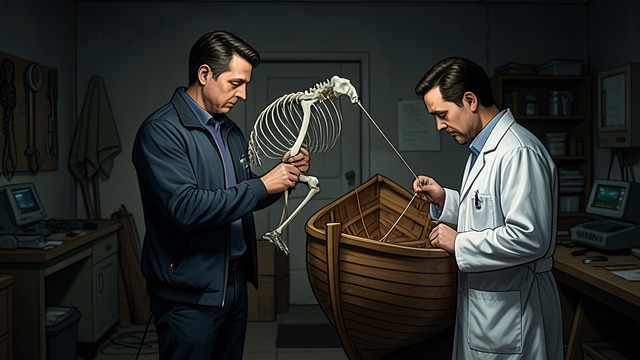
Hiram Conibear becomes Washington’s crew coach largely because no one else is available. His background is in athletic training rather than rowing, but he approaches the work with energetic curiosity.
Experiment
He studies anatomy and mechanics, even testing stroke movements with a borrowed skeleton. His scientific impulse begins to shape a program that needs faster boats and clearer technique.
The Pococks Arrive
Boatbuilders on the Pacific
Need
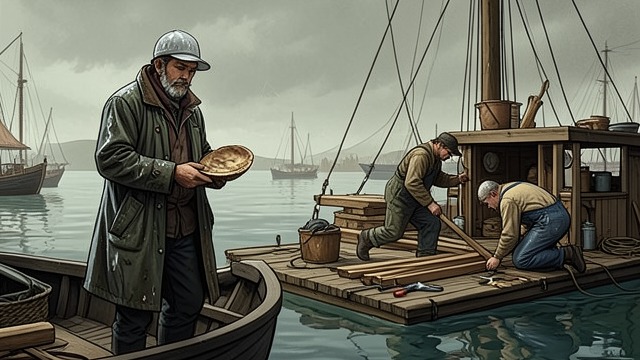
Conibear seeks sleek shells for Washington and finds George Yeoman Pocock and Dick Pocock in their floating workshop in Coal Harbour. He invites them to build equipment for the university.
Partnership
The promised fleet proves beyond the available budget, but the Pococks move south and establish their workshop at Washington. A lasting collaboration begins with a much smaller order than Conibear first imagined.
The Conibear Stroke
Technique Through Exchange
Advice
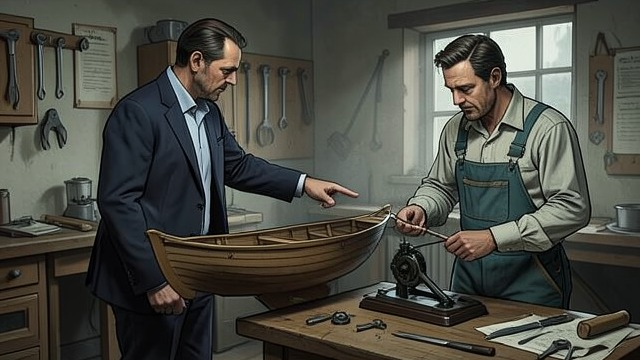
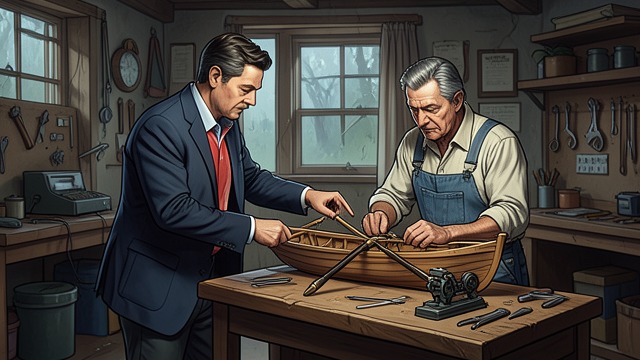
Watching Washington row, George Yeoman Pocock sees problems that Conibear’s mechanical models cannot solve. He cautiously shares what he learned from Thames watermen and Eton crews.
Development
Their discussions produce a shorter, quicker, more powerful stroke. Washington’s results improve, and eastern programs begin studying the method that had first emerged through the coach and boatbuilder’s exchange.
A Western Program Gains Notice
Results on the Hudson
Breakthrough
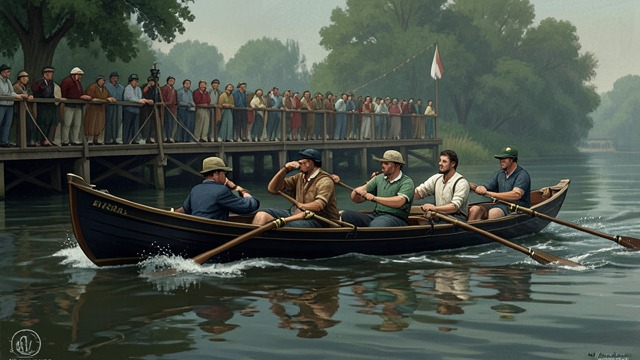
Washington victories at Poughkeepsie demonstrate that the western program can defeat established eastern crews. Pocock’s shells help the university gain both speed and wider recognition.
Expansion
Orders arrive from programs across the country, strengthening Pocock’s workshop. The coach-and-builder partnership has helped change the standing of rowing in the West.
A Tradition Beyond Its Founders
Craft and Coaching Continue
Inheritance
By the Olympic campaign, Washington rowing rests on decades of shared technique, equipment, and coaching knowledge. George Yeoman Pocock continues advising crews while Al Ulbrickson leads the program.
Legacy
The golden crew inherits more than a fast shell: it inherits a western style shaped by experiment, craft, and repeated exchange. The tradition continues after the founders’ era ends.
1908
1912
Early 1910s
1923–1926
1936 and after
