Don Hume
The Boys in the BoatDon Hume’s importance to the Washington crew lay not only in how hard he could row, but in how reliably the other eight men could row with him. At stroke, his smooth, measured pulls gave the boat a rhythm the rest of the crew could find even when the water, the race, or Hume’s own failing health made that rhythm difficult to sustain. His path to that seat began far from the polished traditions of collegiate rowing: with a self-repaired boat, long solo voyages, and a determination to keep rowing.
Identity and Background
Hume came from Anacortes, a lumber and fish-canning port about fifty miles north of Seattle. In high school he was an honor student and an unusually versatile athlete, starring in football, basketball, and track. He was also an accomplished pianist. At the piano he could draw a crowd with music ranging from swing tunes by Fats Waller to Mendelssohn.
The Great Depression disrupted his family. After his father lost his job at a pulp mill, his parents moved to Olympia to look for work, while Don stayed behind in Anacortes with family friends and eventually found work in a lumber mill. The separation was practical rather than a rowing adventure: he was supporting himself while his family tried to regain its footing. Yet the town’s waterways gave him a direction of his own.
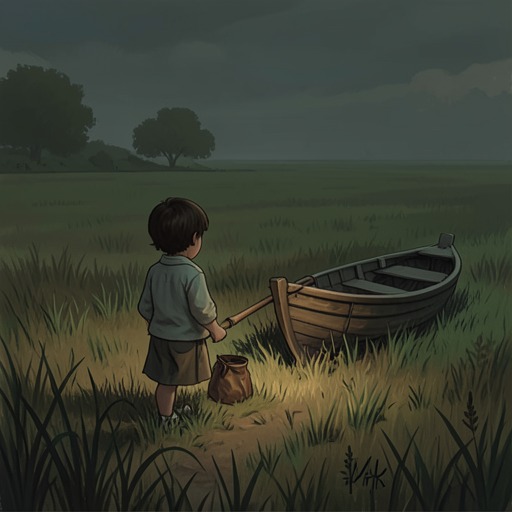
One day on the cobbled beach between Anacortes and Guemes Island, Hume found an abandoned, dilapidated thirteen-foot clinker-built rowboat. He repaired it, took it onto the water, and discovered a particular attachment to rowing. For the year after high school, he rowed obsessively: up and down the channel on foggy days, and on longer trips among the San Juan Islands when the weather was clear. When his mill job ended and he decided to join his parents in Olympia, he rowed there, covering nearly a hundred miles in a six-day voyage.
That fall, Hume moved to Seattle, enrolled at the University of Washington as a geology major, and went directly to the shell house. Tom Bolles and Al Ulbrickson quickly recognized that the newcomer was an extraordinary athlete. His route to the team had been unlike that of a rower groomed in an elite Eastern school: he had learned the feel of the water alone, in a small boat he had brought back to life himself.
Finding the Stroke
Hume first made his mark in the freshman crew. He was not yet polished, but he seemed unusually resistant to fatigue and pain, continuing to drive forward when other rowers might falter. At the April 1934 race against California, he had only recently left the infirmary after severe tonsillitis. The illness did not prevent him from leading Washington’s freshmen through a demanding race. California raised its rate in the final stretch; Washington matched it, and Hume’s smooth, powerful stroke helped his crewmates stay together as they pulled away to win by three lengths.
His aptitude was not simply a matter of endurance. Hume pulled with a smoothness compared to silk and a mechanical regularity like a metronome. The other rowers could sense his steadiness and fall into time with him across changing water and changing race conditions. At stroke, his role was therefore both physical and connective: he set a pattern that made the separate efforts of the crew function as one.
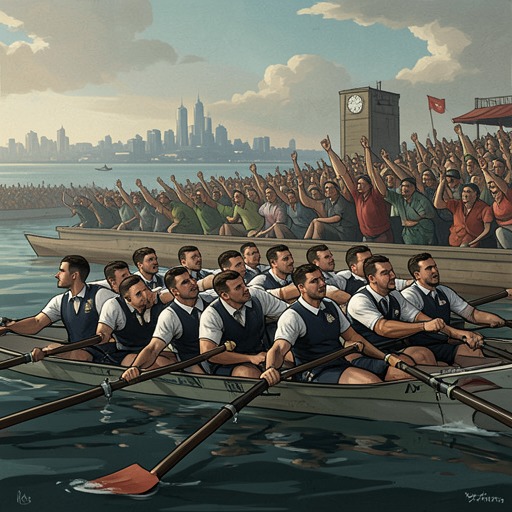
By March 1936, Ulbrickson had placed the nineteen-year-old sophomore at stroke in the boat he increasingly regarded as his best Olympic prospect. It was an unusual choice for such a crucial position, but Hume’s performances as a freshman had already led some observers to rank him among Washington’s finest strokes. The crew around him included Roger Morris at bow, Chuck Day at two, Gordy Adam at three, Johnny White at four, Stub McMillin at five, Shorty Hunt at six, and Merton Hatch at seven. Bobby Moch steered from the stern. Hume was the rhythm around which this particular combination could organize itself.
Races Built Around His Rhythm
In a major race against California, Washington began at a high rate, but Hume could not immediately convert that effort into a lead. Moch made the counterintuitive call to lower the stroke count to twenty-nine. Hume set the slower pace with long, smooth pulls; Joe Rantz and the others found the boat’s swing behind him. Rather than answer California’s bursts with matching bursts, Washington gradually recovered water, drawing even around the one-mile mark and edging ahead while California’s harder efforts failed to erase the difference.
The discipline of that race depended on Hume as much as on Moch’s calls. At twenty-nine strokes a minute, the boat had to keep its power and timing without the urgency of a higher rate. As Washington approached the final stretch, Moch finally called for the acceleration. Hume took the rate through thirty-five, thirty-six, and thirty-seven; Rantz followed smoothly, and the boat began to swing. The move carried Washington past Navy, then brought the crew up on California as its rhythm began to waver. Hume’s controlled stroke had made the late sprint possible by giving the crew something coherent to accelerate from.
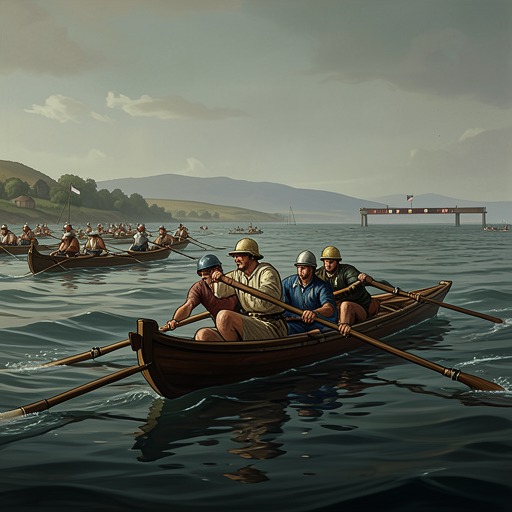
That quality was especially visible in the 1936 Olympic preliminary against Great Britain. By then Hume had lost fourteen pounds from his Poughkeepsie weight of 172, falling to 158 pounds on his six-foot-two frame. He had chest congestion and a recurring low fever, but insisted he was ready to row. Ulbrickson kept him in bed as long as he could before taking him to the course. In the race’s closing stages, Washington found its swing and drove past the British boat in the final twenty strokes. The Americans crossed twenty feet ahead, setting a time of 6:00.8, a new course, world, and Olympic record. Hume collapsed forward across his oar at the finish. Moch splashed water on his face until he could sit upright and help paddle the shell to the float.
Illness, Loyalty, and the Olympic Final
The record-setting preliminary did not settle the question of who would stroke Washington in the medal race. Hume looked gravely ill afterward, and Ulbrickson sent him back to bed. The coach concluded that Hume could not row the final and named Don Coy to take his place. The next morning, Hume remained in bed with his fever spiking. The other rowers, however, believed the boat could not be complete without him.
At breakfast they discussed the change and then went together to Ulbrickson. Stub McMillin, by then team captain, explained that Hume was vital to the boat’s rhythm and could respond smoothly to the small adjustments a race demanded. Moch added that he could read Hume in a way he could not read another stroke. Rantz offered to help carry the burden: Hume could be strapped in, he said, and the crew would pull him across the line. Ulbrickson initially sent the team to get ready for the race without him. After they had started upstairs, he called after them to bring Hume along. The decision turned Hume’s place in the boat into a declaration of the crew’s trust, not a judgment that he was healthy enough to race.
In the final, the wind and exposed water quickly made the Americans’ task punishing. At three hundred meters, Moch saw Hume turn pale, his mouth open and his eyes nearly shut. Hume continued to row at a steady rhythm but did not answer Moch’s calls. Washington fell behind, reaching last place by eight hundred meters and nearly five seconds behind the leaders at the thousand-meter mark. Moch could not get Hume to raise the rate; the crew was still rowing at thirty-five as the wind drove against them.
Near twelve hundred meters, Moch was preparing to hand the stroke to Rantz when Hume suddenly lifted his head, opened his eyes, and met Moch’s gaze. Moch called for him to pick up the pace. Hume responded, and the rate rose to thirty-six and then thirty-seven. Washington advanced from fifth to third by the fifteen-hundred-meter mark. In the more sheltered home stretch, Hume was again at stroke as the boat drew level with Germany and Italy, then moved ahead in the closing meters. The three boats crossed the line within a second of one another. Hume bowed his head as if in prayer; beyond the grandstands, the exhausted Washington crew did not yet know who had won. Roger Morris could only say that they had, he thought.
Later Life and Narrative Significance
Hume’s later career carried him far from the lake but continued to involve long journeys. During the war he served in the merchant marine, sailing out of San Francisco. Afterward he built a career in oil and gas exploration, a profession that kept him on the road and sometimes took him as far as Borneo. In time he became president of the West Coast Mining Association. He never married.
The narrative makes Hume’s value to the crew clearest when his body can no longer perform reliably. In the preliminary he helps set a record, then collapses; before the final he is too ill, in his coach’s judgment, to row; during the race he appears unresponsive at precisely the moment the boat needs him to change pace. Yet his teammates’ insistence on bringing him reflects what his stroke had already given them: a shared measure of timing and an ability to act together. His story is not simply that of a sick athlete enduring to the finish. It is also the story of a self-taught rower whose individual steadiness became a resource the whole boat could depend on, even when he could not fully control what his own body would do next.