Harry Rantz
The Boys in the BoatHarry Rantz is both a gifted maker and a father whose choices leave lasting wounds. His life moves from exuberant faith in what ingenuity can accomplish, through grief and family separation, to a late effort to build a home where his children might be together. His story gives Joe Rantz’s struggle for belonging a difficult family history: Harry does not simply abandon his son and disappear, but neither does his eventual return to family life erase the consequences of having left him behind.
Identity and Inventive Ambition
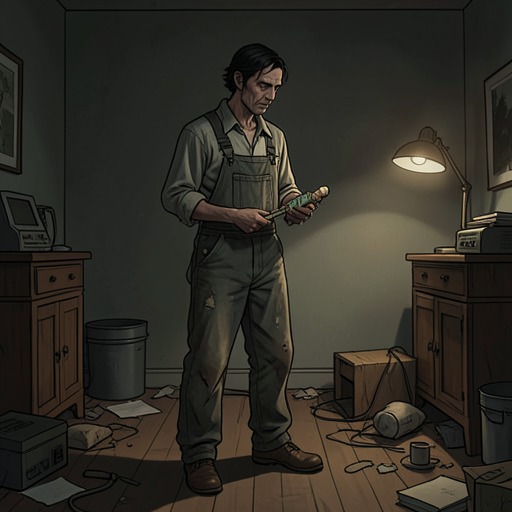
Harry was a large man, well over six feet tall, with an open, ordinary-looking face and an earnest manner. Beneath that placid appearance, however, he had an intensely active mind. He loved mechanical devices, tinkered constantly, and took pride in devising original solutions to difficult problems. His imagination ran toward projects on a scale that matched the technological optimism of his age: he believed that enough ingenuity and determination could make almost anything possible.
In 1903, he put that belief into practice by designing and building an automobile from scratch. When he drove it down the street, steering with a tiller rather than a wheel, his neighbors were astonished. The homemade car was more than a mechanical accomplishment: it was a personal declaration that Harry meant to participate in the era’s new possibilities, not merely watch them pass. His inventive confidence would remain a defining part of him, even as later losses showed how little ingenuity could do to solve grief.
Harry’s unconventional streak appeared in his private life as well. He married Nellie Maxwell over the telephone in 1899, drawn to the novelty of exchanging vows while the couple were in different cities. Nellie was a piano teacher and the daughter of a Disciples of Christ minister. Their first son, Fred Rantz, was born later that year. In 1906, the young family left Williamsport, Pennsylvania, and settled in Spokane, Washington, where Harry hoped to make his mark. Joe, their second son, was born into a family shaped by his father’s restless hopes and his mother’s presence.
Grief and the Fracturing of the Family
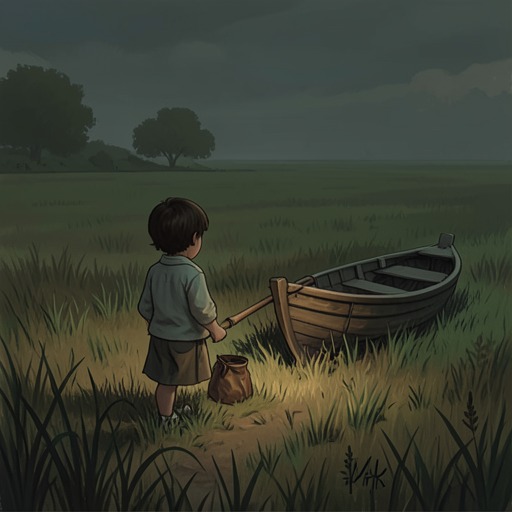
The family’s early promise did not protect it from loss. While Joe was away in Pennsylvania and ill with scarlet fever, his mother died of throat cancer, Fred went away to finish college, and Harry, overwhelmed by what he had witnessed during Nellie’s final moments, fled to Canada. The household that had formed Joe’s first world dissolved while he was separated from it. Harry’s flight was an expression of grief he could not manage, but its consequence for his young son was another rupture in a childhood already marked by separation.
Years later, financial collapse and hardship again narrowed Harry’s choices. In Sequim, the farm’s principal sources of income failed in quick succession: abandoned dogs chased the cows until they stopped producing milk, and minks repeatedly killed chickens, reducing the money the family earned from eggs. The farm’s losses formed the immediate backdrop to Harry’s decision to leave. One rainy November afternoon, Joe came home from school to find Harry’s Franklin running in the driveway, luggage among the younger children in the back seat, and a covered object tied to the roof. Thula Rantz sat in front; Harry stood on the porch watching Joe approach.
Harry told Joe that the family was going to Seattle for the time being, perhaps California afterward, and that Thula wanted Joe to remain in Sequim. Harry said the younger children needed a father more than Joe did and treated his eldest boy as nearly grown. Joe asked to come too, but Harry refused. His counsel that Joe would have to learn to be happy alone became a bitterly practical lesson: the father who had once believed he could build nearly anything could not, or would not, make room for Joe in the family’s departure.
A Troubled Return to Fatherhood
Harry remained in Joe’s life, but their contact did not immediately repair the distance between them. When Joe later returned from work at Grand Coulee, he visited Harry at the bakery and shared lunch with him in the Franklin. Harry and Thula had spent much of the summer making excursions around the state, including trips to places they had known in eastern Washington. At first, this arrangement allowed Joe to see his half siblings without having to worry that Thula would send him away.
The excursions also exposed a failure of care. On one visit, Joe and Joyce Simdars found that Harry and Thula had been gone for three days, leaving thirteen-year-old Harry Junior, Mike, Rose, and Polly largely without supervision or food. The parents had taken a pressure cooker of stew, bread, and canned goods with them to Medical Lake; the children had searched the cabinets for enough to eat. Joe and Joyce took them for ice cream, bought basic provisions, and brought them back. The episode made Harry’s absence concrete not only for Joe but for the younger children, whose dependence on their parents was far greater than Joe’s had been when Harry left him behind.
After Thula died, Joe went to the house on Bagley Avenue and found Harry and the children together at a picnic table on the damp lawn. Harry was preparing cherry Kool-Aid, the children’s favorite. Joe sat with them, saw their grief, and offered his father his sympathy. As Joe recalled warm memories of Thula, Harry began talking about a recent trip to Medical Lake but could not continue. This time, unlike after Nellie’s death, Harry showed no inclination to flee. He told Joe he planned to build a house where the family could live together and wanted Joe to come home when it was finished. Joe could not readily trust the promise; his response was uncertain, and his feelings shifted between confusion and resentment.
Building a Home, Rebuilding a Family
On December 2, a little more than a month after Thula’s death, Harry put money down on a two-thousand-dollar lakefront property beside the home of Fred and Thelma LaFollette, near the north end of Lake Washington. He then began designing another house that he would build with his own hands. The project turned his old identity as a maker toward a different purpose: not a machine that would demonstrate what he could invent, but a place intended to reunite his family.
During construction, Harry and the children lived in the basement. It was more like a cave than a finished home, with a large garage-style entrance and one small window facing the lake, but a woodstove made it warm and dry. Joe visited on weekends with Joyce. He and Harry hauled lumber from the road through driving rain and raised it to the level of the future main floor, while Joyce stayed inside with the children, playing cards and making fudge and cocoa. The four children were still struggling after their mother’s death: they had frightening dreams, the younger girls cried when left alone, and their school grades were suffering. Joe offered a dime for every A they earned; Joyce, seeing how much care they needed, tried to provide some of the ordinary, motherly attention they lacked. Harry’s house could offer shelter, but the family’s reunion also depended on the work of tending to one another inside it.
Pride, Reconciliation, and Family Memory
Harry’s pride in Joe became visible as Joe’s rowing career carried the family into the public story of the 1936 Olympic crew. When the Washington team qualified for the Olympics, Harry listened to the race at the unfinished house on Lake Washington. As the family celebrated, he retrieved a large American flag from a box, fastened it to the wall above the radio, and stood back to admire it. The gesture was quiet but unmistakable: the father who had once told Joe to stay behind now marked his son’s achievement at the center of the household.
For the Olympic final, the family gathered again around Harry’s older Philco radio, which he expected to receive the NBC broadcast on KOMO. Before dawn, he had made coffee and checked that the set worked. When the result came, Joe’s half siblings cheered and tossed cushions and pillows; Harry stood among them applauding. Joyce cried, then carefully put away the four-leaf clover Joe had given her and made sandwiches. Harry’s response placed Joe’s distant triumph within the domestic life he had struggled to rebuild: the radio, the children, and the house were all part of the moment.
The family’s later account presents Harry as reconciled with his relatives and remembered affectionately as Pop. Judy Willman heard his version of the family story, while also learning about Thula from her son, Harry Junior. That perspective does not make Harry’s earlier departures harmless. Instead, it preserves the tension that defines him: a man whose imaginative confidence could produce an automobile and a house, but whose losses and decisions repeatedly left others to bear the cost. His later care and family pride matter precisely because they follow a history of separation rather than cancel it.