Hiram Conibear
The Boys in the BoatHiram Conibear entered rowing with almost no experience in the sport, yet became one of the figures who shaped its practice at the University of Washington. Appointed to coach the crew by default, he brought to the job the energy of a career in athletics, a willingness to test ideas, and an openness to learning from George Pocock. Their exchange helped produce the Conibear stroke, an unorthodox technique that quickly brought Washington significant victories and made the program a serious presence on the West Coast.
An Unlikely Rowing Coach
Before coaching crew, Conibear had worked in several other athletic fields. He rode professionally on multiseated bicycles, in races that could end in collisions, then became an athletic trainer for college football and track-and-field teams. In 1906 he was the trainer for the world champion Chicago White Sox. When he arrived at the University of Washington in 1907 as track coach and football trainer, his rowing experience amounted to four weeks of training on a four-oared barge at Lake Chautauqua in the summer of 1905.
In 1908 he took over the crew after the university’s two part-time volunteer coaches left the position. The appointment depended less on expertise in rowing than on the absence of anyone else to do the job. Conibear nevertheless attacked the work with conviction. People who knew him described him as direct and fearless; George Pocock later recalled his combustible enthusiasm. Conibear’s lack of formal grounding in the sport did not keep him from approaching it as a problem that could be studied and improved.
Improvisation and Experiment
Without a coaching launch, Conibear ran along the shores of Lake Washington to instruct his crews, calling to the rowers through a megaphone. His talk mixed baseball expressions with rowing terms and frequent profanity. Lakeside residents complained to the university about the noise, an early sign of how conspicuous his coaching methods could be.
He also tried to make instruction more scientific. He read anatomy and physics texts, then borrowed a human skeleton from the biology laboratory, strapped it into a rowing seat, and wired its hands to a broom handle. With student assistants moving the model through different strokes, he studied the mechanics of rowing. The homemade demonstration was practical and theatrical at once: Conibear used a constructed body to examine what the rowers’ bodies needed to do.
His interest extended from technique to equipment. Washington’s home-built shells were often heavy in the water, some came apart when rowed hard, and one was so unstable that its crew had to take special care to keep it upright. Conibear wanted long, sleek, fast shells of the kind built in England. On learning that English boatbuilders were working in Vancouver, he went to find them.
George Pocock and the Conibear Stroke
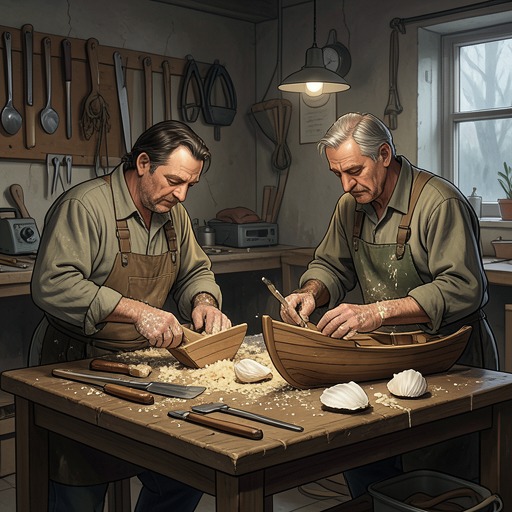
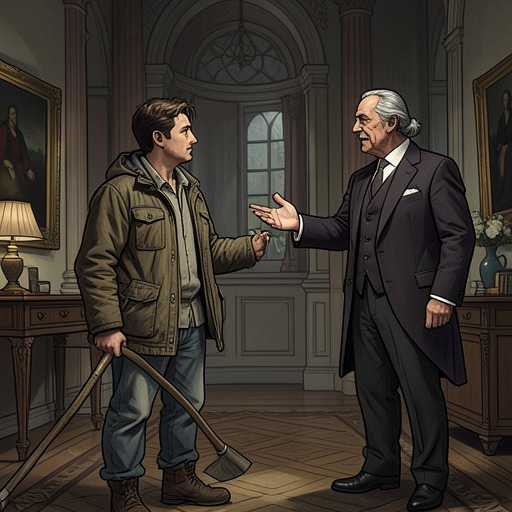
Conibear found George and Dick Pocock in their floating workshop in Coal Harbour. He proposed that they establish a fleet for Washington, imagining an order of as many as fifty eight-oared shells and asking them to move to Seattle, where he would provide a dry workshop on campus. The proposal initially persuaded the brothers to call their father, Aaron, from England to join them. Only after Aaron had begun his Atlantic crossing did Conibear clarify that the available funds would pay for one shell, not a fleet. The reduced order did not end the arrangement: the Pococks settled on the Washington campus and began building for the university.
The partnership became more consequential than the boat order. Watching Washington’s crews, George Pocock noticed flaws in their rowing that the skeleton model could not resolve. He initially kept his observations to himself, but when Conibear asked for advice, Pocock described what he had learned from Thames watermen and from teaching boys at Eton. Conibear listened and adopted what he learned. Their discussions developed into the technique known as the Conibear stroke, making the coach’s name inseparable from a method substantially shaped by Pocock’s knowledge.
The stroke used a shorter layback, a quicker catch, and a shorter but more powerful pull. At the finish, rowers sat more upright, ready to slide forward and begin the next stroke without a long, elaborate recovery. This differed sharply from the longer stroke associated with eastern schools and Eton. Washington’s early victories gave the technique an immediate test in competition; eastern crews soon took notice and tried to understand how the unorthodox method could succeed.
Death and Program Legacy
Conibear died in 1917 in an accident in his backyard. While reaching for a plum in a tree, he climbed too far out on a limb and fell. His death came only a few years after the collaboration with the Pococks had begun to alter Washington rowing. By then the university had become a serious West Coast contender against Stanford, California, and British Columbia, though it had not yet reached Conibear’s ambition of making it the Cornell of the Pacific.
His lasting importance rests both on the coaching program he helped build and on the method that bore his name. He arrived without extensive rowing knowledge, pursued instruction through observation and experiment, and made room for Pocock’s expertise when his own mechanical model proved insufficient. The resulting stroke was neither simply an inherited eastern tradition nor the product of a single coach’s invention: it emerged through practical testing and an exchange between coach and boatbuilder. Washington’s rise gave that collaboration consequences beyond the workshop and the water, establishing a distinctive approach that other crews began to study.