Joe Rantz—Harry Rantz relationship
The Boys in the BoatThe relationship between Joe Rantz and Harry Rantz is defined by a rupture that neither man openly repairs. Harry left Joe behind in Sequim in 1929, and the two did not see each other for five and a half years. When they meet again, Joe’s effort to find his father leads not to a full family reunion but to a guarded conversation, a shared sandwich, and a narrow possibility of seeing his half siblings. Their encounter gives the estrangement a human scale: remembered closeness remains audible in Harry’s voice, while the original injury remains present in what they cannot bring themselves to discuss.
The Separation and Its Aftermath
In the fall of 1934, Joe learned from his brother Fred that Harry, Thula, and Joe’s half siblings had been living in Seattle since the night they drove away and left Joe in Sequim. The discovery made the separation more painful in a particular way: his father had not been beyond reach in some distant place, but had been living with the rest of the family in the same city. Joe had spent years without knowing where they were; now the address Fred gave him turned that absence into something concrete.
The family’s early circumstances in Seattle were precarious. They first lived in a two-room shed on the waterfront near Hooverville. Harry could not find the job for which he had come, and the family relied on public assistance. Thula’s mother provided the children with a bowl of Cream of Wheat on Sunday mornings but otherwise offered no support. After Thula told Harry to leave until he had a job, he went to Los Angeles; he returned six months later with a motorcycle but still no work. A further ultimatum preceded his eventual employment. These hardships do not undo Harry’s earlier decision to leave Joe behind, but they describe the unstable conditions surrounding the family’s subsequent years.
Harry’s Return to Work and Joe’s Search
Harry eventually found work as head mechanic at the Golden Rule Dairy and Bakery in Fremont. The shop was nonunion and paid low wages, but the job allowed him to move the family into a small, respectable house at Thirty-Ninth and Bagley. The address was not far from the north end of Lake Union, where Joe rowed nearly every afternoon. The proximity is striking: father and son lived within the same city and relatively near one another, yet the relationship remained suspended until Fred supplied Joe with the address.
Joe’s first visit came after he had learned where the family lived. He and Joyce drove to the house in the Franklin, parked on Bagley, and climbed the concrete steps holding hands. Someone inside had been playing the violin. After Joe knocked on the yellow Dutch door, the music stopped; a shadow moved behind the lace curtains, and Thula opened the door only halfway. The brief, hesitant welcome sets the measure of the reunion: Joe had reached the household, but access to it—and to his father—was not yet assured.
The Meeting at the Bakery
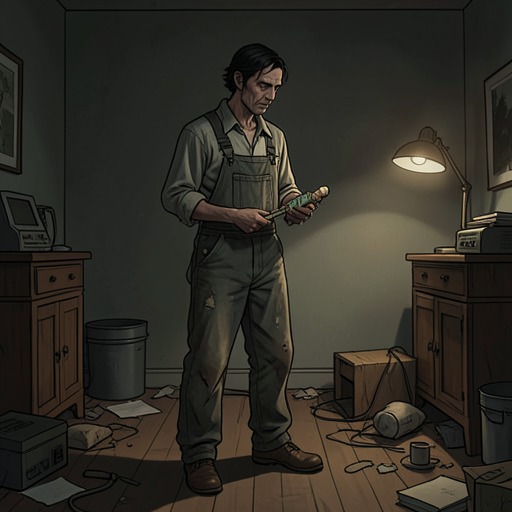
The next day, Joe drove to the bakery and waited for Harry’s lunch break. Harry emerged in dark coveralls, still wearing clothes that reminded Joe of the farm in Sequim. At six foot two, he was the tallest man among the workers. Joe crossed the street toward him. Harry froze, clutching his lunch box; Joe put out his hand and greeted him with, “Hi, Pop.” Harry took his hand and answered, “Hi, Joe. It’s swell to see you.”
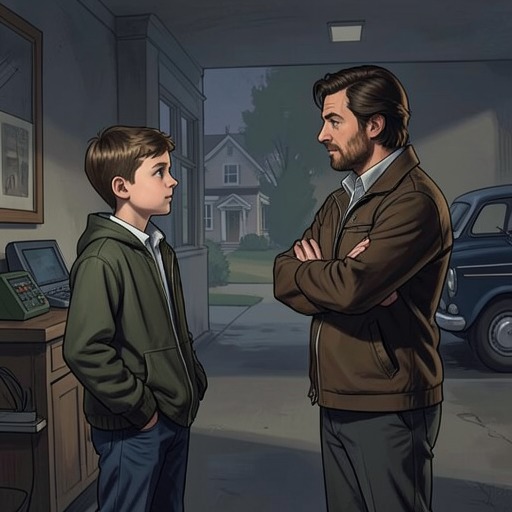
They sat together in the front of the Franklin. Harry unwrapped a salami sandwich and silently offered Joe half. At first he spoke about the bakery’s ovens and dough mixers and the delivery trucks he maintained. Joe was not especially interested in the equipment, but he took pleasure in the familiar sound of his father’s deep voice. He remembered the stories Harry had told on the steps of the cabin at the Gold and Ruby mine, and the time they had spent tinkering with machinery and hunting for bee trees in Sequim. The scene holds two truths together: the old intimacy has not vanished from Joe’s memory, but recollection alone cannot restore the years they lost.
A Narrow Opening, Not a Reconciliation
When Joe began asking questions, they were about the children he had been separated from: how Harry Junior was doing, whether he had caught up at school after the bacon-grease accident, how big Mike had grown, and how the girls were getting on. Harry told him they were all well. After a long pause, Joe asked if he could come by to see them. Harry looked down and said, “I don’t reckon so, Joe.” The refusal stirred anger, disappointment, and resentment in Joe—feelings he could not immediately disentangle, but recognized as old and painful.
Harry then offered a limited alternative. Sometimes, he said, he and Thula went on little excursions, leaving the children at home. Joe could visit then. Harry looked out the window as he said it, as if distancing himself from the suggestion. He seemed relieved that Joe had not asked about the night in Sequim when the family left him behind. That unasked question governs the meeting as strongly as the questions Joe does ask: father and son manage to speak and share food, but the foundational wound remains unspoken.
The Relationship’s Unresolved Shape
The encounter changes the relationship only by making contact possible again. Harry’s invitation creates a route to Joe’s half siblings, not a promise that Joe will be welcomed into ordinary family life, and not an explanation or apology for the separation. Joe’s memories of his father’s stories and practical companionship sit beside his immediate, bodily surge of old resentment. Neither memory cancels the other. The father who once taught and told stories is also the father who left him behind; the son who seeks him out is also the son who must ask permission to see the family.
The scene therefore presents reconciliation as tentative and uneven rather than complete. A handclasp, half a sandwich, and an indirect invitation are real gestures of connection, but they do not settle what happened in 1929. Harry’s reluctance to face that night and Joe’s decision not to force the question leave the relationship open, bounded by the pain they share but do not name. Its significance lies in that partial return: after years of separation, father and son can sit together again, while the terms of their closeness remain unsettled.