Joe Rantz’s exile at Boulder City
The Boys in the BoatJoe Rantz’s exile at Boulder City marks the moment when a family conflict becomes a practical and emotional separation. At ten, Joe is sent from the cabin to live in the camp schoolhouse, where he must earn his bed and meals through work. The arrangement keeps him fed and in school, but removes him from the household and from the everyday companionship of his father and brother.
Circumstances in the cabin
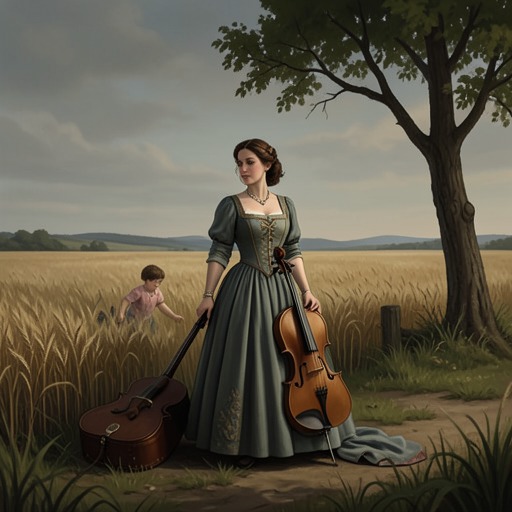
The conflict grew within a household already strained by the conditions of life in the Boulder City mine camp. Thula Rantz was educated and artistic, and had hoped to become first violin in a major symphony orchestra. Instead, isolated from the life she had imagined, she struggled to practice and spent her days on domestic labor. Her violin, rarely played, stood on a shelf while she washed dishes and cared for the children. The contrast with her sister Thelma, who lived comfortably in a house in Seattle, sharpened Thula’s sense that her own prospects had narrowed. The excerpt presents these frustrations as part of the tension surrounding Joe’s eventual removal, not as a dispute arising from one isolated incident.
On the afternoon the conflict came to a head, Thula was pregnant with her third child. She had spent hours scrubbing the cabin floor, then struggled to prepare dinner over a woodstove. Food was limited, and she worried that her own boys would not get enough to eat. Joe was growing quickly and ate readily, adding to her concern. These pressures form the domestic background to the encounter outside: the household was already burdened by work, scarcity, and competing needs.
The garden incident and ultimatum
Joe was tending the vegetable garden, a place where he could take responsibility and feel that his work contributed to the family. The vegetables he brought inside appeared later on the dinner table, giving him a visible way to help. As he worked down a row, he found eighteen-month-old Mike following him and pulling half-grown carrots from the ground. Joe shouted at the child, who began to cry. Thula came out, picked Mike up, and took him inside, shutting the door behind her.
When Harry Rantz returned from work, Thula demanded that he take Joe away and punish him. Harry instead took his son upstairs and spoke to him. Thula regarded this as inadequate discipline. Her anger escalated into an ultimatum: she said she would not continue living under the same roof as Joe and insisted that he had to leave if she was to stay. Harry could not calm her and, fearing the loss of another wife, chose to send his son away. The episode thus turns on sharply opposed responses to Joe’s behavior: Thula demanded a severe punishment, while Harry’s initial response was a private talking-to; the eventual consequence fell not on the marriage but on the child.
A bed earned with labor
Early the next morning, Harry led Joe up the wagon road to the schoolhouse at the top of the hill. He left him outside while he spoke with the male teacher. Joe waited on the steps, drawing circles in the dust with a stick and watching a Steller’s jay on a nearby branch. After a long conversation, Harry and the teacher shook hands: Joe could sleep in the schoolhouse if he chopped and split enough wood to keep its large stone fireplace burning day and night.
That bargain made the schoolhouse both refuge and workplace. Thula would no longer cook for Joe, so before school each morning and again in the evening he walked down the mountain to the cookhouse. There he worked for Mother Cleveland in exchange for breakfast and dinner. He carried trays of hotcakes and bacon in the morning, and meat and potatoes in the evening, to the dining hall, where miners and sawyers ate at long tables. Afterward, he returned the dirty dishes to the cookhouse. At night he climbed back to the schoolhouse, where he chopped more wood, completed his schoolwork, and tried to sleep. Food and a place to stay were therefore tied to separate, repeated tasks; neither came to him as part of ordinary family life.
Separation and its cost
Joe managed the work that sustained him, but the new routine did not replace the relationships he had lost. There were no boys his age in the camp for him to befriend. Before the exile, his closest companions had been Harry and Harry Junior. He remembered the three of them slipping away from the cabin to toss a ball among the pines or roughhouse in the dust, and playing their favorite songs on the piano when Thula was out of earshot. He also missed being alone with his father: playing gin rummy at the kitchen table, looking under the hood of the Franklin while Harry explained the engine, and sitting together on the cabin porch at night.
Those evenings had depended less on conversation than on shared attention. Harry had urged Joe to keep watching the sky for a falling star; now Joe watched from the schoolhouse steps alone. The repeated labor of the exile establishes its material terms, but the remembered routines reveal what the arrangement had cost him: not only a home, but access to small, familiar forms of companionship with his father. In this episode, Joe’s ability to feed himself and keep going coexists with a world that has become narrow and lonely. The schoolhouse gives him shelter, yet the first account of his new life closes on the difference between being able to watch the sky and having someone beside him while he does.