Nazi seizure of power
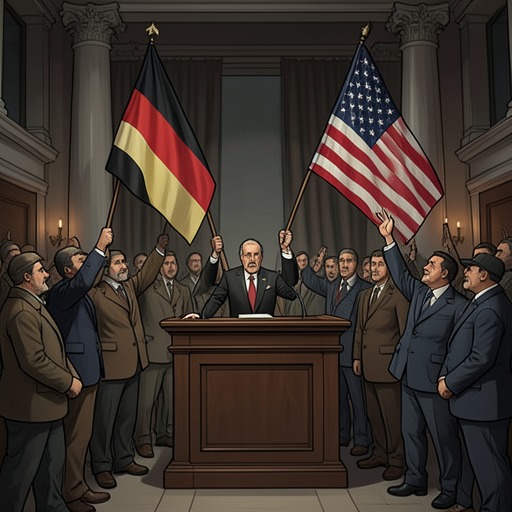
The Boys in the BoatThe Nazi seizure of power in January 1933 set in motion a project that joined domestic repression to international image-making. Adolf Hitler’s government moved to constrain what Germans could read and say, while preparing to use the 1936 Olympics to present Germany as civilized and modern. The Olympic spectacle was not a retreat from the regime’s ambitions: it was meant to make those ambitions less visible while the country rebuilt its power.
Coming to Power and the Olympic Ideal
The National Socialist German Workers’ Party brought Hitler to power in January 1933. His government was determined to rearm Germany despite the restrictions of the Treaty of Versailles, and the possibility that the horrors of the First World War might return hung over the political landscape. In the account’s framing, this was not only a German development: although most Americans paid little attention to European affairs, British concern was rising, and the prospect of another war remained a persistent worry.
The Olympic Games presented a problem for Hitler’s ideology. He had condemned the Games as the invention of Jews and Freemasons, and their underlying ideal—that athletes of different nations and races could meet and compete on equal terms—conflicted with the regime’s belief in Aryan superiority. He also objected to Jews, Black people, and other groups he regarded as racially undesirable entering Germany. In this early stance, the international gathering represented not an opportunity but a challenge to the hierarchy the regime sought to impose.
Control of the Press
Joseph Goebbels, the minister of public enlightenment and propaganda, helped turn the new government’s authority into control over public information. A committed antisemite and influential figure in Hitler’s inner circle, Goebbels was dismantling what remained of a free press. That week, he addressed three hundred Berlin journalists about the new National Press Law and the requirements for practicing journalism in Germany.
Journalists would have to hold licenses through the Reichsverband der Deutschen Presse. A person with even one Jewish grandparent could not be licensed, nor could someone married to such a person. The law also restricted editorial content: material deemed harmful to the Reich’s power, the German people’s collective will, military spirit, culture, or economy was barred. Goebbels presented conformity as a reasonable adjustment to the state’s interests, but the regime reinforced its demands with a separate measure imposing the death penalty for publishing treasonable articles. Together, licensing, racial exclusion, censorship, and the threat of execution made the press an instrument of political control rather than an independent check on government.
From Olympic Reluctance to Olympic Project
Goebbels saw that hosting the Olympics could serve the regime beyond the control of domestic news. The Games offered a chance to portray Germany to the world as friendly, civilized, and modern—and to secure recognition and respect. Hitler gradually accepted this argument. A temporary display of peaceful intentions could buy time while his government rebuilt Germany’s military and industrial strength for a future struggle. The Olympic project therefore depended on a calculated contrast between the attractive image shown abroad and the coercive program unfolding at home.
The change became tangible at the Olympic site outside Berlin. On October 5, Hitler inspected the old Deutsches Stadion with architect Werner March, Theodor Lewald of the German Olympic Organizing Committee, and Wilhelm Frick. Built for the 1916 Games, which had been canceled because of the Great War, the stadium was being renovated for the Olympics Germany would host in 1936. March explained that the adjoining horse-racing track limited the scope for expansion. Hitler ordered it removed and called for a stadium capable of holding at least one hundred thousand people, surrounded by a vast complex for many kinds of competition: the Reichssportfeld.
The scale and setting were part of the message. From elevated ground overlooking Berlin, the proposed complex would, in Hitler’s conception, testify to German ingenuity, cultural superiority, and growing power. Five days after the inspection, March was still working at his drafting table against a morning deadline to present preliminary plans. The political decision had already given the architect’s work its purpose: to make the regime’s vision monumental and visible to the world.
Significance and Limits of the Spectacle
The episode shows how the regime’s propaganda strategy depended on managing appearances, not abandoning its underlying ideology. The same government that excluded people from journalism on racial grounds and threatened writers with death sought to welcome international athletes under the Olympic banner. The apparent contradiction served a purpose: a show of openness could make Germany seem less threatening while the state consolidated control and pursued rearmament.
The planned Games thus belonged to the seizure of power’s wider consequences. The press restrictions narrowed the space for dissent inside Germany; the proposed Olympic spectacle addressed audiences beyond it. In the account’s telling, the stadium and the propaganda campaign were connected instruments: one disciplined public speech, while the other projected a carefully constructed national image. The Olympics became a means to buy political time, even as the preparations advertised a future of German power.