Anonymous jury
The Brass VerdictThe anonymous jury in the trial of Walter Elliot was a protected but consequential part of the courtroom’s design. Jurors’ names were withheld even from the lawyers, and they were identified during selection by seat number. The arrangement limited public exposure while making the integrity of the selection process especially important: Mickey Haller later reasoned that an alleged sleeper could be placed in the box only through access to the system’s successive random selections.
Anonymity and Protection
Judge Stanton ordered the prospective jurors’ identities withheld from the lawyers and referred to each by seat number during voir dire. He also arranged for the Court TV camera to be mounted above the jury box, outside the view of the jurors, so they would not appear in its courtroom coverage. The anonymity did not conceal everything about the panel: the lawyers and the court knew prospective jurors’ occupations and the areas of Los Angeles County where they lived. It was their names, and thus a direct means of identifying them, that remained protected.
Selection and Voir Dire
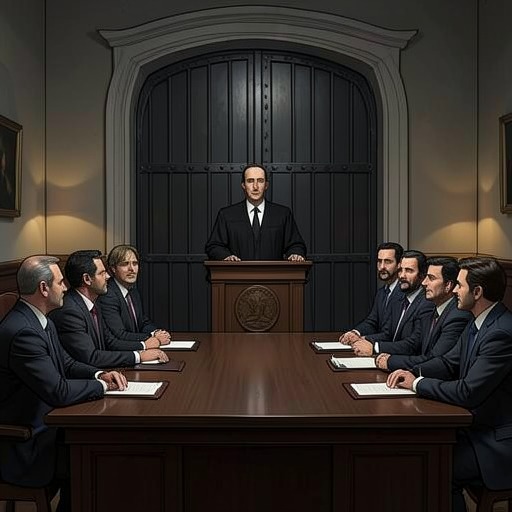
The first twelve candidates were selected by computer and called into the box by their jury-pool code numbers. The panel initially included six men and six women, among them postal workers, engineers, a housewife from Pomona, an out-of-work screenwriter, high school teachers, and retirees. Judge Stanton questioned them about their work and where they lived, as well as their experience of crime, relatives in prison, connections to police or prosecutors, knowledge of legal proceedings, and prior jury service.
The court excused candidates whose circumstances or potential partiality could affect their service. A postal worker whose brother was a police officer, a retiree whose son had been murdered in a drug-related killing, and a screenwriter whom the judge thought might resent studio management were dismissed for cause. An engineer was excused for financial hardship: two weeks on a trial would mean two weeks without consulting income beyond the juror’s five dollars a day. The process therefore combined random selection with judicial screening and hardship review.
Competing Aims in the Jury Box
The anonymity shaped the lawyers’ approach without making the jurors unknowable as a group. Haller and the prosecutor, Jeffrey Golantz, sought opposite outcomes from jury selection: each used challenges to try to form a panel receptive to his side. Haller described the state’s theory as a straightforward case built around motive and opportunity, but argued that its evidence was thin and circumstantial. In his opening, he presented the prosecution’s account as a complicated construction of smoke and mirrors and urged the jury to find reasonable doubt. The jury’s task was thus not simply to receive evidence, but to decide which account made the evidence cohere.
The courtroom’s staging reinforced that contest. Behind the prosecution sat Mitzi Elliot’s mother and Johan Rilz’s father and brothers; Haller noticed that Golantz had placed the grieving mother where the jury could see her. Elliot, by contrast, had no one in the gallery. Haller advised against filling the seats behind his client with actors, corporate lawyers, or other supporters, believing that every visible choice should be made with the jury in mind. Haller also reserved seats for Lorna Taylor, Cisco Wojciechowski, Patrick Henson, and jury observer Julie Favreau. An intended fifth seat for his daughter, Hayley Haller, remained empty after his former wife refused to take her out of school. These absences and presences framed the jury’s view of the case while its members’ own identities remained concealed.
The Sleeper and the Random System
The anonymity did not eliminate the possibility of interference with selection. Elliot told Haller that Jerry Vincent had been approached after the trial date was set with an offer to place a sleeper on the jury, on the condition that the trial not be delayed. Elliot later said Vincent had told him the defense no longer needed the fix because he had found the magic bullet and expected to win without the sleeper. Elliot believed Vincent’s withdrawal from the arrangement was connected to his death, though the account was Elliot’s explanation rather than an independently established finding in this scene.
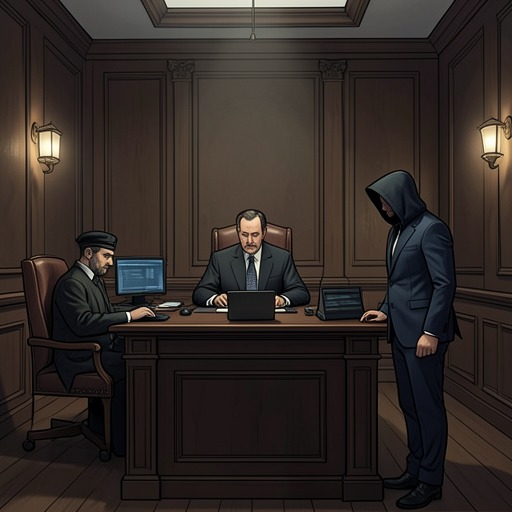
Thinking through the plan, Haller identified the multiple stages an insider would have needed to reach: the summons of citizens for a particular courthouse and week, the random selection of a trial’s jury pool, and the computer’s selection of the first twelve candidates for the box. A planted juror, he reasoned, would have to appear favorable to the prosecution to avoid a defense challenge and would depend on the defense knowing not to use a strike against him. The condition that the trial date remain fixed made the alleged scheme dependent on control extending across the random process, not merely on influencing a single decision in open court.
The anonymous jury therefore embodies both a safeguard and a vulnerability. Concealing names and limiting the camera’s view protected jurors from scrutiny, while the selection procedure was intended to create a random and socially mixed panel. Yet Haller’s reconstruction of the alleged sleeper scheme showed how a conspiracy reaching into each stage of that procedure could undermine the very neutrality anonymity was meant to preserve.