Jerry Vincent’s cell phone
The Brass VerdictJerry Vincent’s cell phone matters because its disappearance removes a potential source of answers while its call records expose an unexplained connection to the Federal Bureau of Investigation. The phone is treated both as one of the possessions taken in the killing and as a surviving trace of contact whose participants and purpose remain unknown. Its evidence is specific but incomplete: it establishes repeated calls, not who made them or what they meant.
The phone and its disappearance
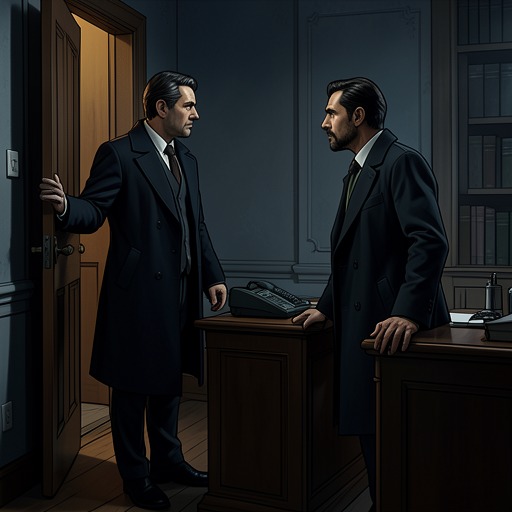
Harry Bosch tells Mickey Haller that the killer took Jerry Vincent’s cell phone, either from Vincent’s body or from his briefcase. The uncertainty over where the phone was taken from is explicit; the account does not settle the precise moment or manner of its removal. What is clear is that it disappeared in the course of the killing, leaving Vincent’s property and the circumstances around it entangled with the crime.
A later reconstruction of the attack places the phone among the contents of the briefcase the killer reached for after shooting Vincent. That account includes the laptop, phone, portfolio, and, as investigators suspect, the Eli Wyms file. It presents the briefcase’s contents as part of a planned theft, while the phone’s earlier description preserves uncertainty over whether it was on Vincent or inside the case. The two accounts therefore establish the phone’s place in the stolen property without resolving its exact location at the moment it was taken.
The reconstruction also makes the phone part of a deliberate sequence rather than an incidental loss: the killer waits in the garage, approaches Vincent’s car, shoots him, and reaches inside for the briefcase. The phone is one item within that collection, not the only object taken. The evidence does not establish that it was the killer’s primary target, or that its theft explains the murder by itself.
Calls from the Bureau
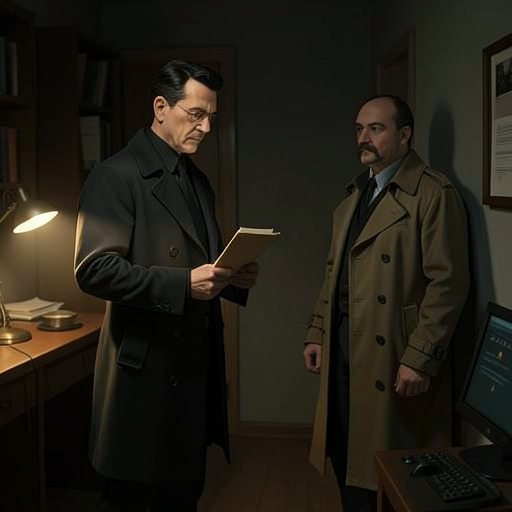
Bosch has obtained the phone records and reports a pattern of calls from the Bureau. On the day Vincent was killed, he received three calls; four days earlier, he had received two. The records establish repeated contact from the federal agency’s main number, but they do not identify an individual caller. Bosch explains that outgoing calls from the Bureau register under that central number, so the records cannot disclose who spoke to Vincent.
The calls were all brief: none lasted more than a minute. Their duration gives the investigators a concrete detail but no reliable account of their content. Haller raises the possibility that the calls were wrong numbers. Bosch rejects that explanation, reasoning that the number of calls makes accidental contact unlikely and that the callers wanted something from Vincent. That is Bosch’s assessment, not a fact the records independently prove. The phone log establishes a pattern; the reason for it remains open.
The timing sharpens the question without answering it. Contact occurred four days before the killing and again on the day Vincent died, but the available evidence does not show whether the calls concerned his legal work, an investigation, or another matter. Nor does it establish that the Bureau’s calls caused or were connected to his murder. The phone offers a narrow documentary trail, not a complete account of Vincent’s final dealings.
An unresolved federal connection
The call records become especially troubling when Haller considers them alongside what remains unknown about Vincent’s death. He wonders what the Bureau knew and why no agent had approached Bosch about the homicide. He considers two possibilities: the agency might be concealing its tracks, or it might be avoiding public attention because an investigation is still in progress. Neither possibility is confirmed. Haller’s concern is practical as well as investigative: involvement in a federal corruption inquiry could taint him and damage his position beyond recovery.
The phone therefore changes the questions surrounding the case without resolving them. The calls suggest that Vincent had some form of contact with the Bureau shortly before his death, but the shared main number hides the identity of the callers and the brief duration reveals nothing about the conversations. Bosch has not yet been contacted by the agency about the homicide. The gap between the record of contact and the absence of an explanation makes the phone an important uncertainty in Haller’s assessment of the case.
Evidentiary limits and narrative significance
Haller places the calls among several unresolved elements, including the circumstances of the killing and whether Vincent’s death disrupted a planned trial. He cannot draw a solid conclusion about how to proceed because too much information is missing. The call history contributes to that uncertainty rather than supplying a solution. At this point, Haller also suspects that his own client, Walter Elliot, is keeping him uninformed about the case’s internal workings; the phone records do not prove that suspicion, but they form part of the wider set of unexplained facts he is trying to assess.
As an object, the phone shifts from ordinary possession to contested evidence. Its loss matters because it was taken with other items from Vincent, while the records associated with it provide a trace of contacts that the investigators cannot yet interpret. The contrast is central to its role: the physical device is absent, but the call pattern remains available; the pattern is precise, but its meaning is withheld. The phone thus preserves a question at the heart of the investigation—who was speaking with Vincent, and why—without allowing either Bosch or Haller to answer it from the evidence they have.