Ronald Torrance
The Brass VerdictRonald Torrance is the state’s central witness for an alleged confession by Barnett Woodson, a claim that gives a largely circumstantial prosecution case its most direct-sounding evidence. Yet Torrance’s own record and pending charges complicate the authority of his account: he has something substantial to gain from helping the state. His role therefore turns on two competing impressions—the detail of what he says Woodson told him and the pressure under which Torrance himself is testifying.
Background and Legal Exposure
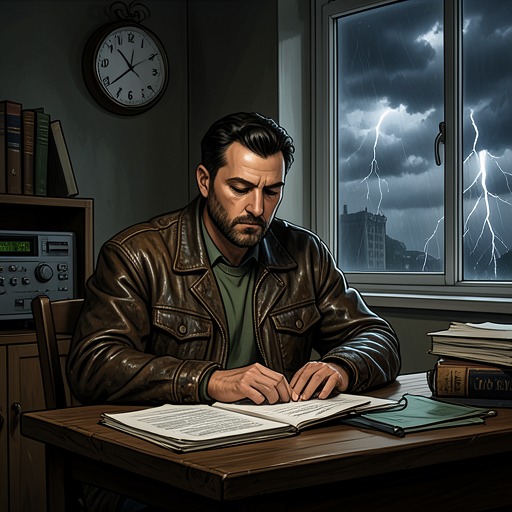
The defense had investigated Torrance before he appeared as a witness. He was thirty-two and, by the account of the narrator, had spent about a third of his life in jails and prisons. His formal schooling had ended in the fourth grade. The narrator also describes a childhood in which no parent seemed to notice or care that he had stopped attending school, a history that places Torrance among people poorly served by the institutions now relying on his testimony.
At the time of Woodson’s trial, Torrance faced charges arising from the robbery of a coin-laundry manager. The incident occurred during three days of rioting and looting after not-guilty verdicts were announced in the trial of four police officers accused of excessive force against Rodney King. Under California’s three-strikes law, conviction on the charges Torrance faced could mean a life sentence. That exposure supplies a concrete reason for him to cooperate with the state, though it does not, by itself, establish whether his account is true or false.
The State’s Witness
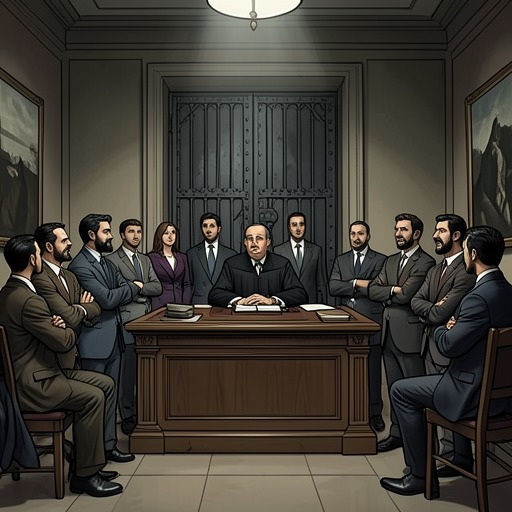
The prosecution’s case against Woodson relied largely on circumstantial evidence, including phone records, and on testimony from witnesses who were themselves criminals. Torrance occupied a prominent place among them: he claimed that Woodson had confessed the killings to him. The prosecution presented him as a witness the jury could believe, taking particular care over his appearance before his testimony on the fourth day of trial. He arrived with his hair trimmed, clean-shaven, and wearing a pale blue suit without a tie. The account notes that the jury had only three Black members, making the prosecution’s effort to render Torrance presentable part of the courtroom context surrounding his testimony.
Torrance said the conversation took place one morning at a picnic table. According to his account, Woodson expressed regret, referred to the two victims, and described the killings and the way their bodies had been concealed. Torrance also attributed to Woodson a claim that he had made a mistake in how he handled the aftermath. These alleged details served a particular purpose for the prosecution: they were presented as knowledge that would be difficult to explain unless Woodson had been the killer. The account thus did more than place a confession in Woodson’s mouth; it offered the jury a narrative whose specific details were meant to authenticate it.
Credibility Under Examination
The apparent precision of Torrance’s story sits beside the weakness the defense saw in the larger case. Phone records and accounts from criminal witnesses did not make the prosecution’s case self-proving. Torrance’s testimony might connect Woodson to the killings, but its force depended on accepting that Torrance had accurately heard, remembered, and repeated a private conversation—and that his own legal predicament had not shaped what he said.
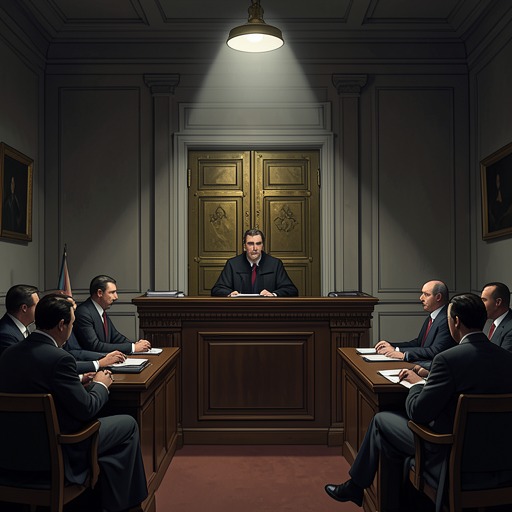
Cross-examination brought the conditions of Torrance’s alleged access to Woodson into view. The questioning emphasized that the two men had been in the same module for thirty-two days and that Torrance claimed Woodson had confided in him. It then asked whether Torrance was saying he had never seen Woodson with a particular file. The question put the claimed intimacy and the details of Torrance’s knowledge under scrutiny, asking the jury to consider not only what he said Woodson had confessed, but also what Torrance might have seen during their time together.
Narrative Role
Torrance embodies the prosecution’s effort to turn circumstantial material into a coherent account of guilt. His testimony supplies a human source for the alleged confession, and its vivid particulars are offered as a bridge between the evidence and the identity of the killer. At the same time, his pending charges make the witness himself part of the evidentiary problem: the stakes that may explain his cooperation also give the defense reason to challenge his reliability.
The contrast is not simply between a detailed story and a sparse record. It is between the story Torrance tells about Woodson and the story the jury must construct about Torrance—his criminal history, his exposure to a possible life sentence, his opportunity to speak with Woodson, and the state’s careful presentation of him. His importance lies in that double role. He is both the prosecution’s most direct account of a confession and a witness whose circumstances demand that the account be tested rather than accepted for its detail alone.