Isadora’s Powerless Amnesiac State
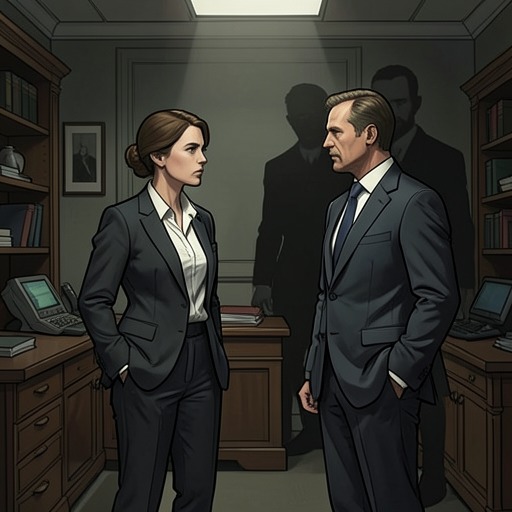
The CEO’s Baby Girl: A Workplace Reverse Harem Romance (Age-Gap Billionaire Obsessions)Isadora’s Powerless Amnesiac State is the aftermath of Ariella’s decisive magical intervention: Isadora survives, but her magic implodes and her memory is erased. The state reverses the power relationship that has governed the conflict, converting Isadora from an active wielder of coercive knowledge and supernatural force into an unconscious, powerless figure whose past can no longer function as a weapon.
Definition and Immediate Cause
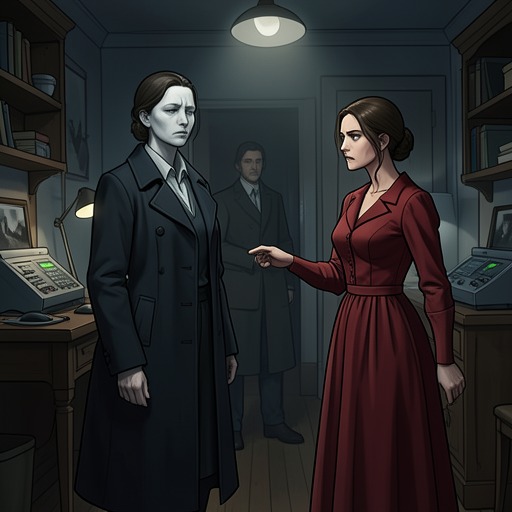
The state begins when Ariella reaches Isadora during their confrontation and places her fingertips against Isadora’s forehead. Ariella does not answer Isadora’s demand for death with execution. Instead, she declares, “I don’t need to kill you. I just need you to forget.” The statement identifies memory as the chosen target and makes forgetting an intentional magical act rather than an accidental consequence of battle.
The spell then moves through Ariella’s body and into Isadora’s. Its effect is presented as overwhelming and bodily before its results are fully explained: Isadora’s eyes widen, her scream becomes soundless, and the force working inside her turns inward. The scene therefore treats magical erasure as both an attack on consciousness and a collapse of the supernatural system that has sustained Isadora’s authority.
Loss of Power and Memory
The central transformation is twofold. Isadora’s magic implodes, folding inward and collapsing “like a star going dark.” She crumples to the ground unconscious, and the narrative explicitly confirms that her power is gone. This is not temporary defeat in the ordinary sense; the language of implosion and extinction presents the loss as a fundamental destruction of her active magical capacity.
Her memory is erased at the same moment. The consequence is especially significant because Isadora’s influence depends not only on force but on what she knows and what she can reveal about the past. Earlier, she attempts to destabilize Ariella by claiming that she and Dominic were once bonded, describing their connection as ancient, powerful, and unbreakable until Dominic broke it. Her words make history a form of leverage. Once that history is removed from Isadora’s mind, she loses the ability to wield her own recollections as evidence, threat, or manipulation.
The Burden of the Past
The state also follows the exposure of Isadora’s earlier pattern of abuse. Jenna describes a former intern who entered Dominic’s world believing she had found the job of her dreams, only to be taken and twisted into whatever fantasy he was pursuing. Later, photographs show a young woman bound in ritual and marked in a manner resembling Ariella, with a tear-streaked face and empty eyes, accompanied by a dry, clinical report. These images turn vague suspicion into documentary evidence of a repeated history of coercion and ritualized harm.
That revelation changes the meaning of Isadora’s later amnesia. Her loss of memory is not merely a personal injury but the destruction of the consciousness that carried a violent past. At the same time, the act cannot restore the victims whose suffering is recorded in the photographs, nor can it undo Ariella’s own marking. Erasing Isadora’s memories ends her access to the past without repairing the past itself, leaving the state morally more complicated than a simple victory.
Reversal of the Bonded Order
Isadora’s condition also answers the revelation that she and Dominic were once bonded. Isadora presents that bond as ancient and nearly unbreakable, while Ariella has been living with the consequences of Dominic’s power and the possibility that his connection to Isadora remains active beneath his assurances that it is over. The magical erasure breaks the continuity of that old order in a different way: Isadora can no longer remember the bond, invoke its history, or act through the power that once made it consequential.
The reversal is completed through Ariella’s agency. Dominic arrives beside Ariella after the spell, bloodied and covered in dust, and recognizes the result by noting that she did not kill Isadora. Survival is therefore part of the punishment and part of the new balance. Isadora remains physically alive, but the person who entered the confrontation as a conscious magical antagonist no longer possesses the powers or memories that defined her role.
Narrative and Thematic Significance
Isadora’s Powerless Amnesiac State concentrates the story’s recurring conflict over ownership, memory, and autonomy. Earlier records and testimony reveal people being bound, marked, and reshaped by another person’s fantasy. Ariella’s response repeats the structure of domination at the level of magic, but reverses its direction and claims control over the controlling figure. The scene consequently presents freedom not as a clean escape from coercive power, but as a dangerous power capable of imposing irreversible absence on an enemy.
The state also creates a sharp contrast between bodily survival and personal continuity. Isadora is not killed, yet the erasure of memory and magic removes the capacities through which she understood herself and acted upon others. Her unconscious body remains, while the historical and supernatural identity attached to it has been stripped away. In narrative terms, the transformation closes Isadora’s immediate threat while preserving the unsettling question of whether defeating domination through total erasure can ever be wholly distinct from domination itself.